

2026's Coolest New TV Tech Trends
We may receive a commission on purchases made from links.
If you're looking to buy a TV in 2026, there are plenty of buzzwords going around in the industry, which may get confusing for some. It's been more than 10 years since Samsung introduced quantum dot technology to its TV range, and since then, there have been significant advancements in display tech, whether it be image upscaling, improved colors and contrast, or AI processing.
Traditionally, primary display types have fallen into one of two broader categories: LCD and OLED. Today, many premium LCD models merge quantum dot technology with mini-LED backlighting to achieve an ideal balance of brightness, contrast, and color vibrancy. This combination of display technologies ensures a high-performance design that can cater to diverse viewer preferences.
Besides 2026's upgrades in display tech, RGB backlighting and AI integration have become more prevalent across many brands. Larger screen sizes have also reduced in price, offering a great way to bring the cinema to your home. Here's a list of 2026's coolest TV trends from the industry.
RGB mini-LED TVs expand to more brands
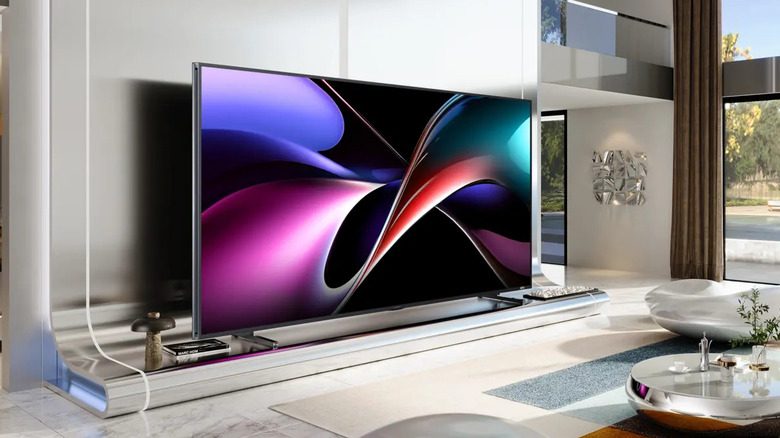
RGB mini-LED technology is the latest fad in the TV industry. Also referred to as Micro RGB or True RGB by companies like Samsung and Sony, it promises a broader color range and better brightness.
RGB mini-LED displays offer an improvement over traditional mini-LED technology. Whereas conventional mini-LED TVs rely on color converters and a layer of blue LEDs, RGB mini-LED adopts a more energy-efficient approach, providing separate green, red, and blue LEDs. The result is a more defined color range, boosted brightness, and lower blue light levels for enhanced viewing comfort at night.
Although some may prefer the unmatched contrast of OLED TVs thanks to their true blacks, RGB mini-LED televisions are a good match for those looking for maximum brightness and vivid colors, particularly during daylight hours. Some of 2026's top RGB mini-LED models include the Sony Bravia 9 II and Samsung Micro RGB R95H, both offering 4K resolution and giant screen sizes, with Sony's largest model measuring 115 inches.
More AI features roll out to new TVs
As artificial intelligence continues to dominate the tech industry, many companies like Samsung are bringing more AI features to their TV lineup. The Korean tech giant has given AI treatment to many of its TVs in 2026 across OLED, QLED, and Micro RGB models. At the core of the company's AI integration is what it calls Vision AI. Built into Samsung's One UI Tizen OS, Vision AI utilizes services like Gemini and Bixby to offer a more personalized viewing experience.
As well as life-like dialogue, Vision AI can also adjust display settings automatically depending on what's on screen. This applies across both movies and gaming, removing the hassle of adjusting settings manually. There's also a smart sound controller that uses artificial intelligence to detect and change different sound categories, such as a sports commentator.
LG is another competitor in the AI TV era, offering options like 4K upscaling via its powerful Alpha 11 AI processor. The chip shares many of Samsung's features, including AI sound adjustments and chatbot integration. The LG C6 OLED TV, released in early 2026, uses the latest generation of its Alpha 11 processor. This dual-engine processor enables upscaling of both sharpness and texture simultaneously, creating a more natural picture. According to LG, its Alpha 11 Gen3 delivers 5.6 times the neural processing performance of some of its 2025 models ⏤ another clear indication of the rapid development of AI.
Screen sizes continue growing
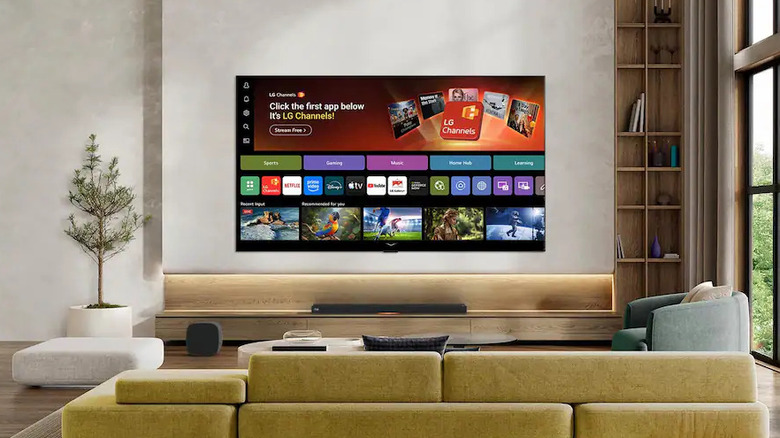
In addition to better displays and features, it's fairly easy to understand the growing demand for larger screens. 2026 welcomed more accessible prices for larger TVs, especially models 85 inches and above.
Samsung, one of consumers' favorite TV brands, presented its QN90F Neo QLED AI TV in 2025. Though a hit among consumers and tech critics, the 98-inch model is priced rather unfavorably at $14,999.99. The QN80H Neo QLED, on the other hand ⏤ a similar 2026 model with some reduced features but equally popular ⏤ has a reasonable $4,499.99 price tag on its 100-inch model.
Besides increasing company profit margins, there are more practical reasons why larger TVs are priced so lavishly. OLED models are particularly costly to manufacture, primarily because of the expensive mother glass that needs to be cut. Larger models lend themselves to glass-cutting inefficiencies, increasing waste and thereby growing costs. Nonetheless, 2026 has welcomed more affordable large displays on the market across brands like Samsung, LG, and TCL.
Art TVs bloom on the market
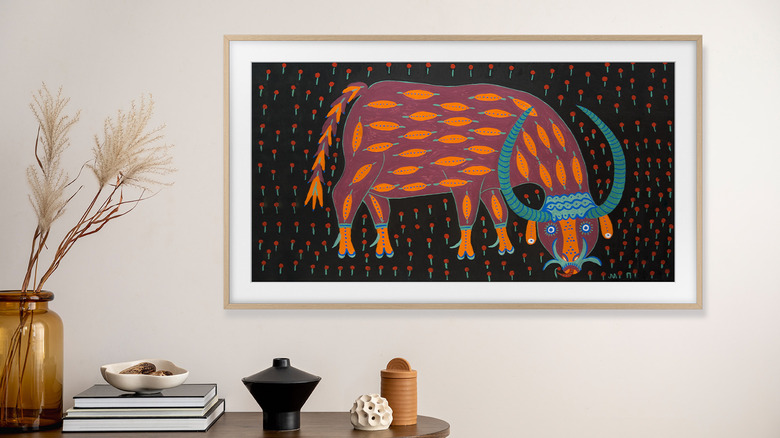
Despite it being nearly 10 years since Samsung first unveiled The Frame TV, the company has made several developments to its lifestyle TV range, adding AI integrations to its latest 2026 editions. But Samsung isn't the only company experimenting with art TVs ⏤ other brands like Hisense, Amazon, and TCL are also taking a punt on lifestyle televisions.
Hisense was one of the earliest competitors to Samsung's lifestyle TV range, releasing its CanvasTV in 2024. Aiming to rival The Frame TV in price, the art TV features many desirable traits, with its latest edition featuring a QLED 4K display with anti-glare. TCL followed in 2024 with its NXTFRAME, offering slim frame designs in sizes up to 85 inches. Its premium 2026 version, the NXTVISION A400 Pro, brings mini-LED technology to the table, despite its limited art collection.
Amazon is the latest to enter the lifestyle TV market, following its announcement of the Amazon Ember Artline in early 2026. The art TV features a curated selection of over 2,000 pieces of art and is built on Amazon's Fire TV OS. One noteworthy feature is the wide selection of frames available, including Matte White, Midnight Blue, and Walnut, so you can pick a style that best fits your living room.