

Why Even Triple-Digit Speeds Can Feel Slow On A Motorcycle
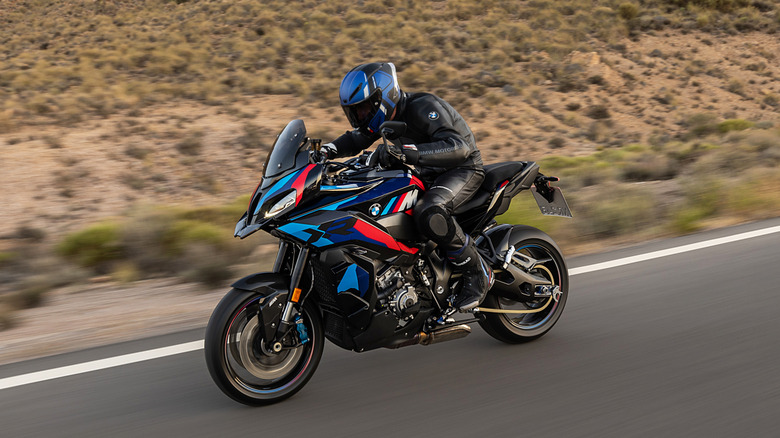
Picture this: you are cruising down a freeway, easily passing cars, and wondering why everyone else is driving so slowly. You then take a quick glance at your speedometer, only to realize you've been cruising at 100 mph on a freeway with a 70 mph speed limit; the rest weren't driving slowly, you were riding fast. If you're a relatively new rider, chances are you'll be taken aback and wonder how you could be riding at 100 mph when it feels like you're doing 60.
Motorcycles can be deceptively quick, and that can be dangerous. With no walls around you to protect you in a crash, even a slow-speed one can be fatal or cause critical injury to the rider. According to a 2024 report by NHTSA, around 37% of fatalities in motorcycle crashes occurred due to speeding, so it's important to be mindful of the speeds you're doing. There are three major factors that give you the impression of riding more slowly than you actually are: sensory feedback, visual cues, and the type of motorcycle you're riding.
Cruising at triple-digit speeds on a motorcycle is fun, but it's not as thrilling as the acceleration that gets you there. Your body experiences all kinds of forces as the motorcycle gains speed. The stronger the motorcycle's pull, the higher the g-forces felt on your body, and the more thrilling it feels to ride. However, once you reach a certain speed and decide to cruise, things start to feel slower. This is one of the primary reasons riders end up speeding without even realizing it. Of course, you'd still feel wind pressure against your body, vibrations filtering through the seat, gas tank, or handlebar, and your motorcycle reacting to the road surface.
The view from the saddle changes everything
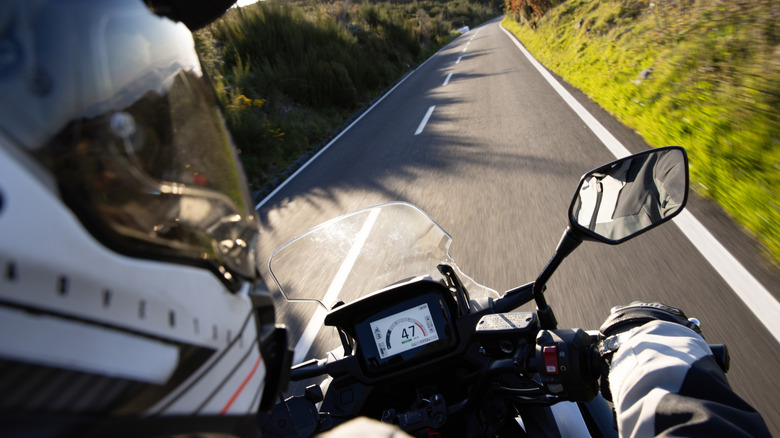
Your brain uses visual cues as a frame of reference for understanding how fast you're going. Road markings, trees, traffic, and roadside structures all act as visual reference points for the brain. Riding at 60 mph on a narrow road with surrounding trees can feel very different from riding at the same speed on an open freeway. The constant movement relative to the visual cues gives the brain the impression of riding fast. By contrast, open highways with straight roads and distant scenery provide fewer cues about movement. The speeds remain the same, but the sense of it differs depending on what you see.
Your bike's seating position can also affect how the brain perceives things. For example, the seating posture on an adventure motorcycle is upright and taller, which allows you to see farther ahead. On a sports bike, you sit closer to the road, so the sense of speed is higher.
Why some motorcycles disguise speed better than others
A motorcycle with a smooth engine, stable chassis, effective wind protection, and suspension that absorbs bumps without sending much feedback to the rider can feel much less dramatic to ride. One of the major drawbacks of single-cylinder bikes is that they are vibey, which can get tiring on a long ride. The sensory feedback from the vibrations can trick the brain into believing you're going fast. A twin-cylinder bike feels much more refined at similar speeds, so the sense of speed is lower.
A sport bike with similar displacement and performance to another sport tourer will clock a higher top speed and complete a quarter-mile drag race faster. However, when it comes to riding in real-world conditions, the latter can hold its own and occasionally be ridden faster. The relatively taller, upright riding ergonomics of a sport tourer are less tiring on long trips; with a wider field of view, the brain can process information sooner and is less fatigued. As a result, speeds are much better masked than on a sport bike.
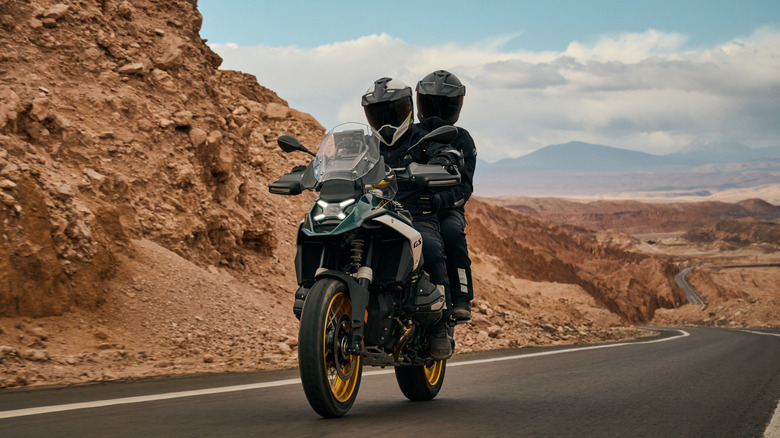
Things are even better on adventure motorcycles and their long-travel suspension. The higher movement range allows the suspension to absorb road undulations without sending strong feedback to the rider. As we established earlier, less sensory feedback reduces the sense of speed.