

How To Protect Your Pool Pump When Winter Weather Hits
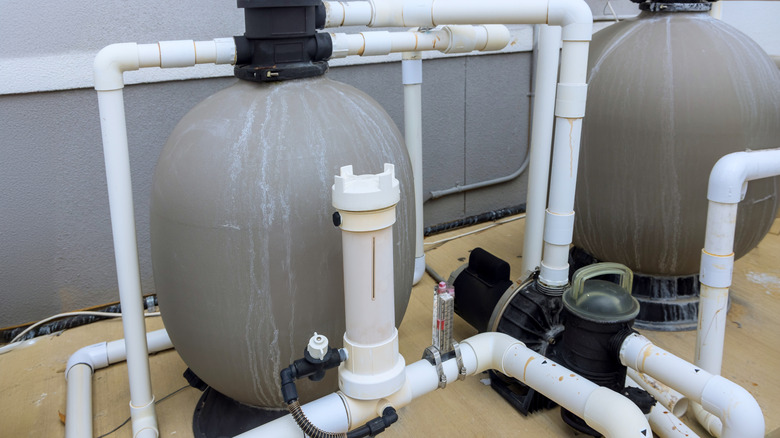
Once winter is on the horizon and temperatures start to creep lower and lower, it's time to make some preparations. For pool owners, keeping every part of this summertime home feature intact over the winter requires specific procedures. For instance, the safety-risk-heavy pool pump, the element responsible for effective water circulation and filtration throughout the swimming season, needs proper protection once winter is in full swing, ideally before temperatures drop to around 60 to 65 degrees Fahrenheit. Fortunately, winterizing a pool pump isn't too difficult.
To begin winterizing, first cut the power to the pump or, if the option is present, set the pump to service mode via the panel box. You then open the filter's air release valve and begin removing drain plugs throughout the system. This includes those on the main pump itself, on supporting cleaner pumps, the heater, filter, and chlorinator. Additionally, don't forget to remove the pump lid and flip it over to rest it on the pump bucket. You can store the plugs in the bucket throughout the off-season. If you have a system with a plug-free UV tank, you should also partially disconnect the pipe near the bottom so that it may drain fully.
It may take up a little bit of an afternoon, but the winterizing of a pool pump and its surrounding elements is immensely important to the health of the entire system. If you skip this relatively simple task every year, the consequences could be serious.
Possible consequences for not winterizing a pool pump
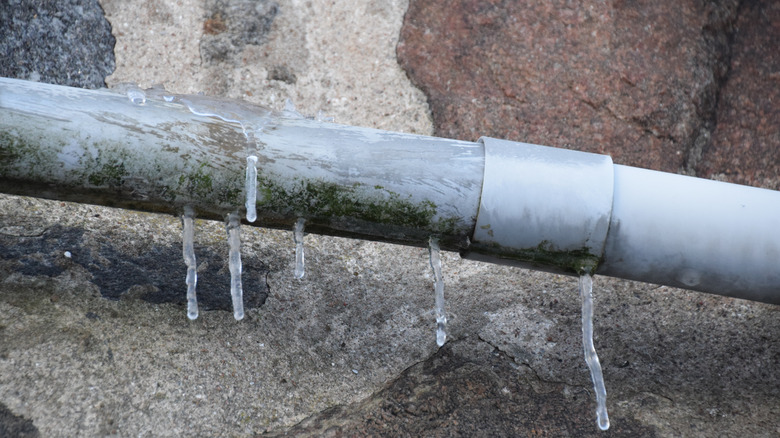
To put it mildly, you need to remember to prepare your pool pump for winter conditions every year. Otherwise, the damage done to the system could be catastrophic. Leaving water in the system during freezing temperatures all but guarantees ice formation, which, when confined to PVC pool system pipes — some of the most vulnerable pipes at home in the wintertime — and other brittle plastic containers, it's likely to expand and crack sensitive parts. This leads to noticeable water leaks, as well as the needed replacement of large, expensive elements like filters.
Worse yet, failure to properly winterize the pool pump and other associated elements could lead to an even bigger job. If multiple pipes running to and from the pump, above and underground, are left full of water, freeze, and crack, you may need to have your entire pool system rebuilt. Depending on the severity of the damage, and if said damage impacted more than just the pipes, you could have to contend with a repair bill that creeps as high as multiple thousands of dollars. That's a steep consequence for damage that could've been avoided with a simple minutes-long system draining at the end of summer.
Pool maintenance can be quite time- and money-consuming, and the same goes for the work required to rectify failing to take proactive pool care measures. Preparing a pool pump and its surrounding parts for winter doesn't take long, nor is it complicated, so there's no reason not to do it and avoid absolute disaster come summer.