

R-410A Refrigerant Isn't Banned, But Here's Why The AC Coolant Is Being Phased Out
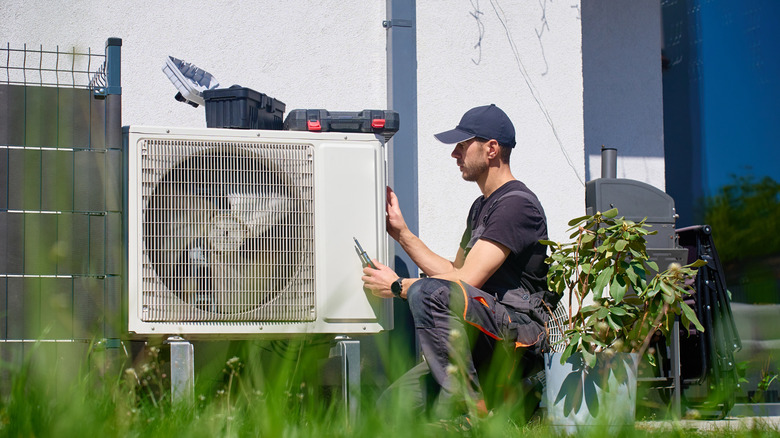
If you purchased an air conditioner from any of the major brands in the U.S. after 2010, chances are that you've come across the term R-410A. As the primary refrigerant used in air conditioners sold during this era, it was common for people to come across the R-410A label slapped across AC packaging. It was visible on AC outdoor units installed across the country, and consumers became familiar with the word as it was frequently used by technicians and those involved in the HVAC industry.
Having been around since the mid-'90s, R-410A came in as a replacement for R-22 (also known as Freon), which had gained notoriety during much of the '90s because of its ozone depletion potential and the resultant crisis. Upon its introduction, R-410A's major selling point was its zero ozone-depletion potential. Over time, as R-22 was gradually phased out around the 2010s, R-410A surged in popularity and eventually became the refrigerant of choice for AC manufacturers worldwide.
Fast forward to 2026, and R-410A finds itself in a similar position to that of R-22. While not completely banned, the coolant is being actively phased out in favor of newer, more environmentally friendly alternatives. While R-22 was phased out because of its adverse effects on the ozone layer, the case against R-410A is due to its high Global Warming Potential (GWP) numbers.
The beginning of the end for R-410A came with the American Innovation and Manufacturing (AIM) Act of 2020. This legislation led to the U.S. Environmental Protection Agency (EPA) instructing AC manufacturers in the U.S. to gradually cut down the production of R-410A-based equipment, while simultaneously transitioning to greener alternatives.
Why is R-410A being phased out?
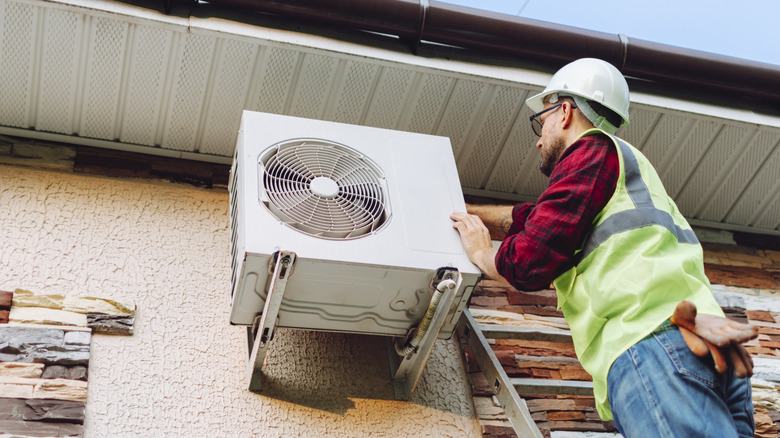
As outlined earlier, the primary reason for the ongoing phase-out of R-410A is its high Global Warming Potential. R-410A has a GWP of 2,088. To make sense of this number, it simply means that R-410A's warming effect is 2,088 times that of carbon dioxide (when measured over a 100-year period). The passing of the AIM Act in 2020 was only the first in a series of steps undertaken to ease the dependence on R-410A, and to give a fillip to the HVAC industry as a whole and look at other alternatives.
To ensure this transition happens as planned, the EPA came up with another set of rules aimed at equipment using these refrigerants. For new residential and light-commercial air conditioners, the EPA set an upper global-warming-potential limit of 700. This automatically pushed R-410A out of contention as far as newly manufactured AC systems are concerned, while encouraging manufacturers to switch to lower-GWP alternatives.
However, despite these new laws in place, existing R-410A air conditioners are very much legal. Homeowners can continue using and repairing them until it's time to completely replace them. The new set of rules is designed to gradually shrink R-410A's role as older models are replaced by a new generation of air conditioners. In simpler terms, there is no outright "ban" on R-410A-based air conditioners, and existing R-410A-based equipment will continue to be able to use the refrigerant for the foreseeable future.
How will the R-410A phase-out happen, and what is it being replaced with?
For most homeowners, the R-410A phaseout will be a gradual process, and something they may not even notice. Those with freshly installed (and older) R-410A-based ACs will be able to use and service them for the next several years. The 700-GWP limit by the EPA, effective from January 1, 2025, prohibits manufacturers from importing residential and light commercial ACs based on R-410A. However, following a major rule change in May 2026, manufacturers and distributors in possession of older R-410A-based ACs will be able to sell this inventory to consumers.
So, as of October 2026, consumers can still buy and install R-410A-based ACs, all of which were manufactured or imported into the U.S. before January 1, 2025. As existing R-410A air conditioners get older, they will eventually be replaced with newer systems that use more environmentally friendly refrigerants, thereby naturally reducing the number of R-410A systems in use.
As for the replacements, there are two main contenders that will take the coveted spot currently occupied by R-410A. These are R-454B (GWP of 465) and R-32 (GWP of 675). These GWP numbers are much lower compared to R-410A's 2,088. In the U.S., R-454B has become a particularly common choice for new residential AC systems, while R-32 is also used by several manufacturers. It will be interesting to see which of these two refrigerants becomes dominant over the next few decades.