

Do You Need To Bleed Your Brakes With Every Pad Change?
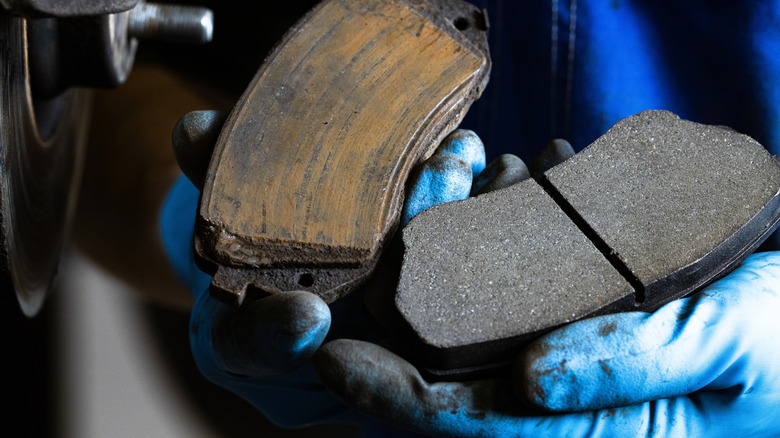
If you started noticing some of the telltale signs that your brake pads urgently needed replacing, then decided to install a new set yourself, you may be wondering if it's necessary to bleed your brakes. The quick answer is: No, you don't necessarily need to bleed your brakes every single time. If the hydraulic system stays closed and no air sneaks in, and assuming the vehicle's instructions don't explicitly require bleeding, just changing pads doesn't create that requirement.
Bleeding is the process of removing trapped air from the hydraulic circuit of your brakes. Brake fluid is responsible for transmitting pressure to your breaks, but air compresses more than the fluid, which lead to a spongy feel and compromise your braking.
During pad replacement, the caliper is usually moved aside with the hose still connected. Some procedures do open the bleeder screw, and in that case, improper handling can introduce some air into the system, which would require bleeding. The key distinction isn't whether your pads were replaced, it's whether or not air worked its way into the system.
When bleeding may be necessary
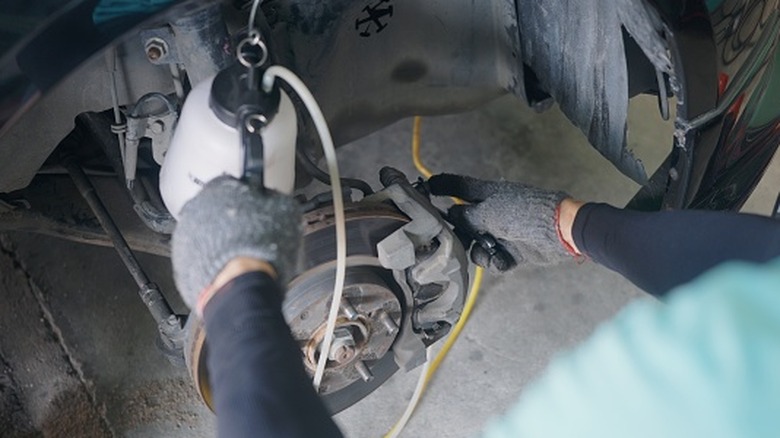
If you're considering replacing your brake pads yourself, know that you can check them without removing the wheel, and that bleeding is often unnecessary, simplifying the whole process. Bleeding only becomes a necessity when air enters the braking system, like when you're replacing a caliper or brake hose.
After you put new pads on, pump the brake pedal while the vehicle is stationary until pressure is back to normal. This has nothing to do with air in the system or bleeding, you're just taking up the clearance that was created when the pistons were retracted. However, if the pressure doesn't stabilize and the pedal continues to feel soft, don't drive until you've diagnosed and repaired the issue.
If bleeding is required, it's good to know how to bleed your brakes yourself. Be sure to use the specified fluid and vehicle-specific procedure, and bear in mind that ABS systems differ. With some, manual or pressure bleeding is fine, but others require a specialized scan tool to operate pumps or solenoids. If you're going to do a bleed yourself, careful preparation and a thorough reading of manufacturer instructions can save you a tremendous amount of time and headaches further down the line.