

Should You Add Weight To Your Truck Bed For Extra Traction In Winter?
We may receive a commission on purchases made from links.
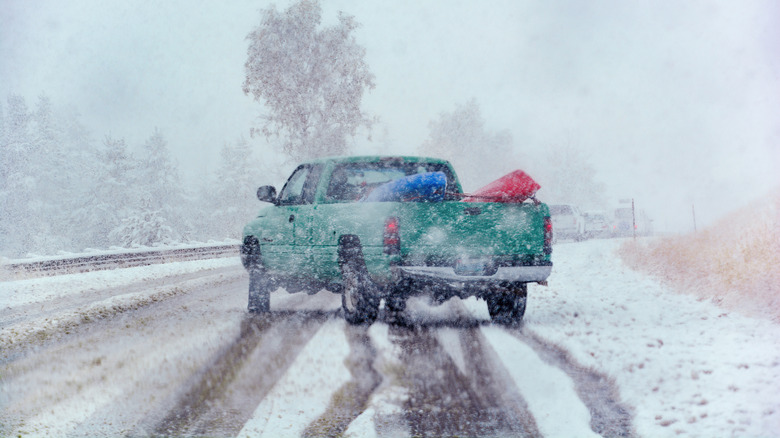
When is comes to winter driving, where snow and ice can become prevalent across U.S. roads, not every vehicle handles the conditions equally. While there are several four-door sedans that are surprisingly good in snow, other vehicles types can be terrible. As anyone who's driven a pickup with all the power going to the back wheels on icy or snowy roads can attest, it's not for the faint of heart. Simply commuting to work or running simple errands becomes highly demanding behind the wheel, as the tires can slip and slide all over the road.
With front-wheel drive, a trucks engine provides plenty of weight over the wheels, helping to enhance traction. Those with 4x4 capability, like the RAM 1500 TRX, or all-wheel drive like the Honda Ridgeline, also do much better in winter conditions.
Weighing down your bed can help provide some grip. In tests run by YouTube channel Tyre Reviews, acceleration time from 0-12.5 mph (20 km/h) improved 1.64 seconds and overall almost 4 seconds quicker around a short test lap. However, this option should be reserved for rear-wheel drive pickups only, as 4x4 and all-wheel drive models don't need the extra weight for solid winter performance.
How much weight and how to add it
The amount of weight you need to effectively gain some traction for those rear wheels largely depends on the size of your truck. First and foremost, you need to be cognizant of your pickup's payload capacity, which is a figure the automaker derived from extensive testing. Adding weight beyond your payload rating can lead to suspension damage, tire blowouts, and dramatically reduced vehicle control, to name a few consequences. In general, smaller to mid-size trucks like the Ford Ranger will see improvement in traction after adding between 200-and 300 pounds over the rear axle. Larger 3/4-ton trucks or bigger, like the GMC Sierra 2500, may require as much as 400 pounds in the bed to make a difference.
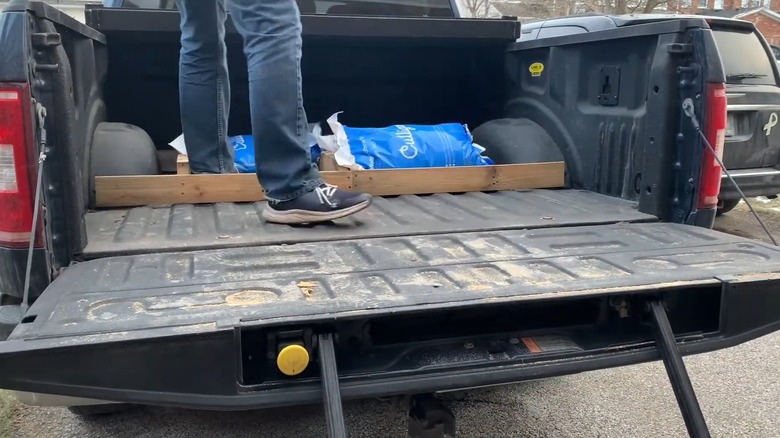
When you're ready to add weight to the bed, simply throwing some sand bags back there isn't ideal. The reason, is that these bags, if unsecured, can slide around as you corner, brake, or accelerate. For optimal traction, it's critical the weight stay directly over the rear axle. Starting at around $50 on Amazon, you find weight bags, which hold items like sand bags and can clip on the bed rails to remain in position.
However, you can also make your own, as YouTube channel Iron Horse Woodcraft demonstrated on the video, "Cheap way to add weight for better traction," where a leftover pallet was modified to fit snugly on either side of the wheel wells and hold bags of rock salt.
The potential drawback of adding weight and an alternative
Once your truck bed is weighed down, the positive benefit to traction when accelerating from a stop may be immediately noticeable. However, the extra pounds coupled with slick winter road conditions could make stopping distance worse. Meaning, you'll need to start slowing much earlier than usual, as it'll take a greater distance to bring the truck to a full halt.
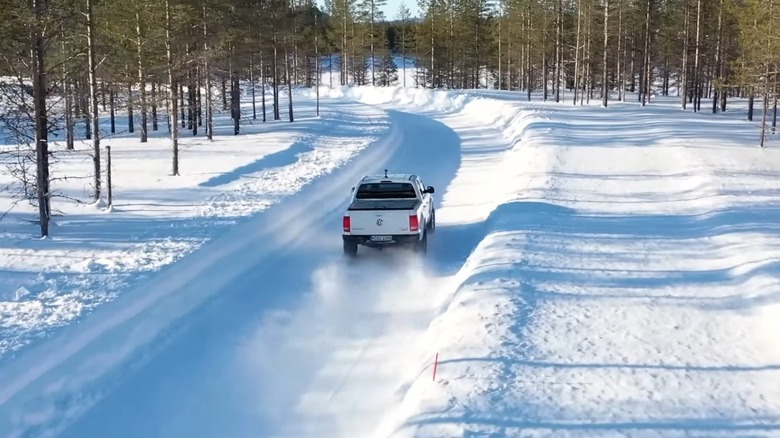
While weighing down a truck bed is certainly an inexpensive way to improve winter driving traction, equipping winter tires may ultimately prove to be the better solution. In another series of tests by YouTube channel Tyre Reviews, an unloaded rear-wheel drive pickup was measured on a snowy test course to demonstrate the difference between winter vs all-season tires, among other things. The gap in lap times reflect the enhanced acceleration and handling of the specialized winter tires, with the all-season clocking nearly 7 seconds behind the winter shoes.
Given the data shows improvements in both adding weight to the bed and equipping winter tires, those measures combined will garner the best results for rear-wheel drive pickups. Those who reside where temperatures remain below 45 degrees Fahrenheit for significant portions of the year, should consider investing in a good snow tire in addition to adding some weight to the bed, for better performance in slick and snowy conditions.