

What Is Tire Shaving And Is It Safe To Do?
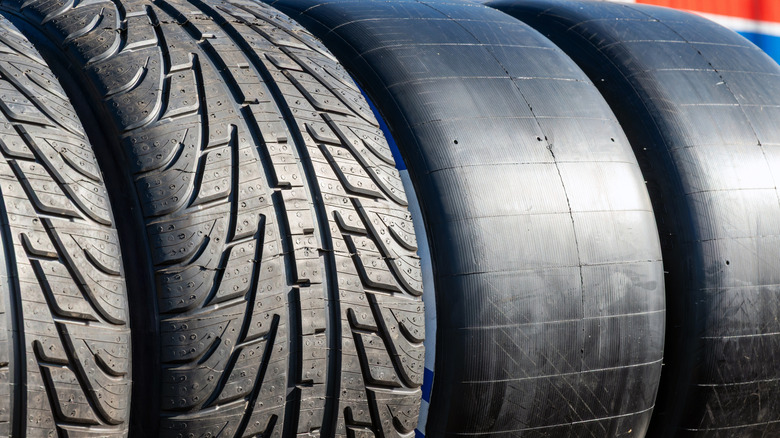
Tire prices are increasing, and drivers are looking for any way to cut costs and avoid having to purchase an expensive new set. Tire shaving could potentially save money on replacements, but only under very specific circumstances. The practice dates back to the early days before radial tires were universal, when tires would frequently be stacked with extra tread or wouldn't be perfectly round, leading to a bumpy or uneven ride. The process involves a technician using a specialized lathe to remove small amounts of rubber to make it rounder or to match an existing set.
For street cars, one common use is when a replacement tire doesn't match the partially worn tires already mounted. It can also be used to correct a tire that hasn't worn at the same rate as its counterparts and can address issues, like specific points that are higher than the rest, when balancing isn't enough. In racing, drivers or engineers will sometimes shave brand-new track tires to a shallower depth before use. Reducing the height of tread blocks can help to cut down on lateral movement when a car is cornering at high speeds, and it can also counteract heat buildup, which can lead to blistering and faster wear.
Is tire shaving safe?
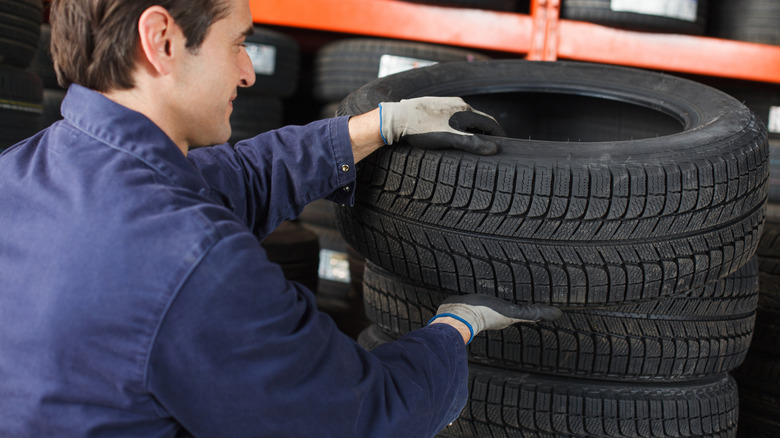
Like other tire tips that can actually make a difference, tire shaving could potentially help you get more use out of your existing set. However, it should be performed by a professional with the appropriate equipment. It's only a safe procedure when used on an undamaged tire and in such a way that enough usable tread is left for the vehicle's conditions. When a qualified technician uses precise measurements to match a single replacement tire with the rest of a set, following the manufacturer's guidance for circumference and tread depth, tire shaving can be a cash-saving measure.
Many of the major tire brands have different guidelines, but the National Highway Traffic Safety Administration puts the minimum safe tread depth at 2/32 of an inch, the point marked by federal treadwear indicators; anything less will lose traction fast and is considered unsafe. That can change in wet weather, where reduced depth can lead to hydroplaning. According to tire producer Michelin, wet-road performance falls off around the 4/32-inch mark, and tires should be replaced before that if you regularly drive in the rain.
The takeaway is that you should avoid shaving tires getting close to the replacement depth. For heavily worn tires, replacing the full set is the safer choice. You should also bear in mind that shaving will reduce the tread life of a new tire, so consider whether it's worth it to match a replacement to a worn set.