

Here's How Marines Combat Drones In The Battlefield
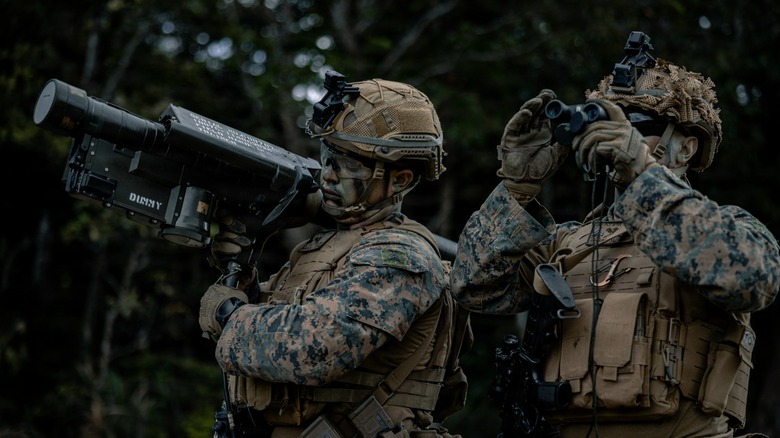
As modern warfare evolves in the 21st century, one fact has become blazingly clear: drones are here to stay. The United States military has been using weaponized drones since the early 2000s, and it's hardly the only country using that tactic. The Russo-Ukrainian War has demonstrated that combat drones aren't only effective, but they exist in numerous varieties, including drone swarms. These, in particular, pose a significant threat to combat operations for all branches, including the U.S. Marine Corps (USMC), which fights on land, at sea, and in the air.
The modern battlespace can quickly fill with drones of all kinds, and the USMC isn't waiting for the threat to show up at its door. The Corps is spending a great deal of time and money to train its personnel in combating drones, and there are more than a few tools that aid in this effort. Marines operating at the squad level are receiving new ammunition in the form of the Drone Round 5.56 L Variant.
This newly acquired type of ammunition breaks apart into five projectiles to take out drones from a safe distance and is similar to Russia's latest bullet designed to combat drones. Additionally, the USMC's new Amphibious Combat Vehicle (ACV) is utilizing an electronic warfare (EW) system capable of jamming uncrewed aerial vehicles (UAVs) in an effort to undermine their operation wherever Marines engage in combat. The jammer in question is Anduril's Pulsar-Lite, which is a small, robust system capable of countering airborne EW missions as well as standard warfighter operations in harsh, drone-threatened environments.
Drone Round's anti-drone ammunition
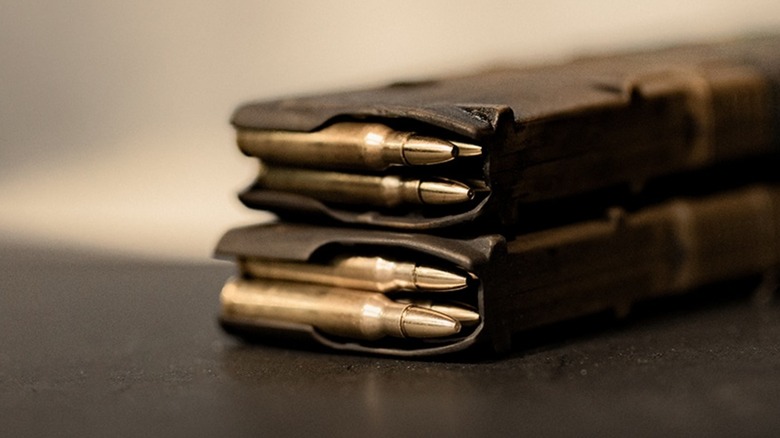
Drone Round specializes in combating drone threats with ammunition, and as of this writing, the company has two models. In July 2026, the USMC purchased 400,000 rounds of the company's 5.56 L Variant, which is capable of being fired from a Marine's M4A1 carbine and the M27 Infantry Automatic Rifle right out of the box. Because the rounds are 5.56 NATO standard, any weapon capable of firing standard 5.56 ammunition can use the new rounds, and the Corps intends to acquire another 1 million rounds in Fiscal Year 2027 (beginning October 1, 2026).
The new rounds can be fired from current weapon systems, but they don't behave like standard-issue ball ammunition. Instead, once the 5.56 L Variant is fired, the projectile breaks up into five parts that spread out, giving Marines a better chance of hitting an incoming or loitering drone. Unlike shotguns, which also fire multiple projectiles from a single round, Drone Round's ammunition is fired at twice the velocity of standard buckshot shells, at 2,200 feet per second.
Additionally, they're lethal at greater distances, up to around 330 feet, while shotguns are effective at half the distance. Drone Round's ammo can be fired via belt-fed systems or loaded into magazines, and the company can produce up to 350 million rounds every year. That gives the company the production capacity it needs to meet the USMC's requirements, but it also suggests a capability to similarly supply other branches like the U.S. Army, which contends with the same airborne threats in its operational battlespace.
The Anduril Pulsar-Lite EW system
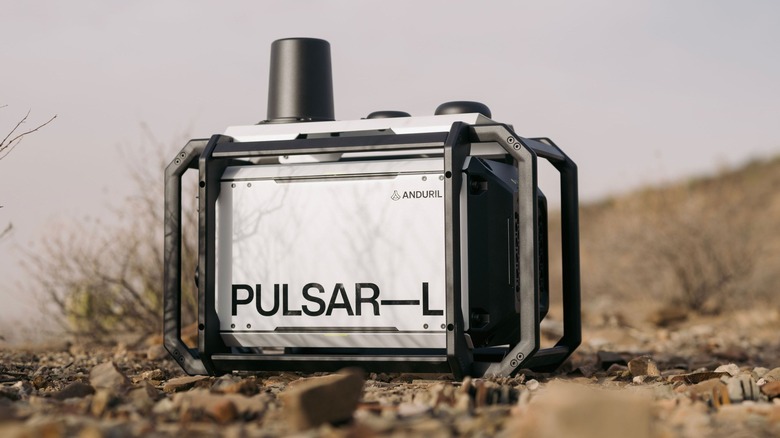
The USMC isn't content to rely on a single defense against drones, so in addition to new ammunition, the Corps is employing Anduril's Pulsar-Lite EW system. Anduril announced the system on April 29, 2025, so it's been around for a while, and the USMC is outfitting its ACVs with it. Pulsar-L features detection, ID, tracking, and defeat capabilities that are capable of deterring a wide variety of drones. It's designed to be adaptable, so it isn't limited to the types of drones it can counter, and instead engages with those abilities to better protect the Marines' battlespace.
It operates autonomously, allowing warfighters to focus on the battlespace itself, and it doesn't require intense training or specialization to operate, as Anduril engineered it to be usable by anyone. The system comes in two configurations: airborne, which is designed specifically for airborne EW operations, and expeditionary, which is built for non-airborne warfighters. The system can detect and jam drones up to two miles from its position.
It's modular and ready to go right out of the box, so it doesn't require a great deal of configuration, but is easily adaptable and upgradeable when it needs to innovate to combat emerging technology. Pulsar-L is also capable of rapid deployment, requiring only two minutes to set up the system for immediate use. It can be used long-term wherever it's needed, so the system is robust, easy to use, and theoretically capable of combating current and future threats. Using Pulsar-L and Drone Round's new ammunition puts two important tools into Marines' hands, strengthening their defensive capabilities wherever the job takes them.