

5-Cylinder Engines: Here Are The Pros & Cons
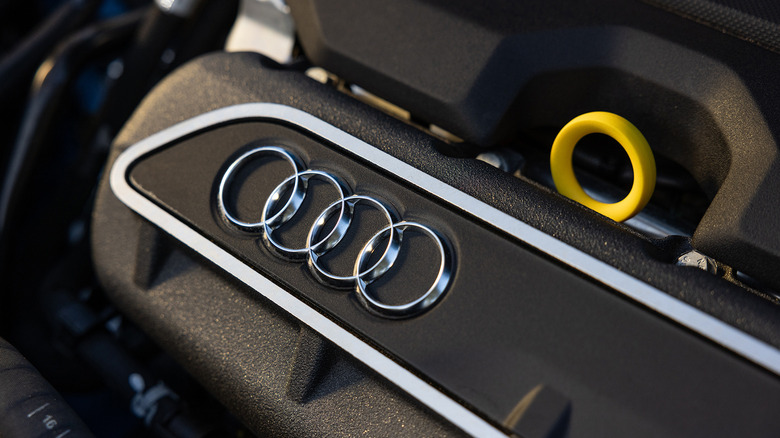
Even if you aren't a gearhead, you're probably aware that most internal combustion engines use an even number of cylinders. There are exceptions, of course, but broadly speaking, four-cylinder engines have long been the standard for smaller vehicles, while larger-displacementsix- and eight-cylinder engines are the norm in larger vehicles and performance cars.
However, odd-cylinder engines do exist, and in the modern era, they may be more common than you think. Today, the tiny three-cylinder engine is probably the most common example on the market, and is often turbocharged to compensate for its small size. Five-cylinder engines also exist, although they're quite rare in new cars. However, there have been a few mass-market five-cylinder cars sold in the American market over the last 20 years, with Audi, Volkswagen, Volvo, and General Motors among the big players who have used this engine.
So, are five-cylinder engines any good? Is the inherent uniqueness of a five-cylinder worth the trade-offs — and what are those trade-offs? Rather than getting into the intricacies of specific engines, let's take a broader look at the pros and cons of the five-cylinder engine when compared to more conventional modern four- and six-cylinder engines.
Five-cylinder pros: performance, sound, uniqueness
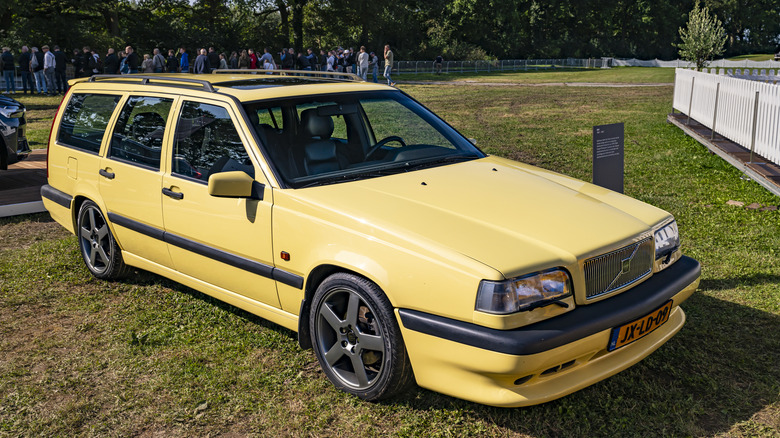
As of late 2026, there's only one new car sold in America with a five-cylinder engine, namely Audi's high-performance RS3 sedan. This is fitting, because Audi is probably the brand that's best associated with the five-cylinder engine, having raced five-cylinder engines for more than 50 years. On the mainstream side, Volkswagen used a 2.5-liter five-cylinder engine as the base engine in the American market Golf, Jetta, and Beetle back in the 2000s and 2010s. Volvo also earned a lot of acclaim for its five-cylinder engines in the 1990s.
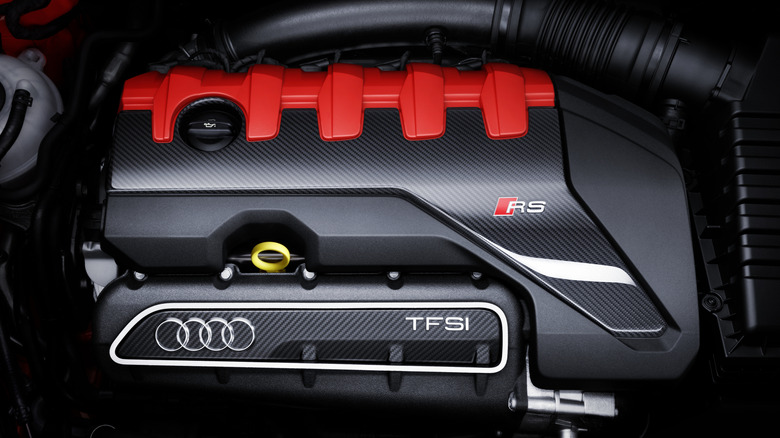
If we look at Audi's current turbocharged five-cylinder engine, performance is easily one of the engine's biggest positives. Yet in today's market, it's not so much the impressive horsepower and torque numbers that make the RS 3 stand out against the competition: it's the engine's unique character and sound, which is really unmatched by any other car.
In earlier, more mainstream applications of the five-cylinder, like the aforementioned Volkswagen models, the five-cylinder engine offered a sweet spot between four- and six-cylinder engines, offering more power than a four-pot while being smaller than a V6. Even if it wasn't quite on par with the GTI, the 2.5-powered Volkswagen Golf was a strong performer, and the five-cylinder gave the car a unique character. As turbocharging became more common, though, the naturally aspirated five-cylinder started to lose that sweet spot appeal.
Five-cylinder cons: fuel efficiency, rarity, and unfamiliarity
For the reasons we just mentioned, car enthusiasts often praise and enjoy five-cylinder engines; indeed, many gearheads are drawn to cars and engines that stand out from the norm. However, that can be a double-edged sword for mainstream buyers who value more mundane traits like ease of service and fuel efficiency.
It's not so much that five-cylinder engines are particularly bad at any of those things — VW's 2.5-liter is known for being quite durable. But their relative rarity, and a possible lack of familiarity among mechanics, could lead to more headaches than four- or six-cylinder engines. Case in point: few might even know that GM used an Atlas five-cylinder engine in vehicles like the Chevy Colorado pickup and Hummer H3 SUV, and getting parts and service for one of those today could prove troublesome.
Fuel efficiency, though, might be the biggest con, and it has probably all but eliminated the five-pot in the modern automotive market. For example, the turbocharged 1.8-liter four-cylinder that replaced the 2.5 in the 2013 Passat had better fuel economy (28 mpg combined versus 26 mpg combined) and more torque (184 lb-ft, delivered much lower in the rev range). Unfortunately, there's really nothing a five-cylinder can do that today's turbocharged four-cylinders can't do better. While Audi's five-cylinder is here to stay, we don't expect other automakers to join Audi any time soon.