

How The V12 Detroit Diesel Engine Earned Its 'Buzzin' Dozen' Nickname
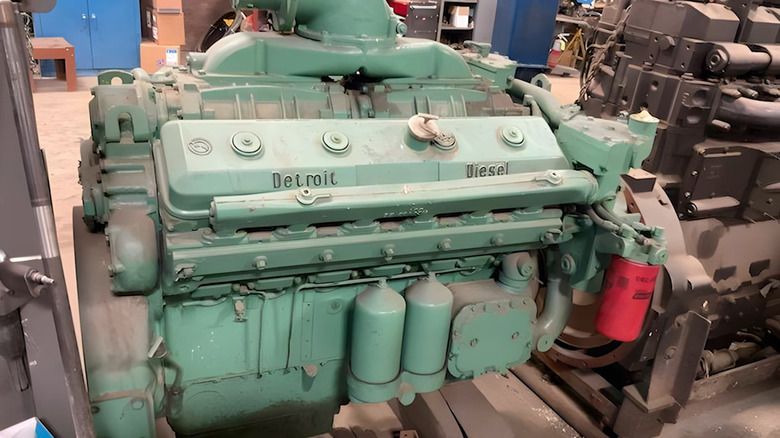
Detroit Diesel's engines have become iconic to motorheads due to their sheer size and power. Even the smallest six-cylinder option in the lineup can be up to 2,700 pounds, but the most iconic is the 12V-71, which weighed between 4,000 to 5,000 pounds. Like other iconic Detroit Diesel engines, the 12V-71 has a nickname: The "Buzzin' Dozen." The "dozen" part comes from its 12 cylinders, of course, while "buzzin" is due to its fast and high revs.
The 12V-71 is rated at up to 2,300 RPMs, though it's 650 RPMs while idle and up to 1,950 RPMs while carrying a commercial load. As you can imagine, this amount of revs per minute can be mighty loud, sounding a bit like a swarm of angry wasps as it powers up a hill. Hence, the Buzzin' Dozen.
But the 12V-71 isn't just loud and massive. Initially meant for commercials vessels and yachts when it was introduced in the 1930s, the 12-cylinder engine also found its way into semi-trucks for its incredible power. It was considered the most powerful truck engine in the 1960s, able to make up to 900 horsepower depending on the application.
Why was the Detroit 2-stroke diesel engine called Screaming Jimmy?
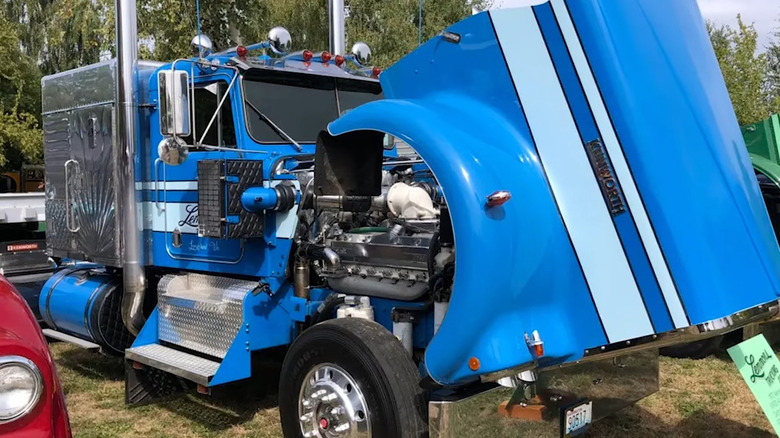
As previously expressed, gearheads have a lot of names for Detroit Diesel engines. One of the most common nicknames you'll hear is "Screaming Jimmy." This is the nickname for Detroit Diesel's lineup of two-stroke engines, including the 12V-71.
Detroit Diesel's two-stroke engines have high revs per minute, creating an easily recognizable high-pitched shriek. Two-stroke engines complete a cycle in two strokes compared to the usual four. As the cycle begins, new air enters the cylinder and old exhaust is pushed out, almost simultaneously. When the piston comes back up, it compresses the fresh air and injects fuel, creating a combustion effect. This air cycle creates that high-pitched squeal that Detroit Diesel's Series 71 two-stroke engines are known for. That explains the "screaming" part, but what about "Jimmy?" That's a phonetic nickname for General Motors, who built the motor in the 1930s.
Despite the impressive performance that Detroit Diesel's two-stroke engines had for the time, trucks now use four-stroke engines — and the brand no longer makes two-stroke engines. GM Assistant Chief Engineer Craig Marriott told Popular Mechanics that four-stroke engines provide trucks with less friction, less heat, and less weight. This, in turn, makes engines more fuel efficient and aligned with stricter emissions requirements. So, while the iconic 12V-71 is no longer in production, it's still remembered fondly, and when it is, it can be referred to by two nicknames: Screaming Jimmy and Buzzin' Dozen.