

What Would A Diesel Export Ban Actually Mean For Americans?
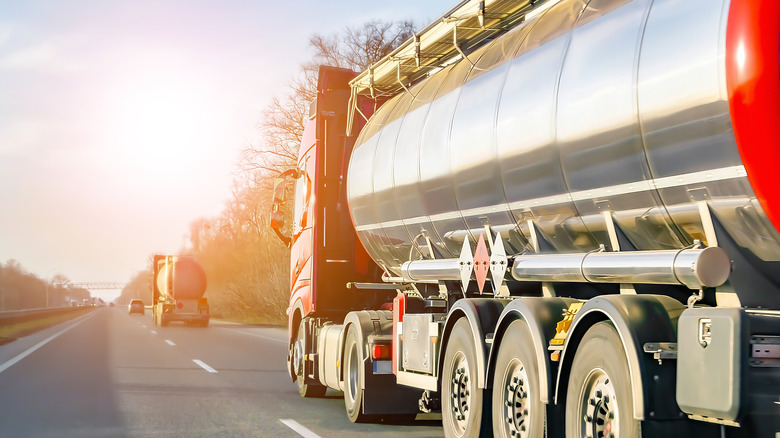
Right now, the United States pumps out around 5.3 million barrels of distillate fuels a day, which includes both diesel and home heating oil. Of that, the U.S. exports as much as 1.5 million barrels of diesel per day. The country sends it to a long list of buyers throughout South America and Europe, even managing to reach a record high of 1.6 million barrels a day in August 2026. But with the White House now considering export restrictions in an attempt to keep more for American consumption, the global supply chain is left wondering what a ban on U.S. diesel exports might actually look like for the rest of the world.
Most immediately, a diesel export ban would mean more diesel available at American fuel stations. Analysts quoted in Time say we could expect to see rising diesel prices fall quickly in the Gulf Coast and Midwest where much of the country's refining capacity is concentrated. However, it'll take time to move that diesel from the middle of the country out to the coasts. Coastal regions could face even higher prices under an export ban though. Both regions currently rely heavily on waterborne or overseas fuel imports. If there are retaliatory bans from other countries that affect those regions, and if the U.S.-refined diesel still can't get there fast enough by land, prices could surge even more.
A diesel export ban may create more problems than it'd solve
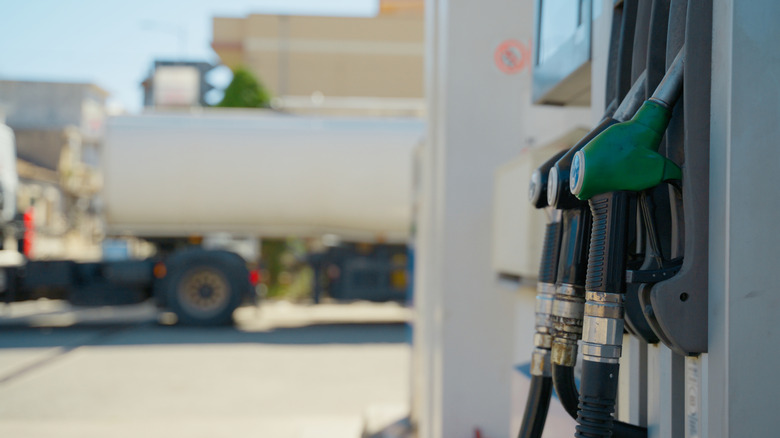
The global necessity for diesel cannot be overstated. Trucks need it to haul freight between distribution centers, stores, farms, factories and ports. Trains, ships, and heavy equipment for farming and other industrial machinery depend on the fuel, as well. Changing anything having to do with the distribution of that diesel would almost certainly have a ripple effect beyond the price a consumer sees at the pump. It'd also impact how diesel fuel is made.
Restricting exports would leave domestic refiners with more diesel than they can possibly (not to mention profitably) place into the market. After all, American refineries produce all types of fossil fuels at the same time. That'd likely mean processing less crude oil in response to a diesel export ban, which would in turn reduce production of gasoline, jet fuel, and other petroleum products. Diesel is usually more expensive than gas, but this could potentially send both prices even higher.
Meanwhile, overseas buyers would have to compete for replacement supplies after losing access to U.S. diesel. Europe, Latin America, Africa, and parts of Asia would potentially face tighter availability and higher prices of their own. In this scenario, the whole global supply chain is thrown off, everyone's clamoring for more diesel, and people still need ways to save money on gas.