

What Metal Were WWII Planes Mostly Made From?
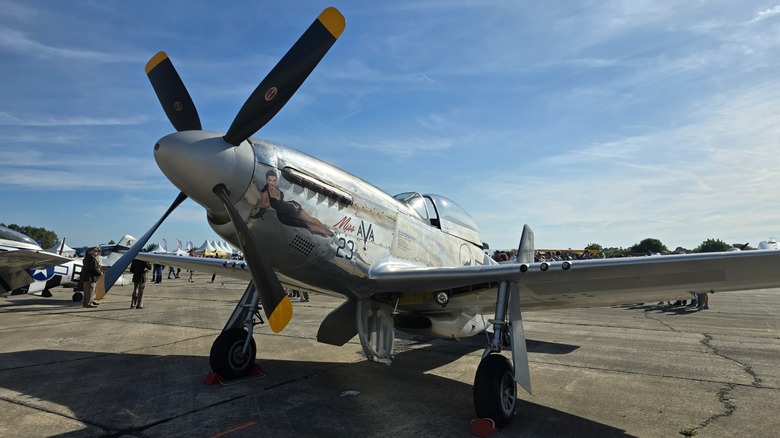
During World War II, the United States and many other nations around the world fielded all kinds of airplanes. These included fighters, bombers, transports, and gliders of all kinds. In the States, rationing and material drives had everyday Americans turning in all kinds of items so their components could be used for the war effort. This included numerous types of metals, including copper, iron, and aluminum. Many of those components found their way into new aircraft, but what exactly were they made from?
If you look at a WWII plane, you can easily see that it's not made of canvas and wood like many of the aircraft that flew during World War I. Instead, they're encased in metal, and while most were painted, some WWII airplanes maintained a shiny, chrome look, showing off their metal parts, as you can see from the pictured North American P-51 Mustang. While you might think that those planes were made primarily out of steel, that was reserved for things like warships, tanks, and weapons. Airplanes, on the other hand, were primarily made out of aluminum.
This was true during WWII, and it remains accurate today, as aluminum is considerably lighter than steel while maintaining the structural integrity needed for an aircraft to operate. Modern planes incorporate numerous composites and other components, but aluminum remains one of the most important elements in their construction. During WWII, aluminum was donated in drives to keep the Allies in the fight, though airplanes weren't made entirely out of that metal, as there were other metals and other non-metal materials.
The many components of a WWII airplane
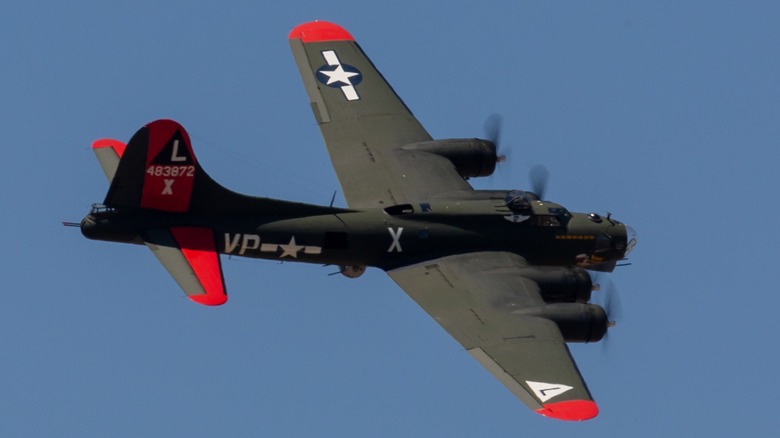
The United States produced around 296,000 aircraft from July 1940 to August 1945, and the primary metal used was aluminum. It was used to make up an aircraft's substructure and other components that kept American pilots in the air. The aluminum that went into an airplane's frame wasn't pure, as aluminum is too soft in that state for such a purpose. As a result, aluminum alloys were used to strengthen the material while keeping it as low in weight as possible.
Most often, aluminum was combined with copper to improve workability, structural strength, and corrosion resistance. Other alloys included manganese and magnesium, and these combined with aluminum to become Duralumin, which made up an aircraft's frame and covering panels. Pure aluminum was coated on the outside metal surfaces in thin layers, as it is entirely corrosion-resistant and capable of withstanding the various extremes subjected to aircraft of the period.
Planes like the pictured legendary B-17 Flying Fortress helped win WWII, and that was made possible because of aluminum alloys and the brave men who flew them into combat. Other components of WWII aircraft included steel used in the engines and other components, glass for the windows, canvas for straps, and a myriad of other ingredients that made WWII aircraft the powerful machines you can now see at museums and air shows. While aircraft construction has changed since the end of WWII, the conflict pushed engineers to produce incredible machines that helped evolve technology into what exists today.