

What Anchors Are Best For Concrete? What You Need To Know Before You Choose
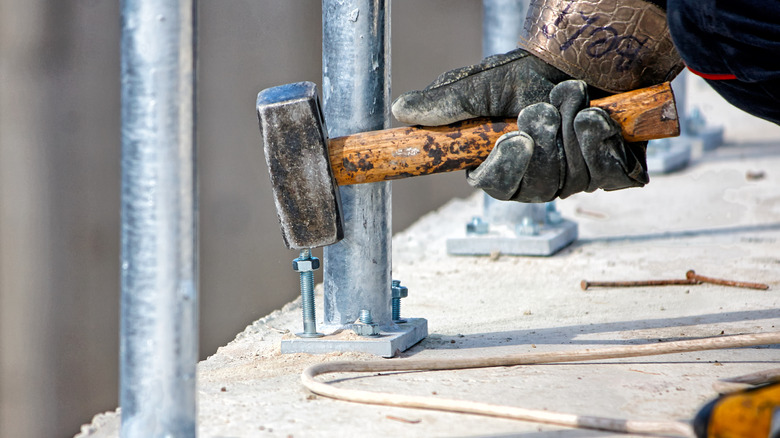
Contrary to what you might assume, the best concrete anchor is not necessarily the largest, the strongest, or the most expensive option at the hardware store. The right choice will ultimately depend on what you're fastening, how much it weighs, where it's going to be installed, and what kind of concrete you're specifically working with.
Broadly speaking, basic concrete screws are best for most light- to medium-duty jobs. For bigger jobs, wedge anchors, concrete anchor bolts, sleeve anchors, or drop-in anchors can all handle more extreme demands. If you're hanging something light on a concrete wall, nail-drive anchors are going be your best bet. Likewise, use lag shields for medium-duty concrete anchoring or fastening.
Before choosing any one of these anchor options, though, check its rated capacity and installation requirements. Load ratings can vary quite a bit based on the anchor's size, design, embedment, installation material, and location. As a rule of thumb, manufacturers say to keep your working load well below the anchor's capacity, just to be safe. Additionally, if the fastener's being pulled directly out of the concrete, tension capacity should also factor into the decision. Same for shear capacity if the load will push across the anchor.
What to keep in mind about concrete
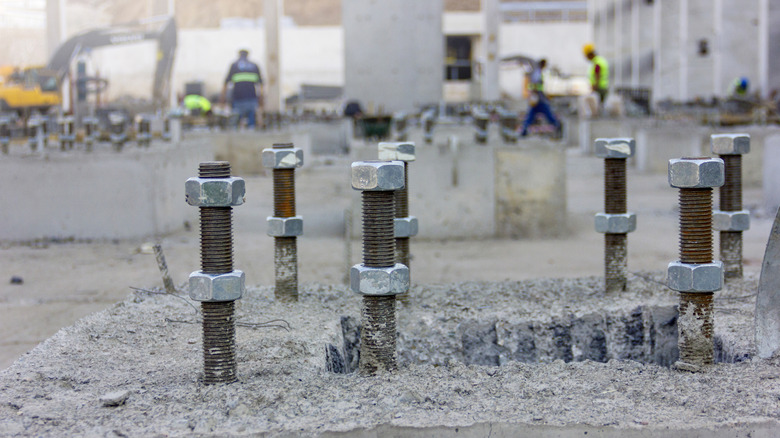
Your choice of anchor can also be affected by the actual concrete itself. Consider the curing time of concrete, which is made from water, aggregates, sand, and portland cement. Cement needs time to bind to the other ingredients as it hydrates and hardens into concrete. Before the 28-day mark, the concrete won't be finished curing, so anchoring anything into it while the concrete is still fresh is a bad idea. That means it hasn't reached its expected level of hardness, and drilling or anchoring would hurt the integrity of the concrete.
Older concrete can also be harder and, in some cases, more abrasive. That'll certainly make drilling through it more difficult. Thickness matters, too; every concrete anchor has a minimum embedment requirement, and larger-diameter anchors generally need deeper embedment. Reinforcing steel can also be a problem, and if rebar blocks where you want to put the anchor, you'll either need to move to a different spot or get a specialized bit to pass through it. Overall, there's a lot to consider when it comes to concrete anchors, and doing proper research can prevent potential problems.