

Want To Stop Your Brakes From Sticking? This May Be A Solution
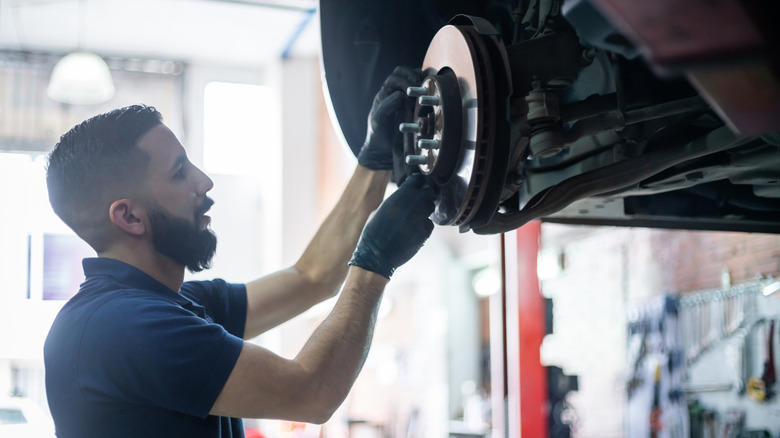
You don't think about your brakes when they work as intended — right up until the day they start acting strange. When they inevitably do, it's rarely a minor gripe since the brakes are the single most important safety feature of any car. Few things illustrate that better than brakes that stick, and there can be a ton of reasons why your brakes are locking up.
It's a common complaint, and it can stem from any one of several unrelated causes. So what does it actually mean? A sticking brake is one that stays partly clamped after you lift off the pedal instead of releasing fully. The result — nonstop friction where there should be none — quickly turns into heat and accelerated wear.
This can also lead to poor economy, difficulties accelerating, weird smells, or the car pulling to one side. In most cases, the trouble sits at the caliper and a clamp that squeezes the pads against the rotor at each of your wheels. When one caliper won't let go, the reasons tend to be unglamorous: rust or dirt on the brake slide pins, a piston that has seized, deteriorating rubber, or corrosion creeping in from old brake fluid.
Inactivity plays a part too, since a car that sits for a long time can develop stuck brakes that clear on their own after a short drive. We'll unpack each of these causes on the next slide, then walk through the maintenance that keeps them from ever showing up.
Getting a stuck brake moving again
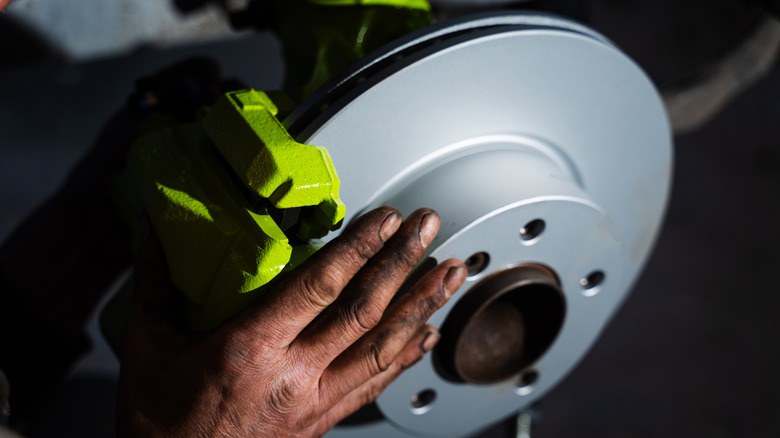
First, pin down which corner is causing the problem since it's rarely about all four. The best thing to do is to take a short leisurely drive, then feel near each wheel — the one throwing off far more heat is the likely offender. Also look for rust, grime, or lopsided pad wear which usually confirms it. A car that tugs to one side under braking points to a caliper stuck on that side alone.
If it's just a car left parked too long, you may need no tools at all: easing along gently and tapping the brakes a few times often frees the milder cases on its own. When dirt or old rubber is gumming things up, the cure is usually low-effort. A torn piston or slider boot is a classic trigger — as 8020 Automotive puts it, "if that boot goes bad, you can get dirt in there."
Often clearing out the caked-on grime and relubricating the parts is all it takes. Going deeper means stripping the caliper down, clearing away any corrosion and swapping in fresh rubber so moisture stays out, then packing silicone-based lubricant onto the slider pins. A seized piston is the bigger job — that piston is what pushes the pad against the rotor when you brake, so when it won't move, the fix is to rebuild or replace the caliper, then flush the old fluid and bleed the system.
Kits run under $10; a caliper run anywhere from $35 to several hundred, and it's best fitted in pairs. Worn pads or damaged hardware just need replacing. Hydraulic faults like a bad master cylinder or blocked lines are best left to a professional — and don't keep driving on it in the meantime if you don't have to.
How to keep your brakes from sticking
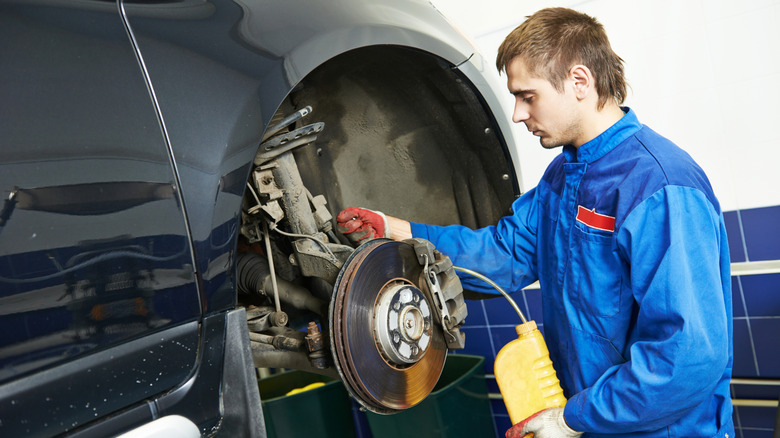
The good news is that almost all of these problems can be solved proactively. All you need to do is keep up with your maintenance and take care of minor issues as they come. A caliper only slides freely when its pins are moving freely, the fluid is topped up and in good shape, and if the pads are fitted correctly. Make sure to stay on top of these, and a good way of doing so is simply building a rhythm around it.
A smart baseline is a brake check at every oil change, and twice a year even when you aren't due for one. The seasonal swap from winter to summer tires is a natural moment to inspect the brakes, suspension, and drivetrain while the wheels are already off. Refresh the brake fluid every couple of years so moisture never gets the chance to corrode the caliper from within.
You can always check the owner's manual to see specific maintenance recommendations by your manufacturer. Cars like being clean, and keeping the brakes clean matters a lot. Road salt, grime, and debris all eat away at brake parts, so a regular wash earns its keep. A little lubrication helps too: give the handbrake cable an occasional treatment so nothing seizes up back there.
Spending a bit more on quality pads and fluid, and dealing with squeaks or pulling the moment they show up rounds out the healthy routine. Lastly, when the pads themselves reach the end of the road — generally somewhere between 25,000 and 60,000 miles depending on how and where you drive — it's worth knowing whether you actually need to replace all four at once or just the set that's worn. Stay ahead of the small stuff and the big, expensive failures mostly take care of themselves.