

What Is The Thinnest Grade Motor Oil And Which Engines Can Use It?
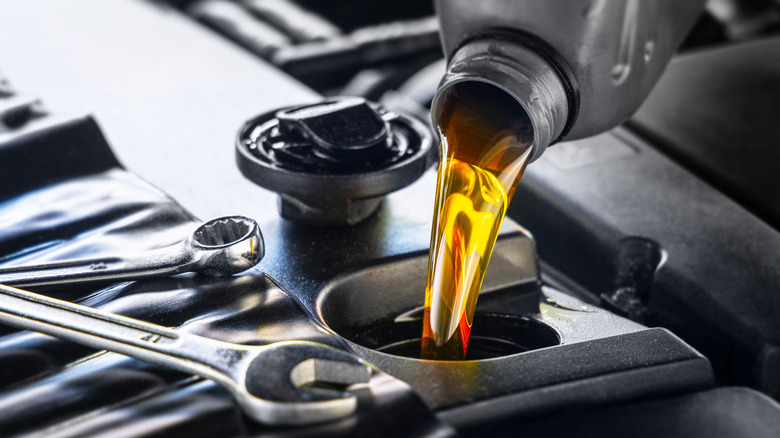
Motor oil is specified by its composition (synthetic or not) and its viscosity. Its viscosity is represented by the numbers you see on the container, like 5W-30. Generally speaking, the lower the numbers, the less viscous or less thick the oil is.
So what's the thinnest you can go? The thinnest oil you can buy as of mid-2026 is 0W-8, and it is currently only used in a handful of Japanese cars designed for fuel efficiency. These include hybrids from Mazda and Toyota, some of which, like the Toyota Yaris Hybrid and Mazda2 Hybrid, are not available in North America.
Of course, there are also a few American-market cars that use 0W-8. These will primarily be Toyota hybrids, such as the Toyota Crown and Toyota Grand Highlander. Some of the automaker's other hybrids, like the great-value Toyota Camry, use a slightly thicker 0W-16 oil, which is still extremely low-viscosity in the grand scheme of things.
Specialized for efficiency

The entire point of 0W-8 oil is to maximize engine efficiency. It's pretty straightforward, really: thinner oil means that the engine just doesn't have to work as hard to pump it around the different nooks and crannies of the engine to lubricate all of the vital parts. It's also very important to note that these Toyota and Mazda engines are specifically designed to use very thin oil. It's not a magic potion that can make an engine run more efficiently.
Additionally, a lot of the time, the oil may be hard to find, requiring a trip to the dealership to get oil or seeking out one of the few manufacturers that actually supply the stuff. Eneos, Liqui-Moly, Toyota, and Mobil-1 are a few makers to look for.
It's worth noting that Toyota has accounted for these availability issues. The owner's manual for the Toyota Grand Highlander Hybrid, for example, notes that owners can use 0W-16 for one oil change interval before going back to 0W-8. The Camry, similarly, lets owners use 0W-20 if owners can't source 0W-16.