

First-Ever Medical X-Rays In Space Could 'Change The Game' For Astronauts' Health
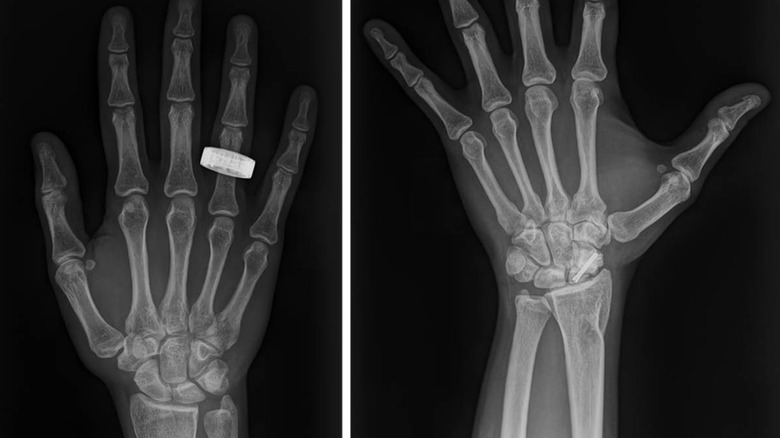
Until now, there really hasn't been a lot of reliable medical imaging options for monitoring astronaut health during spaceflight. For over four decades, spaceflight missions relied on ultrasounds alone, but this has proven limited as flights have become longer and farther from Earth. Now, a team of scientists has revealed the promising results of the first diagnostic X-rays taken during an orbital spaceflight.
In a press release from the Radiological Society of North America (RSNA), Lead Researcher and Assistant Professor of Aerospace Medicine at Mayo Clinic, Sheyna Gifford, M.D said it's always been a "dream" to have more than one way of diagnosing illnesses and injuries in space. "X-rays are fast, easy, and diagnostically valuable."
In the past, X-ray machines took up too much room and used too much power to be considered for space flights. New technology has changed this — you can even find portable X-ray machines at sports games and low-resource areas since they run on solar energy. Why not in space? Gifford's team took X-ray images of a hand during a simulated space flight in 2022 to show it was possible to get a clear image in microgravity — this prompted the next phase of testing in orbit.
How X-rays were studied in space
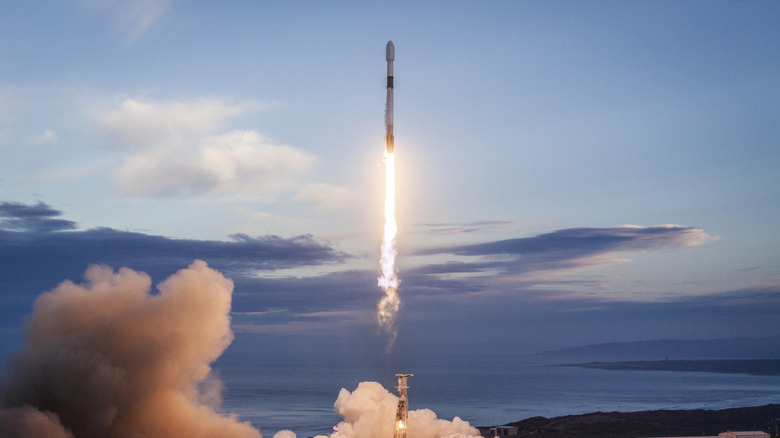
The X-ray study happened on board the Fram2 mission, which was back in March 2025. The mission used a SpaceX Falcon 9 rocket, which reached about 280 miles above sea level and remained in orbit for three days and 14 hours. In the study, X-rays were taken before and during the flight by the crew members.
The goal was to take five radiographs per crew member in-flight, but time constraints limited the radiographs to one abdomen, one pelvis, and two chests, as well as some hands. During the imaging, crew members held the X-ray devices without the need for any clamps or anchors — although they later noted that a better way to secure the device would have been helpful.
Still, it appeared to be an overall simple task for the trained crew. Commander Chun Wang discussed his time in space on X, noting that the crew felt "refreshed" by the second morning in space, allowing them to eat breakfast, "take a few X-ray images," and then check out the South Pole through the cupola (a dome-shaped observation module).
The results of the first X-rays in space
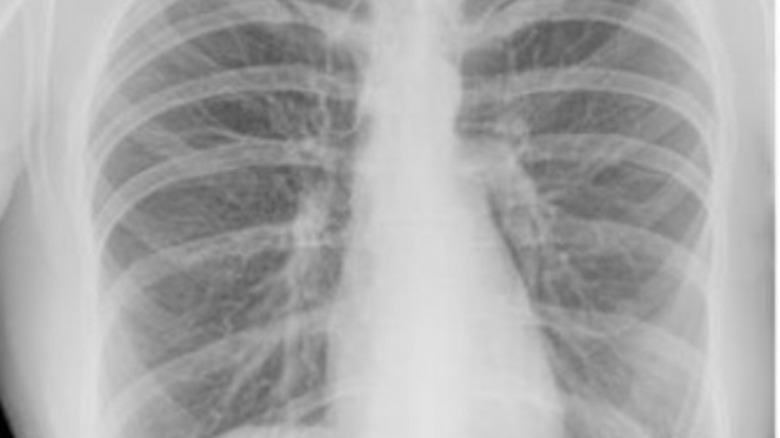
After the crew took the in-flight X-rays, the images were evaluated by three radiologists for quality, resolution, contrast, and clarity. They found the in-flight X-rays were the same quality as the ones captured on land, although positioning was a little worse in-flight. Still, all images were considered diagnostic quality.
"A spaceflight-ready radiography system would have profound implications not only for crew health but also for mission-critical nonmedical tasks," Dr. Gifford said. X-rays would provide another way to monitor health and also study electronics and space suits, which is valuable as missions grow longer. They even see X-rays being used to analyze damaged satellites and the surface of the moon — not something that's entirely unheard of for NASA.
X-rays have definitely come a long way since the tech was accidentally discovered in 1895. However, the X-ray system is not ready just yet. Dr. Gifford noted that more studies are needed to ensure consistent quality. The team is also hoping to reduce the size of the system and improve its durability. She added, "Disseminating autonomous miniature X-ray systems around the globe could also change the game in public health. The sky is not the limit when it comes to X-rays in space and here on Earth."