

What Makes Gear Oil Smell So Different From Motor Oil?
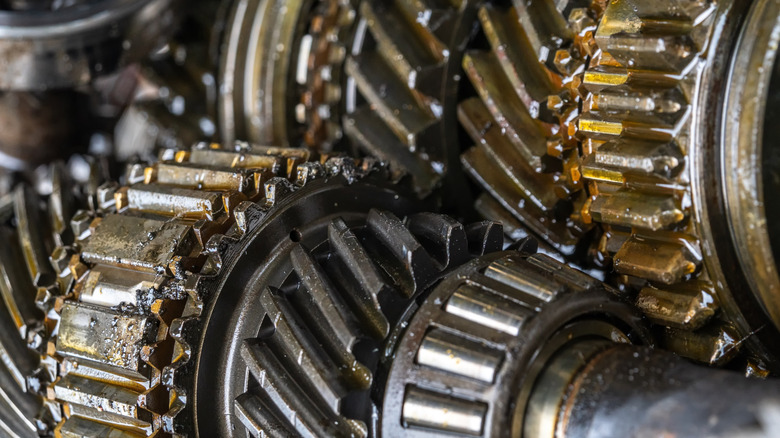
Gear oil reeks, and that's not just being said for dramatic effect. It has this unmistakable odor that you just won't find with something like motor oil. You see, unlike motor oil, which is used to lubricate, cool, and clean your engine, gear oil is used to protect all those internal gears under extreme pressure and heavy loads. The performance requirements are different, and that calls for special additives — the very ones that give gear oil its distinctive smell.
It's all about gear oil's chemical makeup. Every lubricant from gear oil to motor oil starts with a base. And each base, whether that be a mineral- or synthetic-based oil, carries its own natural petroleum or chemical aroma. But unlike the relatively inoffensive smell of motor oil, gear oil smells worse because of its more significant amount of additives. These additives help the oil better prevent wear and other damage in high-pressure drivetrain components such as differentials and manual transmissions. But they also contain smelly sulfur- or phosphorus-based compounds that help create a better protective layer on gear surfaces during operation.
Why gear oil uses such smelly additives
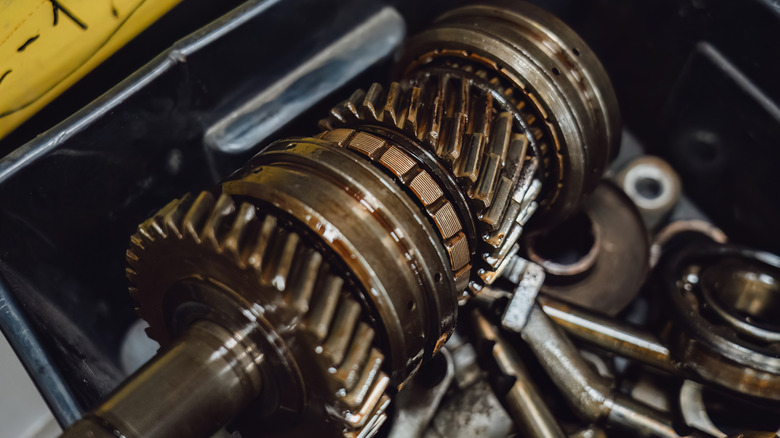
It's common knowledge that propane and natural gases get their bad smells added to them for safety reasons. That way, you can smell if there's a leak somewhere. But with gear oil, those smelly additives are actually more functional than anything. Even under normal wear, gears risk boundary lubrication, a condition where the protective oil film between moving metal surfaces becomes extremely thin. Those awful-smelling additives just so happen to come with extreme pressure and anti-wear benefits. So, no, the gear oil hasn't gone bad or started leaking; that smell is simply a byproduct of its formulation.
New gear oil naturally has a pretty pronounced odor as it is, but standard operating conditions can make it even more pungent (not to mention the passage of time). High temperatures generated inside gear assemblies speed up the oil's oxidation as well as its chemical breakdown. The same thing happens to engine oil. That produces even more volatile compounds that, in turn, intensify the rotten egg smell. Contaminants also get introduced during normal operation (such as moisture, dust, and microscopic metal particles). These can just as easily mess with the oil's chemistry and make the smell even worse. But still, it doesn't necessarily mean something's wrong with the oil. You should only really take it as a cause for concern if there's a sudden or dramatic change in smell. Otherwise, it's just something to be expected.