

Not The Toyota Corolla Or Honda Civic: These Are IIHS' Safest Small Cars In 2026
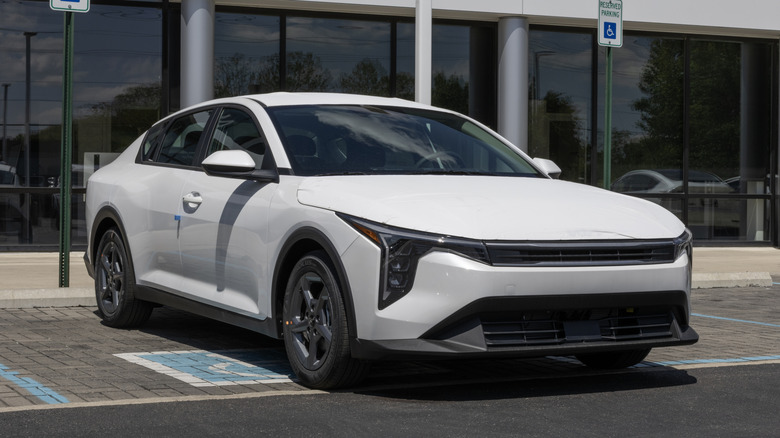
The Insurance Institute for Highway Safety (IIHS) gives some valuable insight on what small vehicles drivers should avoid because of low safety ratings. But when it comes to which ones are the most secure overall, the list actually doesn't include popular models like the Corolla. In fact, out of a list of six top safety picks, the Prius 4-door hatchback is the only Toyota included.
Also on the list of IIHS's Top Safety Pick+ is the Kia K4 4-door sedan, the Nissan Sentra 4-door sedan, and the Subaru Crosstrek Hybrid 4-door wagon. Mazda rounds out the list of 6 with the cheapest 2026 Mazda model you can buy, the Mazda 3 4-door sedan. The Mazda 3 4-door hatchback is also on the list. All the vehicles rated are for the 2026 model year, with the Top Pick+ list itself dating back to 2013.
In order to earn the Top Safety Pick+ ranking, vehicles must perform well in several IIHS crash test evaluations, including the small overlap front, moderate overlap front, and side crash test as well. Vehicles must also have pedestrian front crash prevention, vehicle-to-vehicle front crash prevention systems, and either acceptable or good-rated headlights. IIHS's awards identify the safest choices within each vehicle size category, though larger and heavier vehicles could potentially give more protection in a crash.
Understanding the role of vehicle size
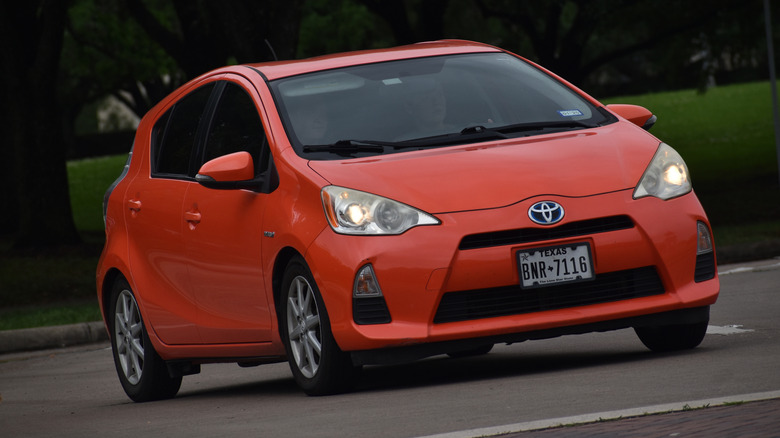
Several entries from IIHS's list of the safest small vehicles for model year 2026 also appeared on the previous year's list. That includes the Kia K4, Mazda 3 sedan and hatchback, as well as the Toyota Prius. In fact, the Prius also scored well in Consumer Reports' (CR) road test, with testers noting that the car delivered confident and secure handling through tight corners. CR also pointed out the Prius' standard safety features such as automatic emergency braking, blind spot warning, and lane keeping assistance, among others.
But even though some small vehicles rate high in safety and can perform well in road tests, that does not mean they are inherently safer than larger vehicles. Larger and heavier vehicles can typically provide more protection in crashes because they have more space between the front of the vehicle and the passenger area. This allows a vehicle's front end to absorb more impact forces and thus reduce the forces passengers experience during a collision.
However, many of today's larger vehicles no longer pose the same risk to smaller cars that they once did. Automakers have redesigned the front ends of many SUVs and pickup trucks so that they better align with the crumple zones of smaller vehicles. This makes larger vehicles less likely to ride up over the front of a car during a crash. Additionally, adding more weight to an already larger-than-average vehicle generally offers little, if any, added protection to its passengers.