

What Does The Check Mark Triangle On Your Electronics Mean?
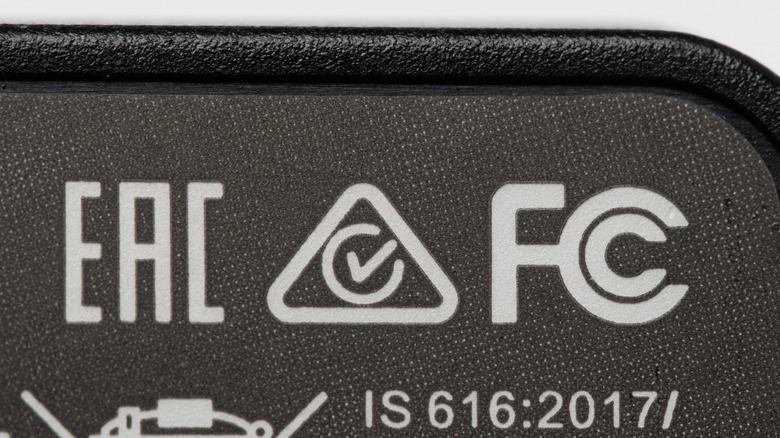
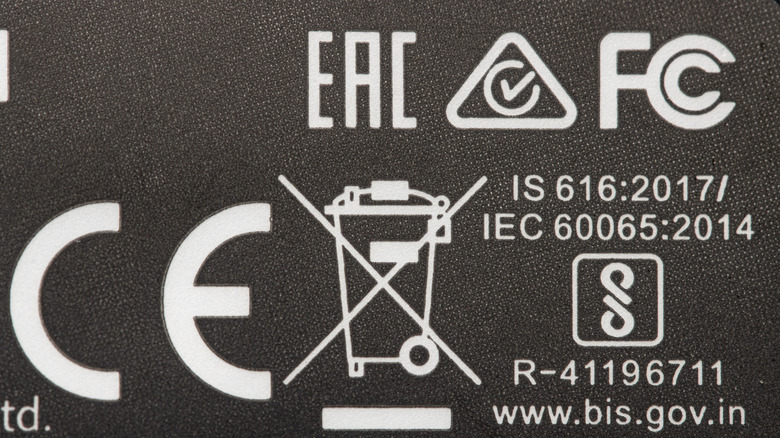
Some of the most common consumer electronic items around — like a phone charger or earbuds — often have this whole crowd of tiny logos at the bottom. Somewhere in that crowd, typically right next to the model number, you'd also spot a triangle with a little check mark inside. This one is the RCM, short for Regulatory Compliance Mark, which indicates compliance with regulations in Australia and New Zealand.
If a gadget's wearing it, it means it's cleared as safe to sell in those regions after meeting the standards for electrical and wireless safety there. An example of an electrical safety standard is that the casing and internal insulation keep dangerous voltage off your fingers. Meanwhile, the wireless part is EMC, which is short for electromagnetic compatibility. It means the device keeps its electrical noise quiet enough that it doesn't scramble signals, much like how certain things can interfere with your Wi-Fi signal.
Now, if you are wondering why your device sold in the USA has an Australian stamp on it, the main reason is that manufacturers rarely build separate units for every country since that'd be expensive. They simply load a product up with every mark it might ever need and send that single version everywhere. It also means that the tick carries no weight in the USA.
Who can use the mark and how it came to be
Governing the triangle check is the Australian Communications and Media Authority, which holds it as a registered trademark. Since it's a trademark, a company can't simply print it on a whim; they must register on the national compliance database first. But despite this bit of red tape, the symbol is fairly common worldwide, even though it hasn't been around for long. It only became the single mandatory mark on March 1, 2016. Before that, two different marks did the job.
One was the C-Tick, which handled the interference and radio side of things. The other was the A-Tick, which covered telephone and telecom gear. It was a bit of a mess, since a single product could require both of these marks, along with a separate approval number that had to be tracked. It also meant that the consumer had to look for more than one mark to check a product's safety. However, the mark isn't an automatic badge of quality, since it's still the maker's own declaration that their product meets the rules. This basically puts it in the same league as the CE mark, which carries its own meaning.
If you're living in the USA, it's better to look at badges tied to your country, since the USA has its own set. One of them is the FCC mark, which covers the radio-frequency side by ensuring that a device's emissions stay within set limits. Meanwhile, electrical safety is verified by the UL or ETL marks, earned after the product is properly tested by a private lab.