

This All-Electric Plane Flies For An Hour On Just $18 Of Energy
When the Wright brothers first took flight over the sands of Kill Devil Hills on the Outer Banks of North Carolina in 1903, it's likely they could scarcely imagine how air travel would develop over the next 100-plus years. From transatlantic flights to commercial jet airliners to supersonic marvels, manned flight has evolved to the point of taking us to the moon and back. Now the aviation industry is exploring brand-new technology to help shift away from fossil fuels. Instead of the deafening roar of a jet engine, imagine the quiet hum of an electric motor, at least on short-haul flights.
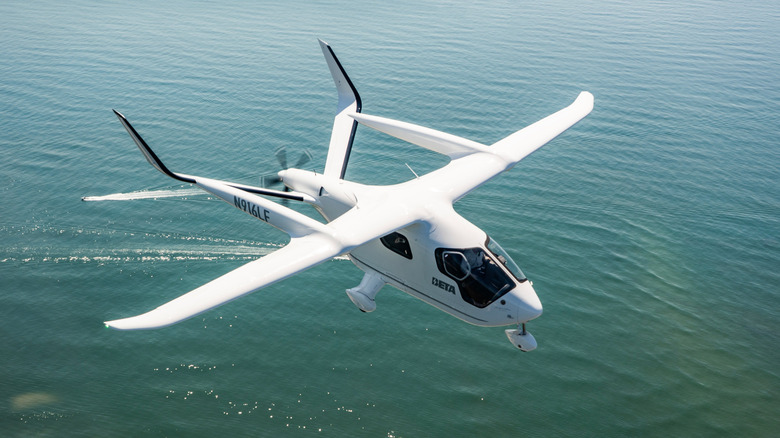
This vision of the future is closer than you may think. A company called BETA Technologies recently took ABC News transportation correspondent Gio Benitez on a flight in its battery-powered aircraft. The aeronautics company has two all-electric planes under development: one that can take off and land on a runway like a conventional aircraft, and one that is capable of vertical takeoff and landing, like a helicopter. Both planes have a charge time of about one hour. BETA estimates that the conventional aircraft costs about $18 per flight hour in energy, while the plane capable of vertical takeoff costs about $28 per flight hour. Both planes can fly at about 176 mph, and the conventional model can go more than 300 miles on a single charge. While they only have a passenger capacity of five people, these planes could eventually change the landscape for deliveries, medical transport, military flights, and more.
The electric future of flight
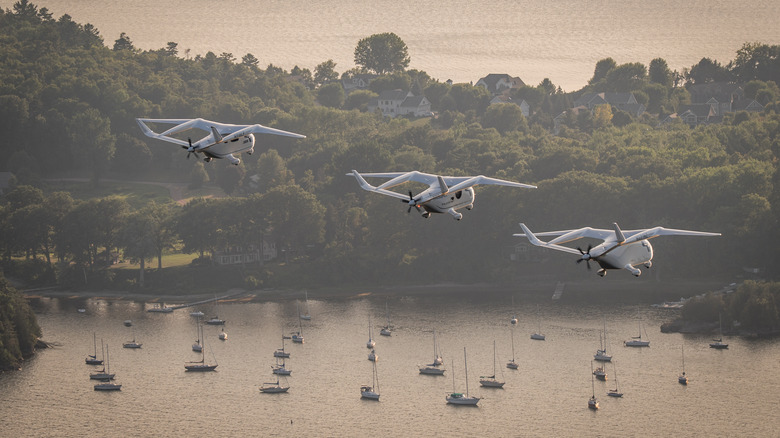
Many startups never make it off the ground, but BETA Technologies says it already has an established customer base and orders for more than 800 aircraft. Its partners include UPS, Air New Zealand, GE Aerospace, and even the United States Air Force. In addition to making flights more sustainable, BETA Technologies is also focused on safety. The model capable of vertical takeoff has multiple motors. If one fails, the plane can continue flying. The other model has only one electric motor but is segmented to provide the same redundancy as a system with more than one engine.
We may see these marvels in the sky sooner than you think. The company can build one plane per day at its factory in Vermont, and final tests are scheduled for September 2026. Both models operate at significantly lower cost than traditional aircraft and helicopters, and BETA offers customized training programs for pilots. The company has qualified more than 30 pilots, trained additional pilots and maintainers from the U.S. Air Force, U.S. Army, UPS, and more. Beyond delivery, medical, and military uses, the company also foresees a future where electric planes are used like ride-sharing services. BETA is certainly not alone in the electric aviation field. There are many players, including Pipistrel, Joby Aviation, Ametek Inc., Airbus, and Boeing.