

Mile Marker Signs Are Way More Important Than You Probably Realize
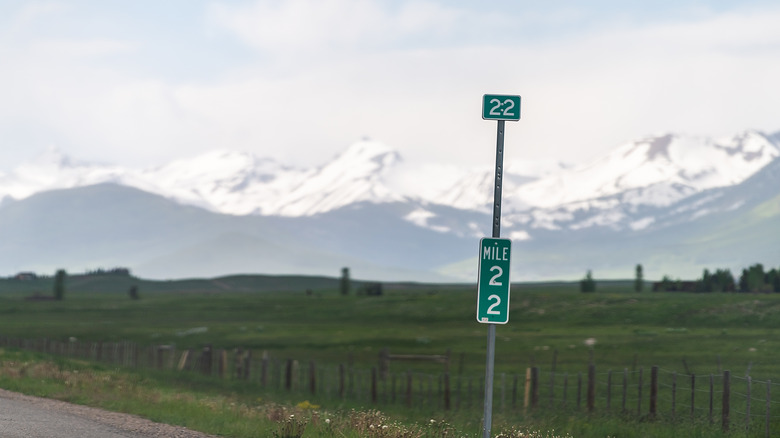
You probably pass by dozens (if not hundreds) of those skinny signs whenver you hit the highway. Like other highway distance signs, they're easy to overlook. And yet, they can actually be some of the most important things on the road if something goes wrong. We've been spoiled by smartphone navigation and in-car GPS systems, but mile marker signs are still one of the fastest and most reliable ways to pinpoint your exact location on the road. Because the signs are placed at regular and precise intervals, they also help travelers know how far they've traveled, how much farther they have to go, and where they are in relation to exits or services.
Whether reporting a crash, a disabled vehicle, or calling about some other hazardous road conditions, a mile marker can also tell emergency dispatchers and roadside assistance crews where to go to help. They're especially useful in rural areas or long stretches of highway where there aren't many recognizable landmarks and you need to call AAA for service, or other emergency authorities. Whatever the case, mile markers can be an immediate frame of reference that doesn't rely on any technology whatsoever.
Common uses for mile markers
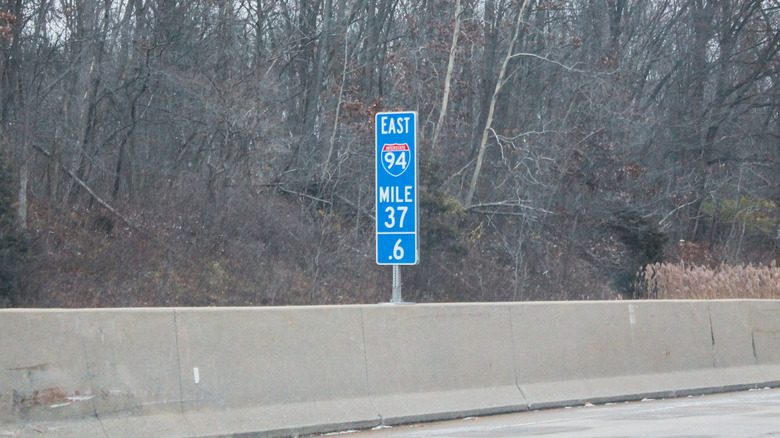
Depending on the state, mile markers are placed either every mile or every tenth of a mile. They use large, easy-to-read numbers to indicate your precise position along a specific highway. While their exact appearance will vary between blue and green, the signs are nevertheless a standardized reference point. In other words, motorists, emergency responders, and highway agencies alike can all understand what you're talking about. There are no confusing traffic signs to decipher.
Emergency dispatchers can use them to direct police officers, firefighters, paramedics, and tow trucks to specific locations. Otherwise, without an accurate reference, responders would have to search miles of roadway before reaching someone in need. That's not going to work in an emergency situation where every minute matters. Highway departments can also use mile markers to document accidents, road closures, construction projects, and maintenance work. That way, crews can communicate exact locations without relying on arbitrary directions.
For drivers, the best thing to do is to pay attention to mile markers before you need them. If your vehicle breaks down or you're involved in an accident, look for the nearest marker before calling for help. If you see someone else in an emergency, sharing the highway number, direction of travel, and closest mile marker can give first responders the accurate location they need to roll out.