

Are Carbon Fiber Car Parts Safe To Paint? What You Need To Know
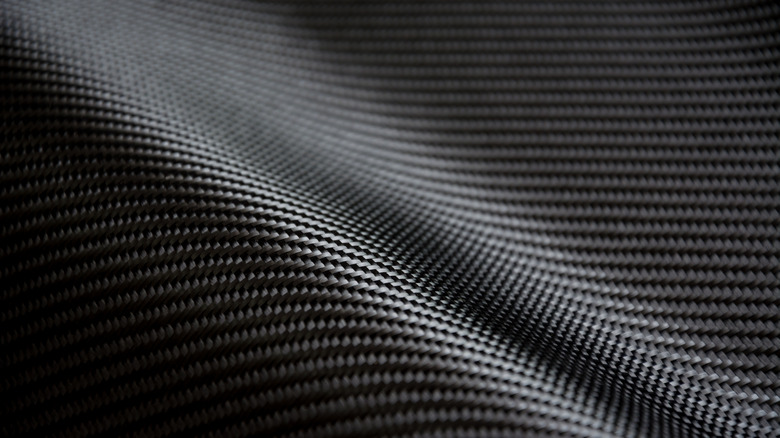
Carbon fiber is one of the greatest innovations to ever grace the world of cars. Originally reserved for the highest end supercars back in the day, with pioneers like the Ferrari F40 and the Pagani Zonda, carbon fiber has slowly made its way to more affordable cars; the BMW i3 famously used carbon fiber in its construction, and the final iteration of the Mazda RX-8 also used it in its drivetrain.
The aesthetic of unpainted carbon fiber looks very cool, and it further contributes to weight saving due to the lack of paint. But if you don't like the look, you can actually paint carbon fiber parts but the process is a bit more involved.
Like any paint job, sanding is a part of the process, but using the wrong grit might damage the fibers, which in turn, ruin the durability. Carbon fiber parts should also be treated with an epoxy resin, as the paint never actually bonds to the fibers, it can only bond to the resin itself. Here's what's involved.
Painting carbon fiber parts yourself
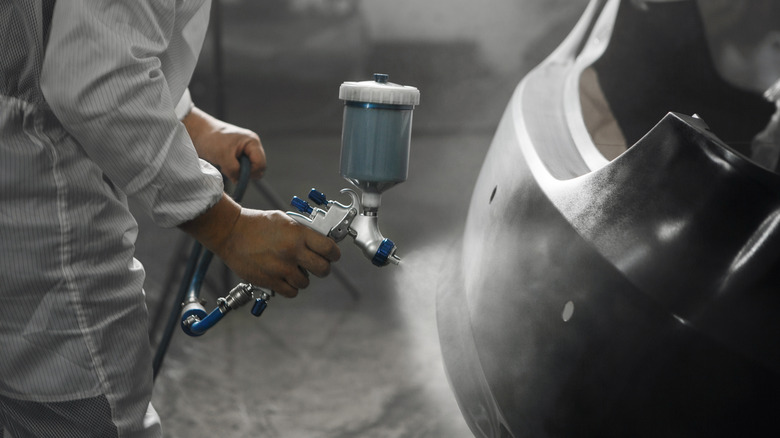
You just unpackaged your fresh carbon fiber hood or quarterpanel, and now it's time to paint. Of course, you can get this done by professionals, but if you have the necessary equipment and knowledge at home, there are several key steps. First, give the part a good clean with a mild detergent and water, and then with some isopropyl alcohol, and make sure you let it dry. Then comes sanding — use a very mild sandpaper, as the wrong grit will damage the fibers. Most experts suggest lightly wet sanding with 400-600 grit sandpaper.
Then, you'll want to make sure you're using a specific epoxy that's designed for composite materials — the stuff out of the can or any other type of universal primer won't cut it. Two to three coats should do the job, and you should always pay attention to the flash (dry) times, which are generally five to 10 minutes per coat.
Finally, you can apply your choice of paint. You can either do an OEM paint match, which will cover up the carbon fiber's weave, or a tinted clear, which makes the weave more visible. Apply the base coat, while holding a paint gun six to eight inches away from the surface, and repeat two to three times, going for a thin coat each time. As the resin that covers carbon fiber parts is sensitive to UV light, you'll also need a good clear coat. If you want, you can also give it a machine polish, or a wet sand with high grit sandpaper to finish the job.