

AI-Assisted Drones Are Helping To Stop Shark Attacks Before They Happen
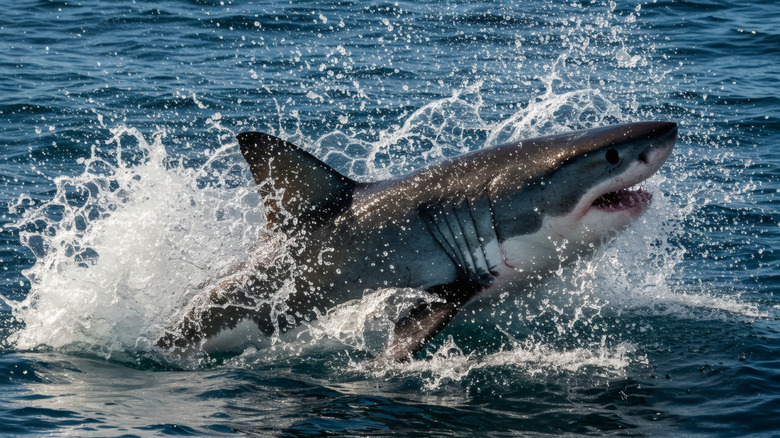
Ever since Steven Spielberg released "Jaws" in 1975, people around the globe have been wary of venturing back into the water. Of course, the film isn't a true story, and vengeful, "Jaws"-sized great white sharks aren't in the habit of terrorizing beach communities. To be clear, shark attacks are incredibly rare, but given the power and size of many species, even a curious bite can be fatal or disfiguring. Because of this, new tools are periodically explored to assist in reducing the number of human-shark interactions.
One new way is by using AI-assisted drones. SharkEye, a research project that uses AI to detect sharks, uses the information they gather not only to learn more about shark biology but to identify them in human-occupied areas and increase safety. No longer do wary surfers have to look for the telltale signs of a shark's dorsal fin breaking the water when a drone can hover over an area and spot a shark from afar.
Here's how it works: SharkEye routinely flies drones over an area to capture footage and identify sharks. They then use machine learning models to detect gigantic great white sharks and other species off California's coast, informing public safety officials of their whereabouts. This type of technology may very well be the way of the future in both the study of sharks and the protection of the world's beachgoers. SharkEye is only one of many similar projects working to stop shark attacks long before they have the opportunity to occur.
AI-assisted drones have already saved some people from shark attacks
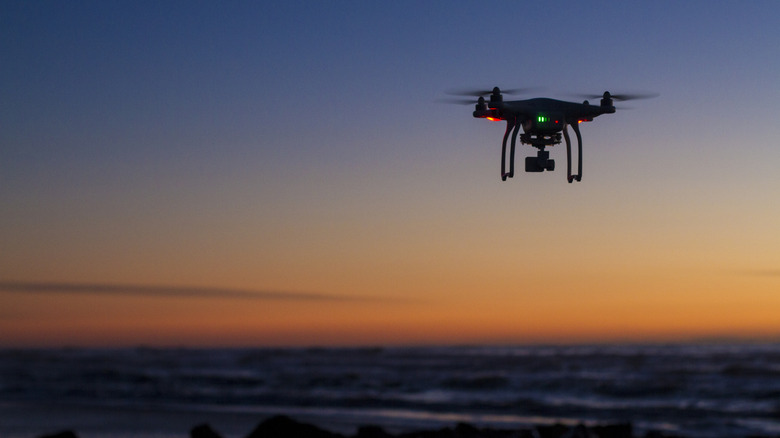
Sharks aren't interested in eating humans. In the case that they do bite, it is usually only after they are provoked or curious. Still, since shark bites often cause serious trauma, organizations like SharkSpotter set the goal of preventing them altogether. As the brainchild of University of Technology Sydney (UTS) researchers, this shark detection system managed to save two people's lives during its first year of operation.
SharkSpotter uses artificial intelligence and machine learning to identify and build statistics on shark sightings, informing the public of their activities. It has a 90% accuracy rate in successfully detecting sharks, which it can distinguish from other sea life, including dolphins. It also identifies boats, surfers, swimmers, and a variety of objects in the water. As a drone flies over an area and collects its data, it is livestreamed to a control station, where the public can access it. They can then make the determination as to whether or not the water needs to be evacuated.
As of this writing, the system isn't autonomous and it requires human operators. In the future, swarms of similar drones could take over the process entirely, though that may be several years in the future. The technology and methodology of using AI-assisted drones to identify shark threats is only just beginning, though it has plenty of room to grow as the tech improves.