

Australia's Floating Solar Panels Solve Two Resource Problems At Once
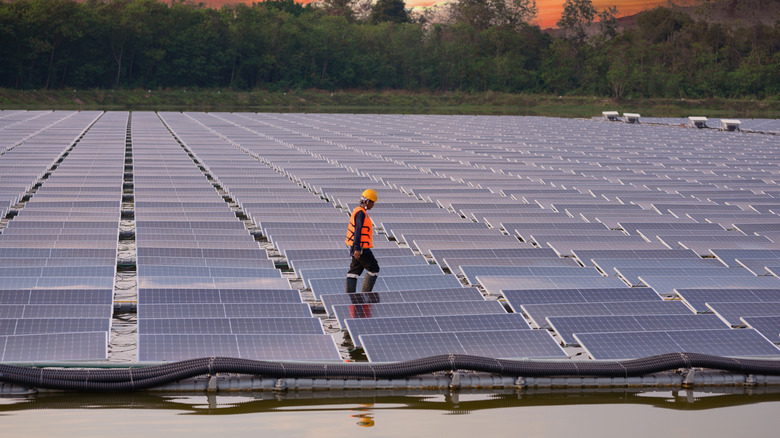
Australia is on the edge of a water shortage crisis. Farming represents the biggest drain on the continent in this context, using 70% of the country's water supply, though the issue is also compounded by prolonged periods of drought and increased human activity. In the spirit of preserving its water supplies, the country has designed a new kind of floating solar panel that could help.
Called floating photovoltaics (FPV), these solar panels can be found in the country's dams and water reservoirs. Essentially, they form a sort of roof over these bodies of water, trapping evaporation in by covering the water's surface. At the same time, they provide renewable energy to power grids in much the same way that standard solar panels help the environment.
These floating solar panels have the potential to save a lot of water. The dams and reservoirs across Australia see 1,400 gigaliters of water evaporate each year. As reported by Bloomberg, one company developing these panels has claimed these panels can reduce that evaporation by more than half. In an attempt to save water in the country, the Australian Renewable Energy Agency invested $8.5 million in an initiative designed to deploy more floating solar panels across its irrigation farms in 2025.
Floating solar panel projects in Australia and beyond
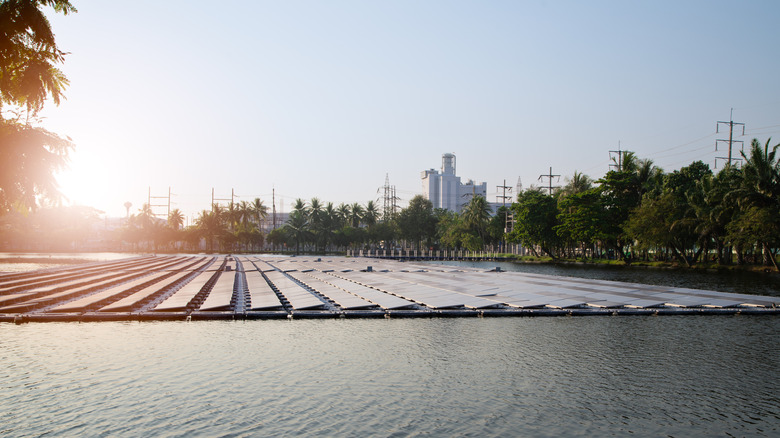
Wannon Water currently has one of Australia's largest floating solar panel systems, generating over 600,000 kilowatt-hours of renewable electricity each year over Warrnambool's Brierly Basinin southern Victoria. The 1,260 panels installed in the network capture direct sunlight not just from the sky above but from its reflection on the water's surface below. Since they have been installed, they have helped reduce greenhouse gas emissions by close to 600 tons every year. A similar installation of 644 floating solar panels by Gippsland Water is generating enough kilowatts to power 90 homes per day at peak capacity in the region as well.
What's unique about these floating solar panels is that they don't completely cover the water source like some other strategies designed to reduce evaporation. This is a plus because it avoids triggering algal blooms and keeps the water clean. With so many environmental benefits, floating solar panels are becoming a critical part of not just Au energy plans going forward, but also Germany, California, and other regions.