

5 Classic Electronics & Pieces Of Tech That Instantly Remind Boomers Of Their Childhood
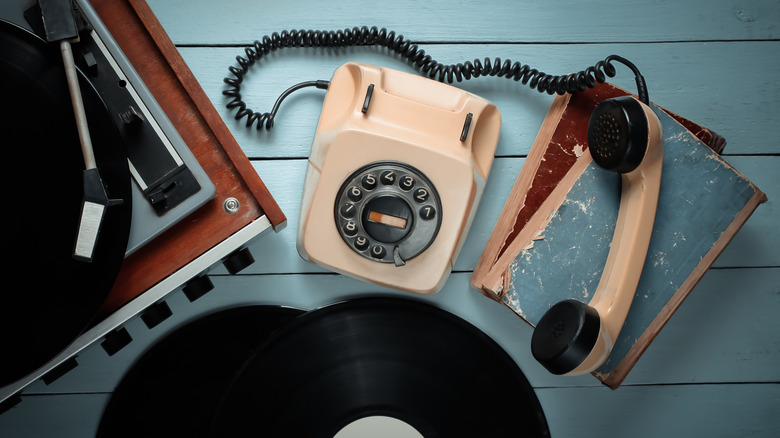
Baby Boomers — or Boomers for short — were born between 1946 and 1964, putting them in their sixties, seventies, and eighties today. Stepping back in time to that era reveals a world of classic and nostalgic tech with a certain charm that most modern-day devices simply don't have. Wooden finishes on console TV sets, spinning controls to dial a rotary phone — these are things most kids today wouldn't know about, but instantly take Boomers back to their childhood.
TV sets and rotary phones aside, Baby Boomers were also very familiar with technology that has made a resounding resurgence today: vinyl record players. Boomers will remember hitting The Twist in front of one of these with their parents, or setting the needle down on the latest rock 'n' roll hit – a genre that exploded in the 1950s and '60s.
And if Boomers weren't listening to music from their record players, they were probably using a transistor radio (which first hit the scene as the Regency TR-1 in 1954) for tunes, sports, and news. Or they may have been writing their own stories and capturing moments with a Polaroid camera. It's interesting to take a trip down memory lane through the lens of tech, and these classic electronics are a perfectly nostalgic guide.
Console TV sets
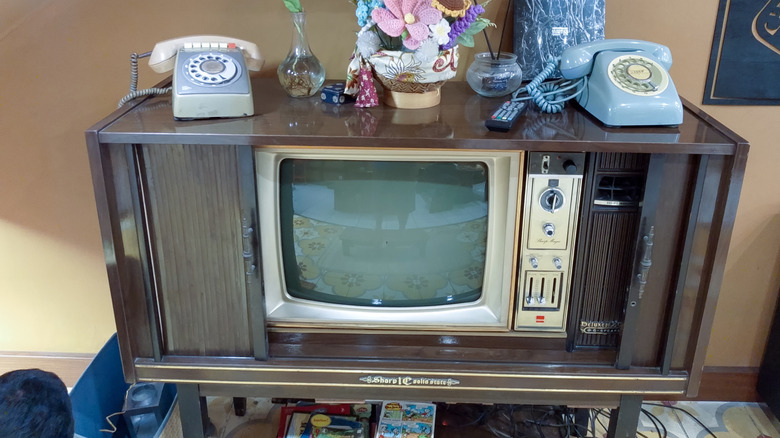
If wood-finished Zenith, RCA, or GE console TV sets are nostalgic to you, there's a good chance you're a Boomer. Characterized by their furniture-style wooden cabinets, knobs or dials, and captivating center screen, these television sets took the United States by storm in the 1950s, '60s, and '70s. It was the centerpiece of the living room and something for the whole family to gather around and enjoy.
Many Baby Boomers will remember the transition from black-and-white to color television — which had actually been around since the 1920s, but wasn't refined and popularized until the 1940s and into the '70s — and the ubiquitous impact it had on information and entertainment distribution. 90% of US households had a television set by 1960, whether black-and-white or color. And it wasn't just to watch "The Flintstones."
1960 saw the first televised debate between presidential candidates (John F. Kennedy and Richard M. Nixon), and in 1961, Kennedy gave the first live press conference on television. There was no internet or social media to get insights on politics and the goings-on of the world — for Boomers and their parents, these console television sets were crucial to staying informed about the world around them.
Vinyl record players
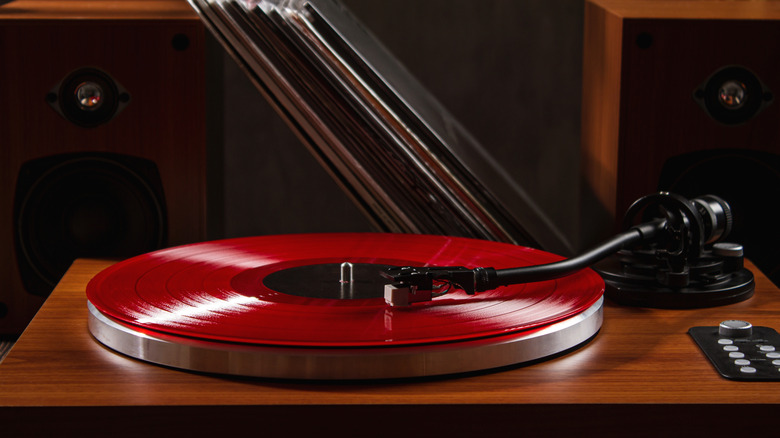
Vinyl record players were most popular from the 1950s to the '70s, meaning many Baby Boomers grew up listening to The Beatles and The Beach Boys on a spinning vinyl disc throughout their childhoods. For many teenagers, the vinyl record player was a way to express artistic freedom and build a music collection unique to their tastes. Instead of waiting and hoping for a song to play over the radio, they could easily share certain songs with their friends and have others introduce them to new tunes.
Like console TV sets, vinyl record players of the time were often a bit different than the ones we see in today's vinyl resurgence. When Boomers were growing up, record players were often housed in wooden consoles and doubled as pieces of furniture. There was also a hands-on aspect that made using vinyl records enjoyable. Choosing a record from your collection, putting it on the turntable, and lowering the needle onto the track was all part of the experience. While records were eventually largely replaced by CDs, that experience is an important part of why vinyl records came back into style.
Transistor radios
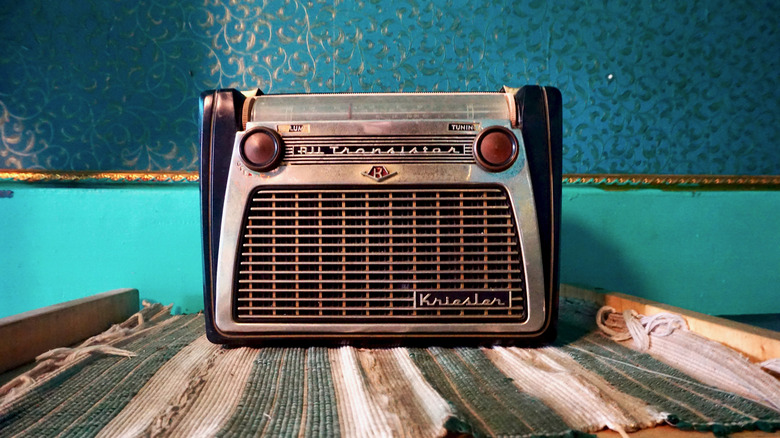
While vinyl records brought music into Boomers' homes, transistor radios let them take it anywhere they wanted. Coming onto the scene in the mid-1950s with the Regency TR-1, these pocket-sized radios quickly changed the way people of the time interacted with music, news, and sports. While the tabletop radios that came before them were big and bulky, transistor radios were small and light enough to carry easily. Because they were battery-powered, they didn't have to be tied down to an outlet.
For many Baby Boomers, the transistor radio was their first piece of personal tech. Like record players, transistor radios allowed teenagers to listen to the songs and stations they wanted without having to change the channel for anyone else. And the timing couldn't have been better with rock 'n' roll artists like Elvis Presley and bands like Creedence Clearwater Revival becoming popular at the time.
Nowadays, we can simply look up and stream whatever songs we want. But Baby Boomers will remember the feeling of tuning into a station on their transistor radio and hoping for their favorite song to come on — and the joy they were filled with when it finally did.
Rotary telephones
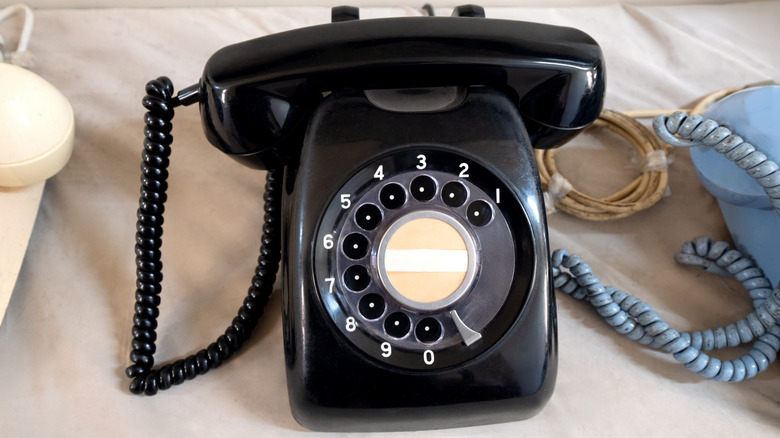
Rotary telephones are one of the most instantly recognizable pieces of tech on this list. Characterized by their circular dial mechanisms and curly cords, you would find rotary phones in many American households between the 1930s all the way into the '90s. Rather than the physical buttons and touchscreens of today, rotary phones had numbered holes that you would place your finger into and rotate until the circular dial reached the stopper. Their distinct clicking sound and tactile feel became a shared memory across multiple generations.
While our smartphones can be used anywhere, rotary phones were tethered to one specific location. If the phone rang, someone had to get up to answer it. There were no text messages, notifications, or caller ID screens to check first. It was also common for the phone to sit in a busy area of the home, so conversations were rarely private if your family was around.
And for many Boomers growing up, the rotary phone was a method of connecting with their friends. You'd write their phone number down, or do your best to remember it by the time you got home, and then you'd call up your friend after school or on the weekends to hang out. It was a time when phone calls were sometimes planned ahead of time, and communication moved at a slower pace.
Polaroid cameras
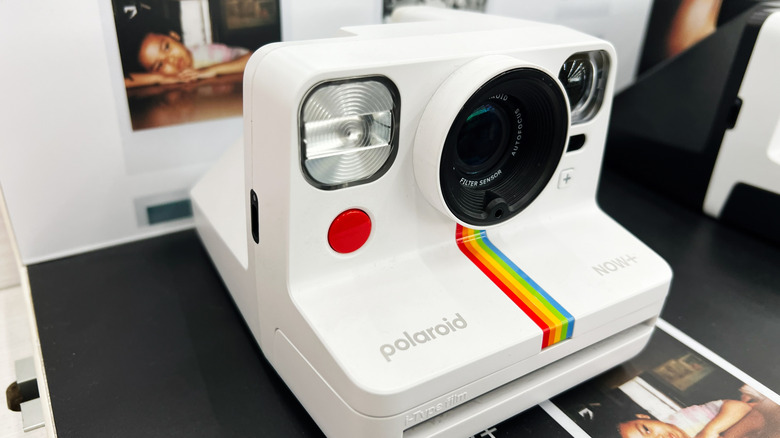
Polaroid cameras, which came out in 1948, were one of the most exciting inventions for Baby Boomers because being able to snap a photo without needing a studio and time to develop the picture was revolutionary at the time.
Polaroid pictures became popular at family reunions, parties, and holidays. Instead of using an entire roll of film and waiting days or weeks to see how a picture turned out, you could click the shutter button and hold a physical copy a few moments later (after waving it in the air to help it develop faster). The process became part of the fun — friends and family would gather around to watch an image slowly develop from what initially looked like a blank piece of paper. By 1977, despite Kodak's best efforts at competition, Polaroid had cornered the majority of the instant camera market.
Long before social media turned every photo into something instant and shareable, Polaroid made it possible to capture a moment and immediately pass it around the room. The distinct white border and vintage look of the photos made taking and collecting pictures a fun, spontaneous activity.