

4D Printing Tech Is Here And It's Turning Waste Into Machines
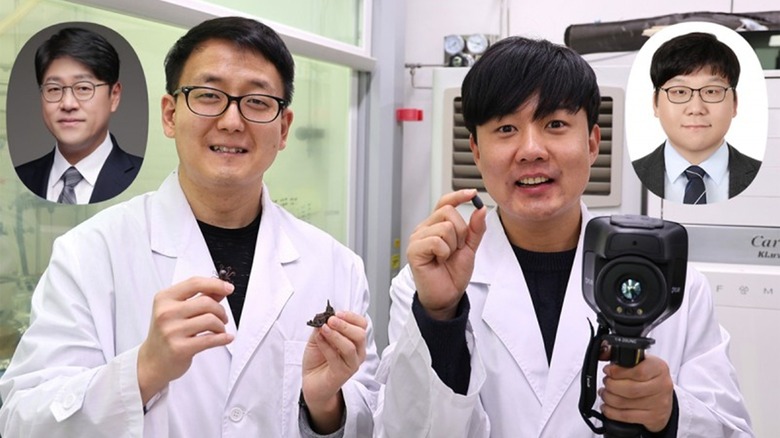
A research team out of Korea has built a 4D printer that uses recycled materials to make soft robots — robots made of non-rigid materials. Elemental sulfur, a byproduct of petroleum refining, is usually seen as waste. But the team behind the 4D printer use it to create a material that experiences structural changes when exposed to certain temperatures and lighting. By adding in magnetic particles, the printer creates tiny half-inch robots that move around by following external magnetic fields.
Unlike 3D printed objects, 4D printed objects don't have a fourth spatial dimension. Instead, they're 3D objects that can change shape after they are created. The printer uses an infrared laser to trigger a chemical welding reaction without the need for adhesives, allowing the resulting objects to have components that can move and change forms. When these objects are no longer needed, they can be melted down and repurposed into printing material. "Smart materials that can move autonomously and be recycled are expected to become key drivers of future soft robotics and automation technologies," said Dr. Dong-Gyun Kim.
What are soft robotics?
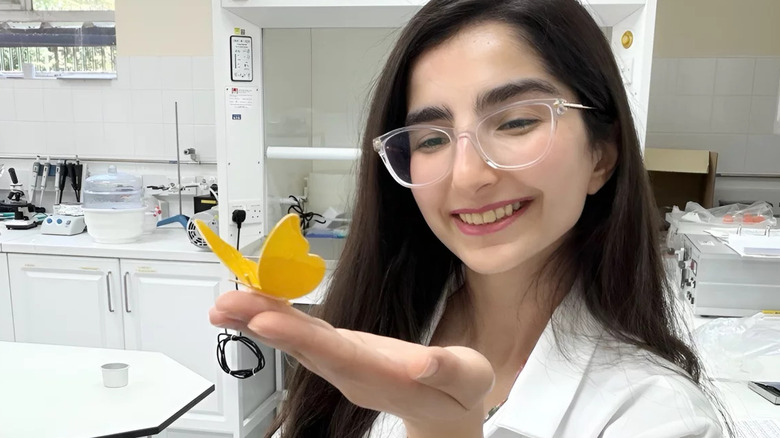
So, what is the point of making half-inch robots? Right now, they're largely for research purposes. The Korea Research Institute of Chemical Technology (KRICT) team's 4D printer is just the beginning for 4D printing in the soft robotics field. Soft robots are machines that are made out of pliable and flexible materials so they can have more versatile movements. Soft robots are also lighter than metal robots, making them ideal for a wide range of applications from medicine to manufacturing. The first soft robot was created in 2014, making it a relatively new field in robotics. In 2026, China's Southern University of Science and Technology revealed a soft robot that can change its leg length to perform a wide range of actions.
The soft robotics industry struggles with a lack of sustainability, but the 4D printer solves that, using waste to create robots that can be broken back down again. Another setback has been heavy, rigid powering systems that don't allow the robots to be as flexible and soft as they should be. The University of Bristol has created a "soft" miniature pump that weighs a lot less than the usual mechanical pumps, allowing for more freedom of movement. As research teams keep innovating, soft robotics may be able to fulfill their designated roles.