

Being Followed By A Drone While Driving? Here's Why It May Be Tracking Your Car
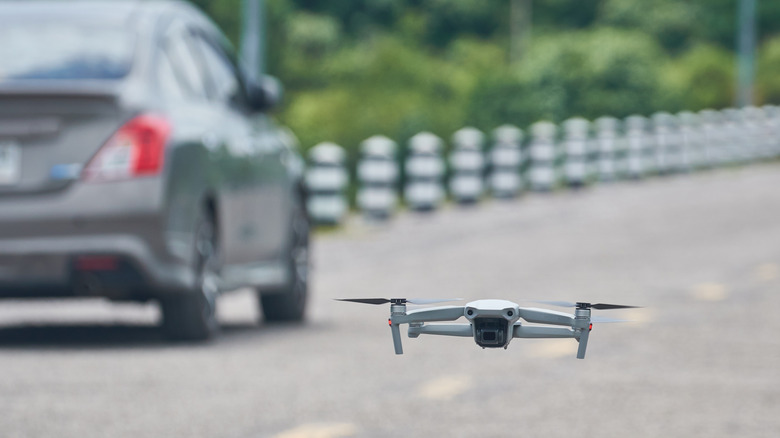
As drone technology continues to evolve, much of the attention has focused on how drones might be the future of warfare. But it's also starting to reshape surveillance closer to home, as some law enforcement agencies in the United States are now using drones to monitor and potentially track vehicle movement in traffic. It may sound like something out of a spy film, but these systems are already being tested or deployed in some cities.
These drones are typically sent in response to live incidents on the road, connecting them to tools already in use that monitor vehicle movement. So if you spot one overhead or in your rearview, it could be connected to those efforts. A recent example of this comes from Oakland County, Michigan (via Fox 2 Detroit), where the sheriff's department has received approval from the city to use a fleet of automated drones for emergency response and public safety operations. This move came amid public concerns over both surveillance and personal privacy.
A similar program in Denver kicked off in October 2025, when Denver officials signed a one-year pilot agreement with Flock Safety (via 9News). The company would provide a drone system to work in conjunction with license plate cameras, 911 dispatch, and other data platforms used in law enforcement investigations. But this move also faced some pushback. Some city officials voiced concern over the program's lack of transparency and the fact that they were not fully informed about the agreement when it was finalized.
Flock Safety is facing legal challenges across the US
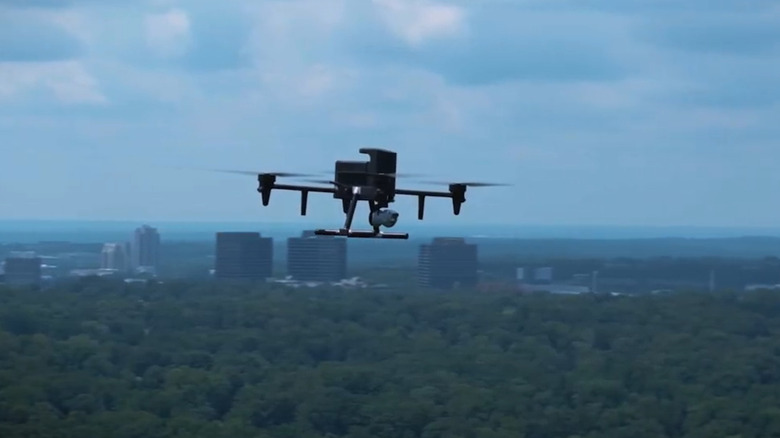
Flock Safety's drones launch automatically when triggered by connected sensors and can fly directly to an incident location within seconds. These drones provide HD video feeds in real time, with features like color night vision, high-powered zoom, and thermal imaging that allow operators to monitor events day or night. Recorded video is stored securely and can be used later for incident review and investigations.
The downside of all this tech is that law enforcement agencies may be using Flock's systems in ways they weren't intended. According to the Electronic Frontier Foundation (EFF), Flock's license plate reader system has been used for everything from school residency checks to noise complaints. The EFF has argued that the lack of a warrant requirement for accessing the databases of Flock's controversial AI license plate reader system has enabled agencies to search through vehicle movement data with very few restrictions, opening up the risk of abuse.
Flock isn't having things its own way, though. Cities are fighting back against Flock Safety's cameras, with the company facing several lawsuits in states across the U.S., including California, Colorado, New York, and Virginia. These lawsuits are over privacy concerns and the company's vehicle tracking practices. While these lawsuits do not focus on Flock's drone system, they do reflect important issues regarding how its surveillance tools are being used in law enforcement.