

Should You Repair Or Replace Your Concrete Driveway? Here's How To Know
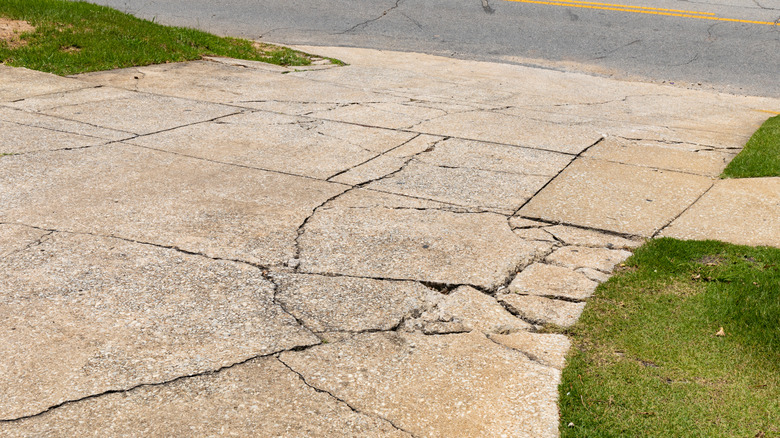
No matter the driveway type, eventually you'll have to ask yourself the question, should it be repaired or completely replaced? In the case of concrete driveways, several things can ruin them and bring you to this question. While you should consider key elements like your driveway's age — concrete driveways generally remain drivable between 25 and 50 years — and financial situation before making your decision, ultimately, the matter should come down to the severity of the present damage. Certain issues can and should be repaired for the sake of time, effort, and cost, while others are beyond attempts at repair and will unfortunately call for an expensive yet effective driveway redo.
As far as repairs, a professional or even a handy homeowner can fix up minor imperfections like small cracks, holes, and chips. So long as they're not enormous or all over the driveway, there's no reason why the correct tools and materials couldn't remedy the situation. On the other hand, some issues are just too big for DIY or professional patchwork. If your concrete driveway has one or more cracks that are long, wide, and deep, areas are sinking or forming potholes, or the repairs you've attempted are failing not long after they were done, a full replacement is likely your best bet. Otherwise, the existing issues are likely to worsen and you'll continue to spend on quick fixes that don't improve anything.
With all of that in mind, the best thing to do for a concrete driveway is take care of it. There are several preventative measures worth taking to keep repair or replacement-necessary damage at bay for as long as possible.
Keeping a concrete driveway in good shape
To keep a long-set concrete driveway as intact as possible for as long as possible, proactivity is crucial. For one, climate and weather-related factors need to be addressed. The area around the driveway should have ample drainage; this way, water doesn't pool on or near the concrete. Water soaking into concrete, freezing, expanding, and melting is a central process to crack formation, lengthening, and widening. You should avoid the use of excessive salt during winter, too, since salt quickens the freeze-thaw cycle and causes spalling, or flaking, on the surface. If you must use it, shovel off the slush and leftover salt as soon as possible.
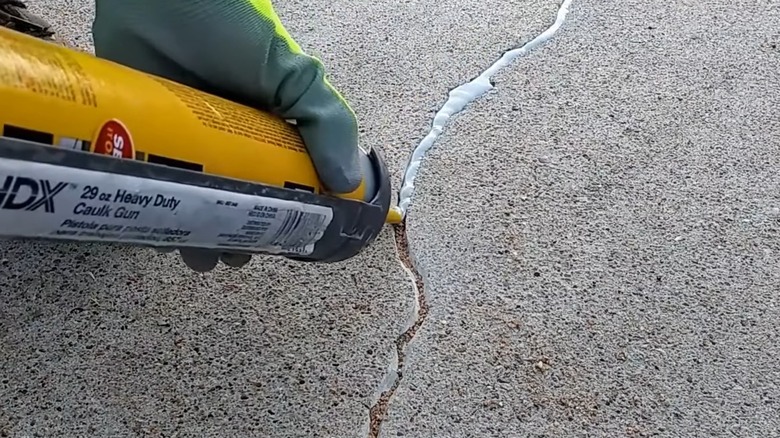
Trees can also harm concrete driveways, with their roots freely growing underneath. This causes lifting and subsequent cracking, so removing nearby trees entirely or trimming small, young trees' roots without compromising their stability is recommended. Sealing your driveway, preventing concrete's porous nature from taking on water and cracking, is worth the effort every few years. If small cracks and holes are already beginning to form, it's best to quickly fill them. This way, they don't grow into bigger problems that demand more time and money to fix.
At some point, concrete driveway replacement will have to happen, but there's no reason to do it sooner than necessary. So long as you have the right tools for concrete repair, and the damage hasn't already spiraled out of control, fixes could keep your driveway together and buy you some time before a full-on refresh becomes essential.