

Water Towers Do Way More Than Just Store Water
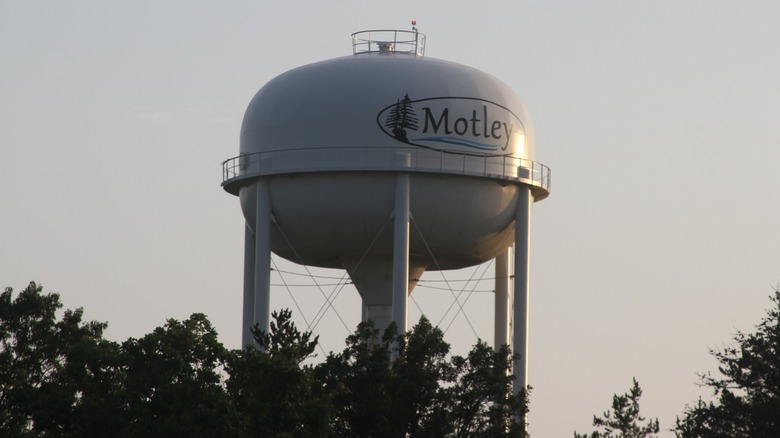
If there was ever a device that's integral to our daily lives that few people know much about, it's water towers. The ubiquitous structures are found all over the place, and while they can look somewhat unique, depending on their configuration and where they're installed, they all serve the same purpose. If you think that's storing water, you're only half right because water towers are standing there, secretly providing a service you likely take for granted, and without them, you'd notice almost immediately.
The first question that likely comes to mind when you look at a water tower is, 'Why use a tower to store water?' It's a fair question, seeing as you can more easily store water in subterranean tanks or on the ground in large cisterns. The fact that it's a tower structure is the first key to its use because water towers don't just store the wet stuff; they also distribute it.
Storing water several hundred feet above most buildings allows for gravity to produce a great deal of pressure at ground level. The reason you have high water pressure in your home is that it's literally falling through pipes from high above. It's the tower's height that provides the pressure, which amounts to 0.43 PSI of water pressure each foot, and most water towers are between 150 and 200 feet tall while typically being located on high ground. That provides up to 67 PSI of pressure at ground level, which is around the so-called "sweet spot" for residential water pressure.
How water towers are used
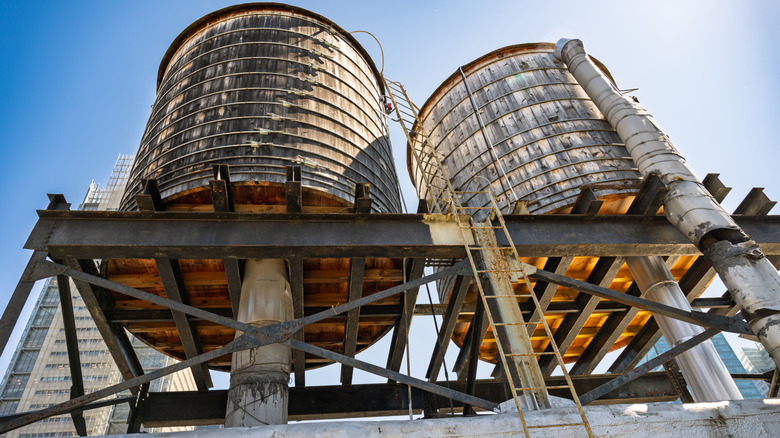
Water towers as they now exist came about in the 19th century, but the concept of distributing water via gravity-provided pressure dates back to Roman aqueducts. The concept remains much the same, but the engineering is significantly improved. The size of the tank is vast, and seeing it from the ground doesn't do it justice. A typical residential pool holds around 30,000 gallons of water, while a water tank holds closer to 1.5 million gallons. Typically, that's enough water to supply the tank's community for a single day.
Pumping water up to the tank from a water source isn't as energy-demanding as you might imagine. Topping off the tank occurs during low water consumption times, which is usually at night. A municipality's water pumps throughout the day, often producing more water than is needed. It's this excess water that's pumped up into the tank, creating a standing reservoir that comes in handy during power outages and periods of high demand — most often in the mornings or evenings.
While you don't often see water towers in cities, they're actually all over the place. Most tall buildings, which have a height exceeding a normal tower's pressure capabilities, have their own pumps and towers on the roof. This supplies the needed pressure, so many cities have far more towers than residential areas. Essentially, water towers are there to guarantee water pressure when it's needed, whether it's helping residents take showers or feeding high-pressure water to colored fire hydrants during emergencies.