

What's The Average Lifespan Of A Kitchen Range Hood?
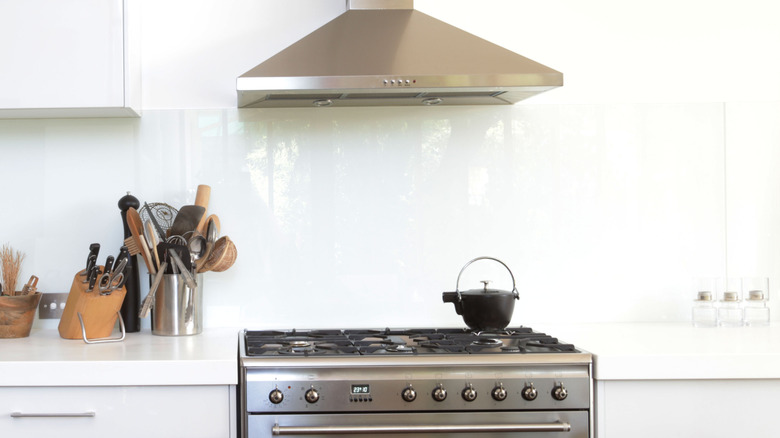
Some things in a kitchen are easy to take for granted, often used on a consistent basis without much thought to their age or condition. A kitchen range hood can be one such appliance, with it filtering the air and regulating the room temperature while you cook seemingly forever. However, as innocuous as it might be, it can fail just like any other kitchen appliance. With that said, most aren't likely to give out for some time, as most estimates place their lifetime between 10 and 20 years with regular use. Somewhere around 15 years of use is widely considered the average lifespan.
While it isn't the most exciting piece of technology in a kitchen, it's pretty obvious when a range hood starts to fail. The motor will get noisier, and the fan will clearly lose suction power as the motor struggles. Smells will stick around long after you finish cooking, and smoke will linger instead of cycling through. Most obviously, electrical failure in the form of buttons and switches not working is a clear-cut sign that there's something wrong, and that your range hood may be beyond its useful life.
Kitchen range hoods are among the kitchen appliances that should be bought new rather than used, so if replacement is needed, you want to take good care of your new unit. There are a few things you can do to make it more likely that your kitchen hood will last as long as possible.
Getting the most from your kitchen range hood
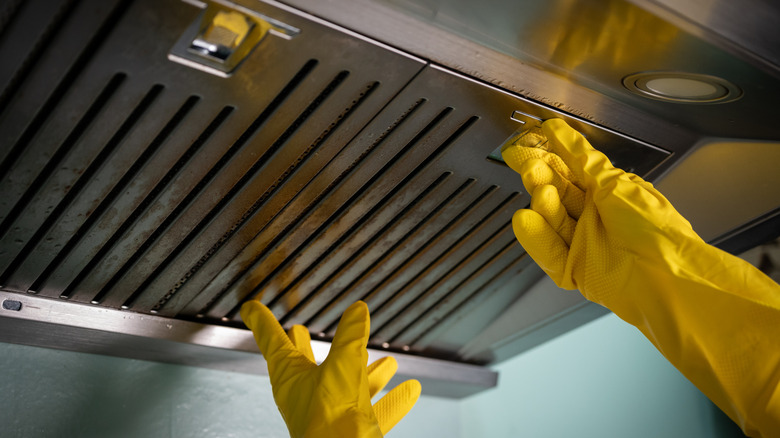
There are a few routine maintenance tasks to keep up with for your range hood. One of the most important things is cleaning the filter, as this is where food particles get trapped and can become a source of odors in your kitchen. If you decide not to replace it with a new one, metal filters can be washed. All it takes is removing the filter, then soaking it in a mix of warm water, baking soda, and dish soap for between 15 and 20 minutes. Next, scrub away all of the softened food residue, let it dry, and put it back in its place. You should do this at least once every six months or so, though a more frequent schedule is wise if you cook a lot.
While you wait for the filter to soak, the fan could use a good wipe-down, too. Steering clear of electrical elements, you should scrub the fan blades with a warm, soapy water rag and then remove soap residue with a clean water rag. You can spin it up again once it air-dries. In the meantime, wiping down the outside of the hood is a good idea, too. Don't forget to inspect the connected ductwork, too, as food gunk build-up is a surefire way to force the system to work harder to expel smoke and debris, shortening its lifespan. Also, only use the fan as needed, meaning not all dishes you prepare will call for the highest setting and the motor strain that comes from it.
You need to clean grease and grime off all of your kitchen appliances, including the oft-forgotten range hood. With some simple regular maintenance, it should run like a dream and provide you with many years of strong service.