

Japan's Answer To Drone Warfare Is An Ultra-Cheap Cardboard-Based Swarm
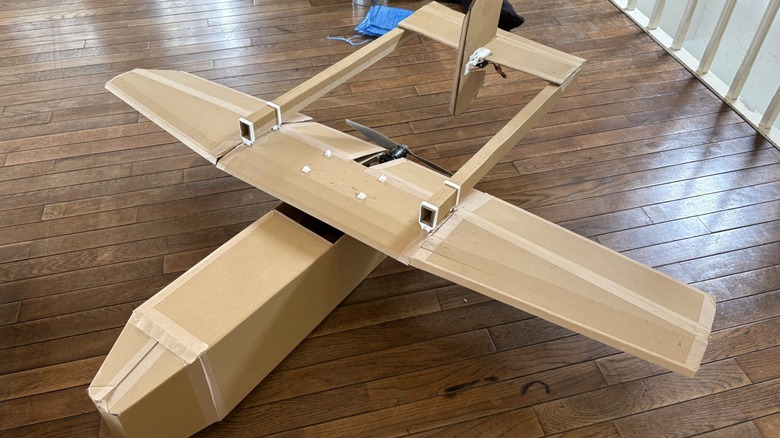
There is no denying that drone warfare and the associated technology have become a crucial part of modern warfare. These unmanned flying objects come in various shapes and sizes and can perform a wide variety of tasks — ranging from aerial reconnaissance and intelligence gathering to offensive missions such as taking out enemy equipment and engaging enemy soldiers. The top modern-day military powers have a wide array of drones in their repertoire. Yet, even as military drones become more advanced and sophisticated, a surprising trend has emerged: armed forces are increasingly turning to low-cost, low-tech drones capable of threatening vastly more expensive, technologically superior equipment. The most recent example of this is Japan. The country's defense minister recently met with a start-up that is developing disposable drones made of corrugated cardboard.
今日は段ボール製ドローンで有名なエアカムイの皆さんと意見交換をさせて頂きました。海上自衛隊では既に標的として活用しています。ドローンをはじめとする無人アセットを世界で最も駆使する自衛隊を目指す上で、防衛分野に意欲あるスタートアップの皆さんと連携強化は不可欠です。今日は非常に濃密な... pic.twitter.com/OJwVOpFiBT
— 小泉進次郎 (@shinjirokoiz) April 27, 2026
The company behind Japan's disposable cardboard drones is AirKamuy, and the model in question is christened the AirKamuy 150. Very little is known about the drone as far as technical specifications go; however, what is already known is that it can be assembled in under five minutes, is capable of reaching speeds of up to 120 km/hr (120 mph), has a range of around 50 miles, and can remain airborne for up to 80 minutes. These small drones are shipped flat-packed, which means several units can be packed inside a single standard-sized shipping container.
The most remarkable facet about the AirKamuy 150, however, is its price, which reportedly ranges between $2,000 and $3,000. This is an incredibly low acquisition cost by military standards. To put things into perspective, Iran's cheap Shahed drones, which gained notoriety in the recent U.S.-Iran conflict, cost anywhere between $20,000 and $50,000 to build.
Use cases for the AirKamuy 150
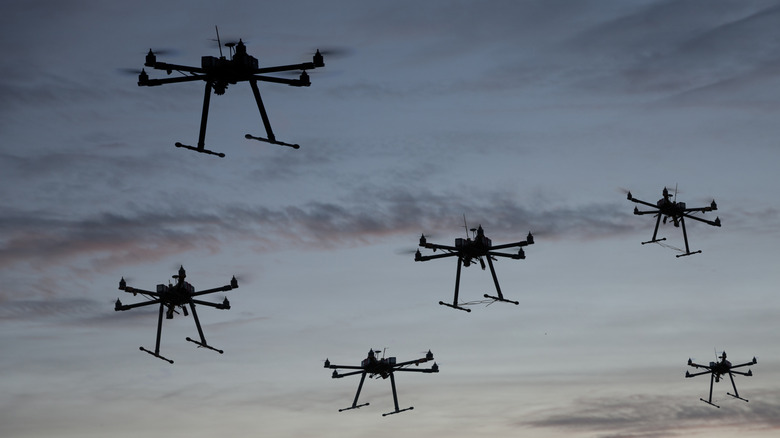
Given the sheer ease of use and quick deployability of the AirKamuy 150 cardboard drone, it is touted by senior company officials to be used as a swarm drone. For those unaware, the term "swarm drones" is given to large groups of unmanned drones (UAVs) that function as a single coordinated unit to perform various tasks. In military use, drone swarms can be used to conduct precision strikes and electronic warfare without needing the help of more sophisticated and expensive equipment. The drone can also be used for various civil applications, including the transportation of medicines and as part of emergency response mechanisms.
Japan's defense minister, who was recently seen posing with the drone, also revealed that the country is already considering using AirKamuy's cardboard drones for the Maritime Self-Defense Force. There is no denying that we know very little about the actual real-world performance of this cardboard drone. However, given the excellent track record of similar low-cost drones in battlefields around the globe, expectations are high as far as the AirKamuy 150 drone is concerned.
AirKamuy's entry into the world of low-cost, expendable, cardboard drones has definitely attracted global attention. It is quite likely, therefore, that other companies engaged in the design and manufacturing of drones may come up with similar drones in the near future.