

Tire Age Vs Tread Wear: Which Really Matters More?
The answer to the question posed here has more than one correct answer. This is because both the amount of tread wear and the age of the tire are critical indicators of how much life is left in it.
Let's start with tread wear. Most of us have watched the tires on our vehicles wear out over time. If these tires are on your daily driver, and the car is in regular use, it is very likely that your tires will wear out long before their age becomes an issue. In this situation, tread wear is the most important issue you will have to face over the course of your tires' lifespan. You should regularly check your tire tread and replace the tires as soon as the tread wears down to the built-in indicators, which sit at the legal minimum depth of 2/32-inch
But let's say that you also have a car that sees only occasional use. It could be a classic car that is only driven on special occasions or in nice weather, one that may not see many miles in a year. As the years go by, you may hardly notice any tread wear on that car's tires. This is where the age of the tires comes into play. According to Discount Tire, one of the largest independent tire retailers in the U.S., tire manufacturers' warranties expire after six years, while Discount Tire will not service any tire older than 10 years for safety reasons.
How can you tell how old your tires are?

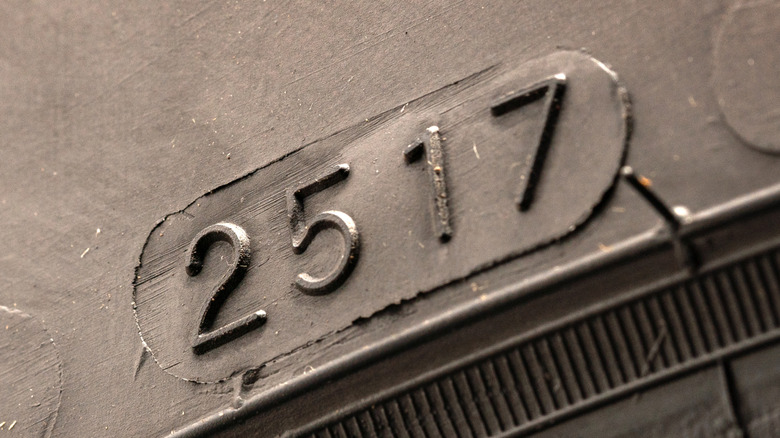
There's an easy way to tell exactly how old each of your tires is. All you have to do is check the DOT Identification Number on your tires. The final four digits of this alphanumeric code indicate the week and the year that the tire was produced, letting you know its precise age. For example, the tire with code 2517 was made in the 25th week of 2017, while the tire with code 4020 was made in the 40th week of 2020.
So if you've got tires that are between six and 10 years old, it is time to start thinking seriously about replacing them, regardless of how much tread is left. This is because, over time, oxidation occurs. Air enters the tire's structure and begins to break it down, which can cause loss of traction, reduced elasticity of the rubber, and a general breakdown of the tire's sturdiness. This is more likely to happen when the tires are exposed to sunlight and in higher-temperature climates. It is less likely if the tires are stored indoors.
To get the most amount of life out of your tires before they wear out or get too old, you should be regularly checking your tire pressures, as well as rotating them at the recommended intervals, looking them over for any damage, and getting them aligned if you notice that the vehicle doesn't track straight. A little maintenance goes a long way.