

Want To Stop Your Garage Door Sticking To A Concrete Floor? This Might Be A Solution
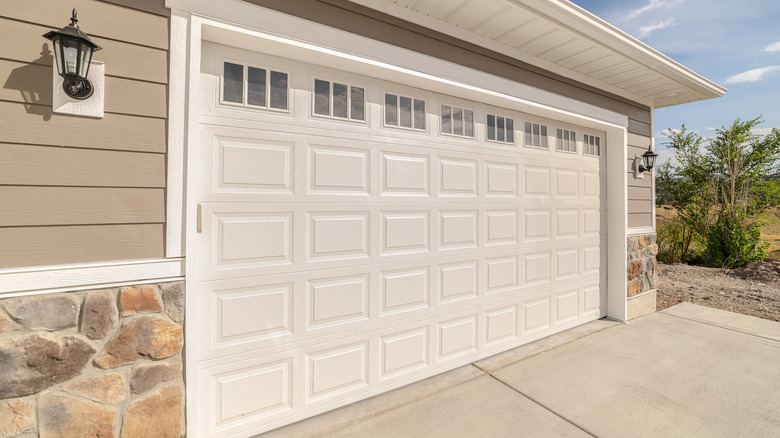
A garage door should be a simple part of any home, but there are still some potential issues to keep an eye on. There are a host of fixable problems garage doors can present, such as the bottom sticking to the concrete floor of your garage. This is especially common in the winter when water settles and freezes at the base of the door. This sticks to the rubber bottom seal, requiring the motor to work harder to raise the door — if it doesn't fail outright. Fortunately, there's a cheap and generally effective solution to this problem.
The goal is to keep the rubber from sticking to the ground, which you can do with a silicone-based lubricant. This type of lubricant reduces friction and drives moisture away, thus preventing ice from sticking to your garage door's rubber seal. All you need to do is raise the door and spray some lubricant along the length of the rubber bottom. Of course, it should be stressed that you want to use a silicone-based product; otherwise, you risk damaging the rubber. WD-40 Multi-Use Product and other petroleum-based sprays, for example, should be avoided as they may make the rubber swell and crack over time.
Unfortunately, it may be too late for some doors, as the rubber may already be ruined due to repeated attempts to free a stuck door. Thus, the first step may well be replacing your door's rubber seal.
Replacing a garage door seal
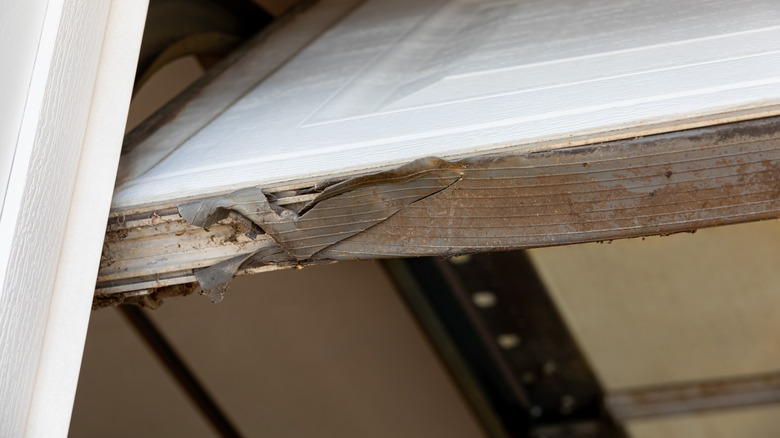
Over time, a rubber garage door seal will begin to decay. In addition to the stresses of being stuck to ice during the winter, exposure to sunlight, temperature changes, and general aging will cause the material to become more brittle and flatten over time. Sure, a silicone lubricant can stop the seal from sticking to the floor, but that requires a seal that's in good condition first.
Thus, before spraying any lubricant, make sure your seal is still functional. It should not look overly flattened and be free of cracks and tears. You'll want to replace it if it looks rough, as it's important to prevent water, cold air, and unwanted rodent visitors from getting in. At most, all it takes is a replacement seal, a screwdriver, and a small pry tool.
- Raise the door so that the seal is at eye level. Turn off and unplug the opener.
- Pry out the old bottom seal using a small knife or screwdriver. You may also need to remove any hardware holding the seal in place.
- Cut the new rubber seal to the correct length, then fold it into a U-shape and slide it along the door's bottom track. Secure it accordingly.
- Test the door, ensuring the seal remains in place and fills the gap between the door and the ground.
- Spray the seal with your chosen silicone lubricant, especially if you're doing this in low temperatures.
Whether you park your car there or want to turn your garage into the ultimate man cave, taking care of your garage door is essential. This includes proper preventative maintenance for perishable parts such as the rubber seal, as normal occurrences like ice and snow can lead to more time-consuming repair jobs down the line.