

5 NASCAR Drivers Whose Careers Ended Too Soon
For race fans looking to fulfill their need for speed, NASCAR has long served as the sport of choice to scratch that particular itch. The stock car racing series has been around since the late-1940s, and in the decades since its inception, NASCAR has transformed into a billion-dollar business that rivals any racing league in the world. That's saying a lot for a sport that features little more than really fast cars driving in circles.
In principle, those cars are all meant to adhere to the same rules and specs. But as Robert Duvall's character famously said in the 1990 classic "Days of Thunder," "There's nothing stock about a stock car." Likewise, there's nothing stock about the folks at the wheel of those cars either. Over the years, NASCAR drivers have delivered no shortage of pulse-pounding thrills, and along the way, the sport has produced a list of superstars that rivals that from any professional sport.
Like most other sports, however, NASCAR has also seen the dominant runs of a few legitimately elite stars in the sport cut unexpectedly short. Some of those careers were, of course, cut short by tragedy, as NASCAR is one of the more danger-filled sports in existence. Some of those careers were, however, shortened for a myriad of other reasons. Here are a few legendary NASCAR careers that we can't help but feel ended too soon.
Dale Earnhardt
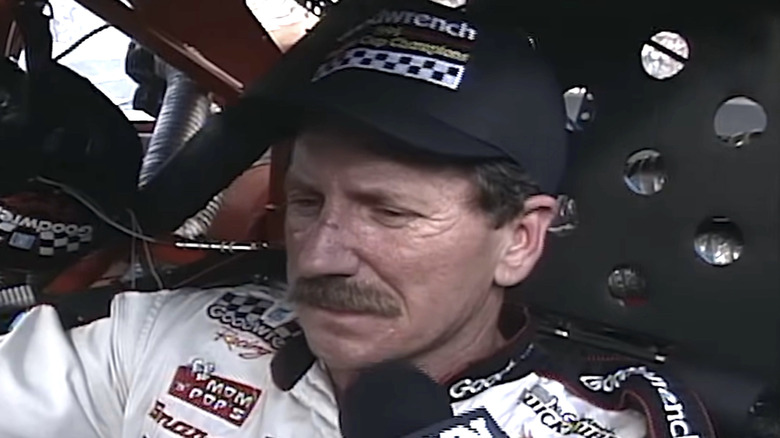
In the annals of NASCAR history, there are few names quite as revered as that of Dale Earnhardt. To that end, there are also few who were quite as feared by fellow drivers on a NASCAR racetrack, as Earnhardt's skill at the wheel and fierce will to win was second to none; a fact that earned him one of the sport's most memorable nicknames: "The Intimidator."
Simply put, if you were leading a NASCAR race anytime in the 1980s or 1990s, Earnhardt's Number 3 car was the last you wanted to see in your rearview mirror. For that matter, it was also the last you wanted to see occupying the spot in front of you. In his hall of fame career, Earnhardt won 76 Winston Cup races, and a total of 7 Cup Series championships, one of the best records in the sport's history.
Given his credentials, it almost seems silly to claim his career ended too early, but many-a NASCAR fan would be quick to tell you Earnhardt was still driving at an elite level when his career came to an end in 2001. Alas, that end came in tragic fashion, when Earnhardt's Number 3 Chevy slammed into the wall on the final lap of the Daytona 500, doing so at speeds exceeding 150 miles-per-hour. Earnhardt reportedly died on impact, marking a tragedy that would not only leave NASCAR without one of its most legit on-track icons, but forever change the face of sport and its approach to driver safety.
Junior Johnson
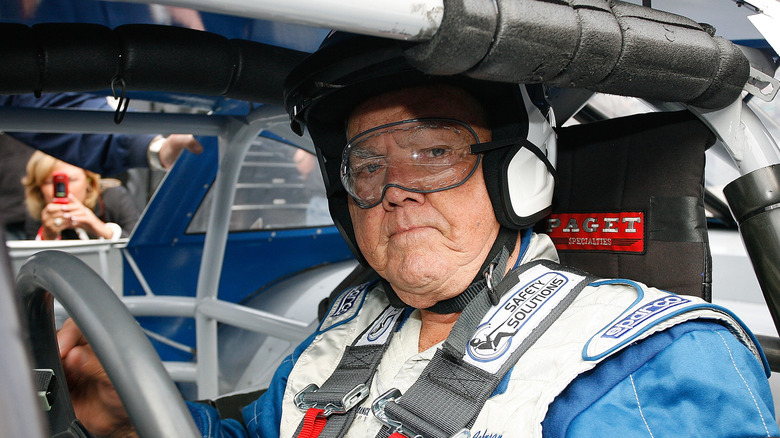
On the subject of storied NASCAR legends, some fans might argue that Junior Johnson is an all-timer on that list. One of the sport's earliest icons, Johnson actually made his living as a moonshiner before he started burning rubber on NASCAR tracks. He made his NASCAR debut in 1953, piloting a souped-up racer around the legendary track in Darlington, South Carolina. He was 22 years old.
Johnson did not win that race. In fact, he didn't win his first NASCAR event until 1955, but over the course of the next decade, he'd go on to secure 50 total wins and become one of the most respected drivers on the track. Given his win totals, you might be surprised that he never took home a Cup Championship over that span, not even in 1965 when he won a whopping 13 races. That was largely due to the fact that he never competed in a full season of NASCAR events. That might've changed if Johnson had continued his career as a driver, but he shocked the racing world in 1966 when he officially retired from that profession.
Johnson stuck with NASCAR, pivoting first to being a pit chief, and eventually starting his own racing team. In that last capacity, Johnson only cemented his Hall of Fame legacy, becoming one of the most successful team owners in history by winning six Cup championships. He officially entered the NASCAR HOF in 2010, though some fans can't help but wonder what might've been if he'd continued driving.
Alan Kulwicki
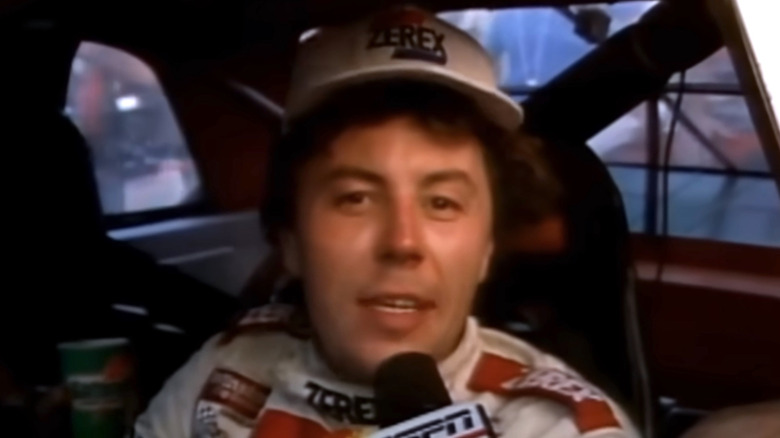
During his tenure as an owner, Junior Johnson would back rides for some legit NASCAR legends, including Cale Yarborough, Bill Elliott, and Darrell Waltrip. If he'd had his way, Alan Kulwicki reportedly would've joined those ranks in the early-1990s. The Hall of Famer had other plans for his NASCAR career, however, and opted instead to continue running his own racing team independently, which he'd already been doing since the 1980s.
Kulwicki was a bit of a NASCAR outsider, though, hailing not from the South as most drivers did, but from Wisconsin, and arriving on the circuit with a degree in mechanical engineering in hand. The driver was clearly happy enough to wear that outsider badge of honor, carving his own path to dominance on the NASCAR scene and shocking with his 1992 Cup Series championship run.
By then, he had, of course, already secured the 1986 Rookie of the Year honors, and even debuted his famed "Polish Victory Lap" after his first win in 1988. Known as a perfectionist by colleagues, Kulwicki was a veritable one-man show who seemed to just be scratching the surface of what he could do on the track when his career came to a tragic end in 1993. It did not, however, end on a racetrack, with Kulwicki perishing in a plane crash en route to Bristol, Tennessee for that year's running of the Food City 500. As such, Kulwicki's career remains one of the great "what could've been" stories in the history of the sport.
Davey Allison
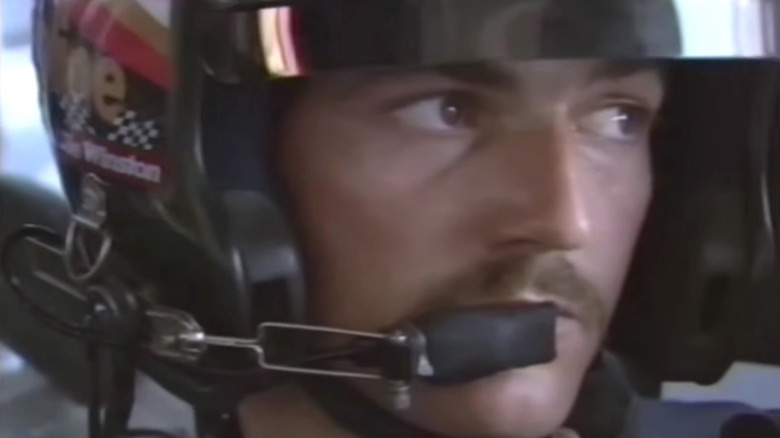
Speaking of NASCAR's biggest "what could've beens," Davey Allison is one name that would no doubt spring to mind for longtime racing fans. That name surely carries some extra weight with diehard fans too, as Davey was the son of another NASCAR legend, Hall of Famer Bobby Allison. Davey looked to be well on his way to matching, and potentially even surpassing Bobby's career stats early in his career. It began with a bang, as Davey drove his way to two wins, nine top 5 finishes, and Rookie of the Year honors during his first campaign in 1987.
Over the course of the next few years, Allison proved to be one of the fiercest and toughest competitors on the NASCAR circuit, even earning the nickname of "The Unstoppable Man" due to his reputation for bouncing back from crashes. By the end of the 1993 campaign, Davey had won a total of 19 races, including the Daytona 500.
Months before a tragic accident cut short his burgeoning racing career, Allison had nearly won his first Cup Championship, but fell just short after getting wrapped up in a crash in the final race of the season. Like Kulwicki, Allison's Hall of Fame career was not cut short at the wheel of a race car. He did, however, die on the track, as Allison crashed a helicopter he was piloting on the infield of Alabama's Talladega Superspeedway. That crash occurred in July 1993, and many in NASCAR circles are still wondering what heights Davey Allison might've reached.
Carl Edwards
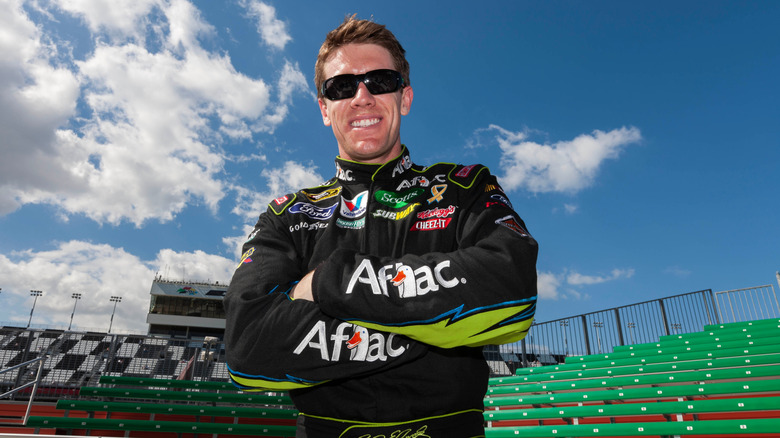
While tragedy has brought about the early end of many notable NASCAR careers, it has not always been the reason that some drivers have left the track behind. That is just the case for one of the most successful drivers of the modern era, Carl Edwards.
Prior to working his way into the NASCAR field, Edwards worked as a substitute teacher. During this period, he frequented racing circles and reportedly handed out business cards that said, "If you're looking for a driver, you're looking for me." The bosses at Roush Fenway Racing ultimately bought into Edwards' shameless self-promotion, first putting him at the wheel of their Truck Series racer. His dominant run in that arena led to rides in NASCAR's Xfinity and Cup Series in 2005.
Edwards would finish top 2 in the former series 5 straight years, including a 2007 championship win. In the Cup series, Edwards won a total of 28 races and earned championship runner-up honors twice, losing the 2011 Cup to Tony Stewart via a heartbreaking tie-breaker. After just 13-years in the saddle, Edwards shocked the NASCAR world with his abrupt retirement in 2017. In the end, Edwards decided to prioritize his health and spending more time with his family over his NASCAR championship aspirations, walking away from the driver's seat. Edwards did not walk away from the sport forever, though, and has been working as a NASCAR commentator for Prime Video since 2025, the same year he was inducted into the sport's Hall of Fame.