

4Runner Vs. RAV4: Which Toyota SUV Depreciates Faster?
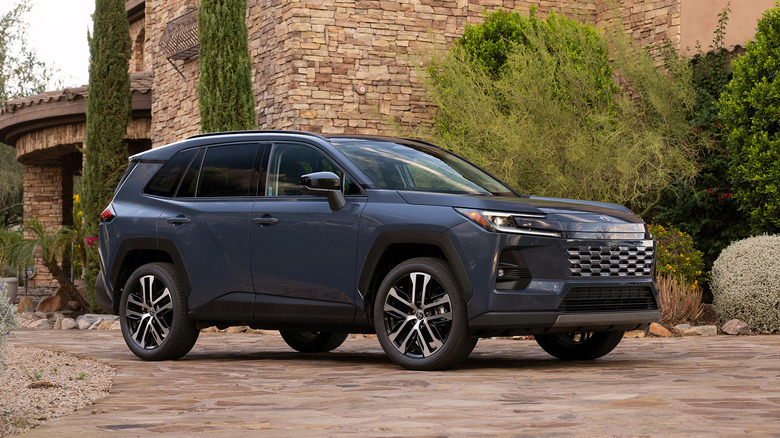
In 2025, Toyota had three of the top 10 best-selling vehicles of the year, including the Camry, the Tacoma, and the RAV4. The Japanese brand is known for its efficient and dependable vehicles, and is ranked number one by Consumer Reports when it comes to new car reliability and number two for used car reliability. The RAV4, which was the third best-selling car of 2025 and Toyota's bestselling vehicle, has been completely redesigned for the 2026 model year and is now available only as a hybrid. The 4Runner was likewise redesigned the previous year; it has a four-cylinder turbo engine and is also available as a hybrid.
The RAV4 is smaller than the 4Runner and has a starting price of $31,900, while the base model of the 4Runner currently sits at $41,870. But over time, which is the better buy? Disregarding all other factors that may influence your purchase, such as passenger capacity, cargo capacity, fuel mileage, towing capabilities, and more, which vehicle will lose more value over time?
Vehicle depreciation matters because it impacts your resale value and how much equity you have in your vehicle. If you're upside down on your loan, you may not be able to trade-in for a new car and could run into problems if your car is totaled. When comparing the RAV4 to the 4Runner, it depends on how long you intend to keep the vehicle. The RAV4 depreciates more slowly in the first four years, while the 4Runner leaps ahead and holds its value better past that point.
The RAV4 depreciates faster, but is it still a better buy?
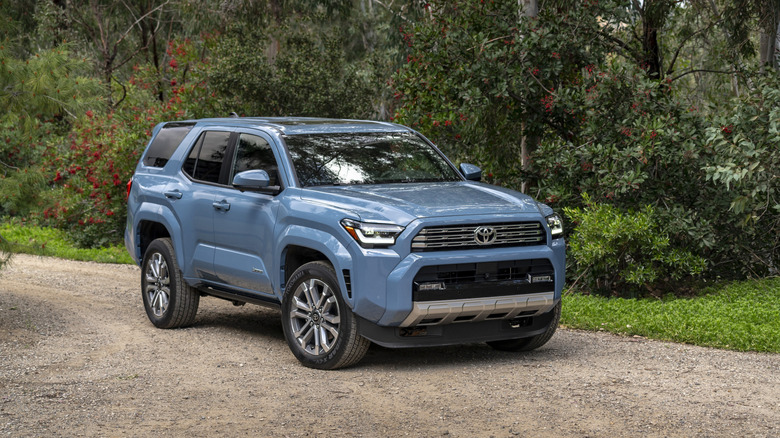
Americans are keeping their cars for longer and longer. The average length of ownership now sits at around eight years, indicating that the better buy in this scenario is likely the Toyota 4Runner. By the second year of ownership, the RAV4 maintains more than 83% of its original value, while the 4Runner is worth less than 79% of the price paid. By year four, both vehicles will have lost approximately 25% of their value, according to CarEdge, and by year seven, the difference is more profound. At that point, the RAV4 loses more than 40% of its value, while the 4Runner loses just over 30%.
If you plan to keep your vehicle for 10 years or more, you will have long paid off the loan before you sell the car. But the more it depreciates, the less you'll receive for it when you finally do sell it, and you may have delayed buyer's remorse. By year 10, the 4Runner is still worth almost 55% of the purchase price, while the RAV4 sits at just under 50%. It's important to note, however, that both hold their value better than average.
Ultimately, depreciation should only be one of the factors you consider when you buy a car. Despite its faster depreciation rate, the RAV4 sells much better than the 4Runner. Its price tag, which sits $10,000 lower than the larger, more expensive SUV, is likely a major contributor to that. It's also a vehicle known for its reliability, and the hybrid engine gives it excellent fuel economy.