

This 'Red Road' Is Designed To Slow Down Drivers And Protect Wild Life
Why did the chicken cross the road? Probably because it didn't know it shouldn't! Contrary to what we may have learned from Road Runner cartoons when we were kids, animals are incapable of reading road signs (or any signs, for that matter). While even humans are confused by some road signs, we understand that crossing the road can be dangerous. Animals don't, and in fact may even be attracted to roads at night because they are well-lit, warm, and provide access to food and water sources.
In the United States, it is estimated that between 1 and 2 million collisions between large animals and cars occur annually. Those accidents cause an average of 26,000 human injuries, 200 deaths, and billions in property damage each year. The U.S. is investigating solutions to this problem that benefit both animals and drivers, including dedicated wildlife crossings such as bridges and culverts. In late 2025, Colorado opened the I-25 Greenland wildlife overpass connecting 39,000 acres of habitat. California is also in the middle of constructing the Wallis Annenberg Wildlife Crossing, which is expected to open in December 2026 above the 101 freeway.
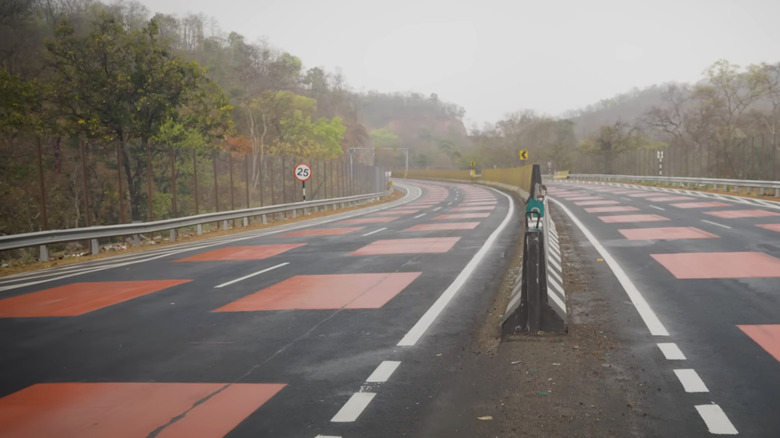
Other parts of the world are developing different solutions. In India, the government decided to coat a short section of road in a unique red pattern. The intention is that it can slow down drivers in an eco-sensitive wildlife corridor in Madhya Pradesh, as the 2-kilometer (or about 1.2-mile) stretch of National Highway 45 passes through the Veerangana Durgavati Tiger Reserve. To naturally slow down drivers, the Ministry of Road Transport and Highways decided to put a bright red, thin, thermoplastic surface layer on the road, along with a few other measures to help protect wildlife. Here's how it works.
The red road is based on the psychology of color
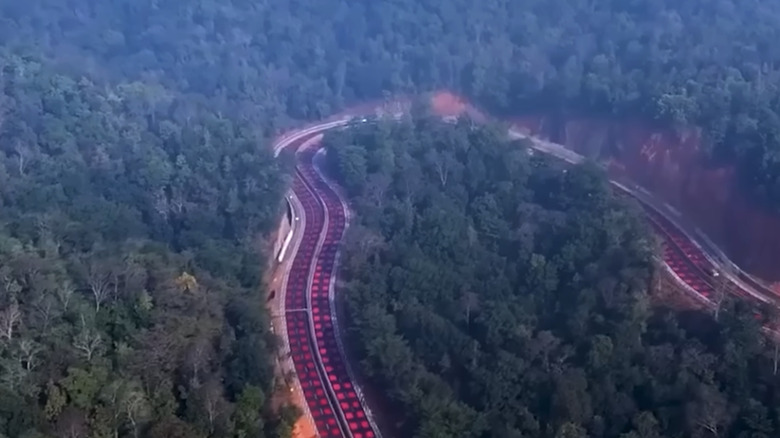
The layer of red paint on this section of the road is a visual cue for drivers to slow down. It is also raised slightly, providing a physical cue as well. The idea is that drivers will naturally slow down when they come across this section of the road, rather than abruptly braking. On the road, color choice matters, and the choice of red over yellow was deliberate. The color is a natural cue for humans to slow down, as it is associated with stop signs and traffic lights. The bold color — which also shines bright red at night — is also rarely used for road paint and immediately captures a driver's attention.
In case you're wondering, this hazard paint is designed to be compatible with advanced driver assistance systems such as lane assist. It might seem like those systems would be triggered by these lane colors, but they use clues such as edge detection and reflectivity in addition to color recognition, so the road color is not expected to interfere with their functionality.
Still, about a mile of red paint isn't enough to protect vulnerable wildlife. The stretch is part of a larger 7.4-mile system that includes 25 dedicated animal underpasses and fencing to keep animals off the roadway and guide them to the underpasses. Research indicates that fencing and dedicated crossing points can decrease the risk of colliding with a large mammal by 80%. India appears to be hoping that the silent "slow down" message the red paint sends can help even more.