

This Chevron Exec Has An Answer To Rising Gas Prices That Americans Aren't Going To Like
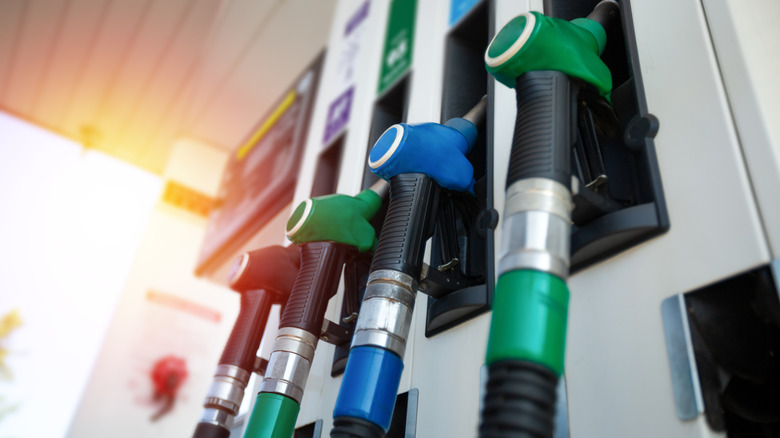
Gas prices are skyrocketing across the United States and around the world. For Americans in particular, according to the BBC, the average price across the country hit $4.02 a gallon on March 31 2026, a height it hadn't reached since Summer 2022. At the time of writing, the current average still stands at about this point, while the current average for diesel is $5.511. Along with other daily essentials like groceries and energy bills, these are the cost increases that hit hardest, and we look to industry experts for insight as to when there might be some relief.
Unfortunately, Chevron president of downstream, midstream, and chemicals, Andy Walz, doesn't appear to have any words of comfort for anxious drivers at present. In a CBS News interview, Walz was questioned about any options American drivers may have when faced with rising costs. He responded, "people should try to drive less, they should try to conserve energy [...] energy's essential for people's lives, but we should conserve it."
He also noted that he doesn't see a "silver bullet" to tackle the rising prices but added that the United States' access to crude oil that Chevron and others are using is, in his view, "helping Americans buffer their price." Ultimately, it's a situation that could worsen the longer it goes on, according to the executive. Needless to say, then, acknowledging just how vital vehicles are to Americans (and drivers around the globe) while also suggesting that they use them less is far from the most foolproof of solutions to the crisis.
Fighting the ongoing crisis
There are millions of U.S. drivers who are reliant on their vehicles to get to work, and who don't have the option of performing their role from home. In fact, those vehicles are their work in a lot of instances, not to mention essential transport for families across the country. As such, we often have little option but to pay the best prices we can find at the pump, whatever they may be.
This isn't to say that there isn't anything at all to Walz's words, though. There are some ways to save money at the pump in the face of rising prices, and careful driving such as minimizing the time you spend idling can be a valuable part of that. Where it's possible to cut down on journeys that may not be important, that's certainly something to consider too. The reality, however, is that consumers simply driving less isn't a substitute for oil giants like Chevron doing their bit by using their resources for those customers' good.
This, according to Walz, is what it's trying to do. Speaking from the company's huge refinery in Pascagoula, Mississippi, he told CBS News, "we're bringing in Venezuelan crude [...] we're running this facility 24/7, we're doing it safely, and that's how we can lower the price to Americans." This crude, he states, "brings revenue to Venezuela" while also "lowering prices in America, because we have access to a new supply point that we didn't have previously." It's an unfortunate fact that most of the money from fuel price increases isn't going to gas stations, but Walz claims that a prospective decrease in prices is about factors such as careful increases in production in Venezuela and careful management of energy use by consumers.