

Alleged Supercomputer Hack Could Be The Biggest Breach In China's History
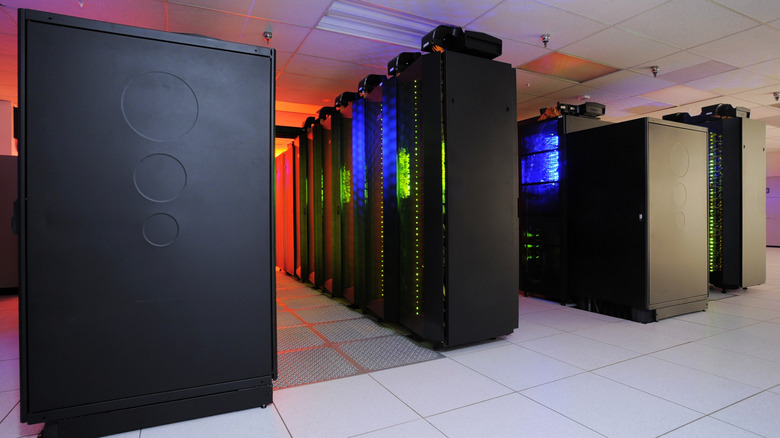
A hacker has allegedly stolen a massive amount of classified data from one of the nation's state-owned supercomputers. While it stopped short of revealing which of China's many supercomputers were affected by this breach, a CNN report claims that the stolen dataset contains more than 10 petabytes of data — enough to make it potentially the largest data breach in China's history. The affected supercomputer is believed to be housed at China's premier National Supercomputing Center (NSCC) in Tianjin, which has historically been home to several of the world's fastest supercomputers.
The supercomputing hub at NSCC is extensively used by several clients across China, with CNN estimating the number to exceed 6,000. These clients include multiple Chinese state-run agencies, including the Commercial Aircraft Corporation of China (the company behind the Comac 919 passenger jet), the National University of Defense Technology, and the Aviation Industry Corporation of China. The large trove of data accessed by the hacker includes classified defense documents, missile schematics, and research data from aerospace engineering, bioinformatics, and fusion simulations.
The first indication of this breach dates back to early February 2026, when an anonymous user "FlamingChina" uploaded a sample of the dataset to a Telegram channel. Cyber researchers immediately got to work, and several of them have verified the data to be genuine. They were also able to confirm that the hackers were offering several users a "limited preview" of the data priced at several thousand dollars. Anyone with deeper pockets was also given the option to gain unrestricted access by paying hundreds of thousands of dollars' worth of cryptocurrency.
How did the hackers pull it off?

While a detailed technical breakdown of the breach is beyond the scope of this article, cybersecurity researcher Marc Hofer claims that the breach was primarily achieved via a compromised VPN domain. Speaking to CNN, Hofer claimed that he confirmed this method directly with the person allegedly behind the breach, whom he was able to contact via Telegram.
Hofer added that once the hacker had access to the supercomputer, he deployed a botnet — essentially a set of automated programs designed to extract, download, and store as much data as possible from the target supercomputer. The botnet was programmed to extract and store this data discreetly without alerting the Chinese cybersecurity apparatus. This approach also meant that it took the hackers well over six months to siphon off the claimed 10 petabytes of data.
Now, there is no denying that this alleged breach will raise questions about the robustness of China's technology infrastructure. While China has tried to minimize such data breaches in the past, this newest incident is only the latest in a long string of such cybersecurity-related breaches in the country. What makes this particular breach far more worrying from a Chinese perspective is the sensitive nature and sheer volume of the leaked data. Only time will tell whether the latest supercomputer data breach will prompt China to accelerate its cybersecurity apparatus