

Ukraine's New Fleet Of Interceptor Drones Are Impressive - Here's How They Work
The Russo-Ukrainian War has been the first major conflict where the use of drones has been widespread. Some of the most commonly deployed drones by Russian forces are the Iranian-designed Shahed-136 drone or Russian-made variants of the design. These relatively low-cost drones are designed to overwhelm air defenses through sheer volume, making interception difficult — and potentially costly. It's estimated that the Shahed-136 drones cost about $35,000 per unit. While this isn't a figure to be sniffed at, it pales in comparison to most surface-to-air missiles, with something like a single Patriot missile costing $4 million.
From a purely economic standpoint, countering vast numbers of drones with missiles that cost millions of dollars simply isn't feasible in the long-term. This is why Ukraine's new fleet of interceptor drones is not just impressive — but critically important. Ukrainians are increasingly using drones to counter drones in conjunction with other air defense systems. Among the latest Ukrainian drones to enter the fray is the Strila drone, manufactured jointly by Quantum Systems and WIY Drones.
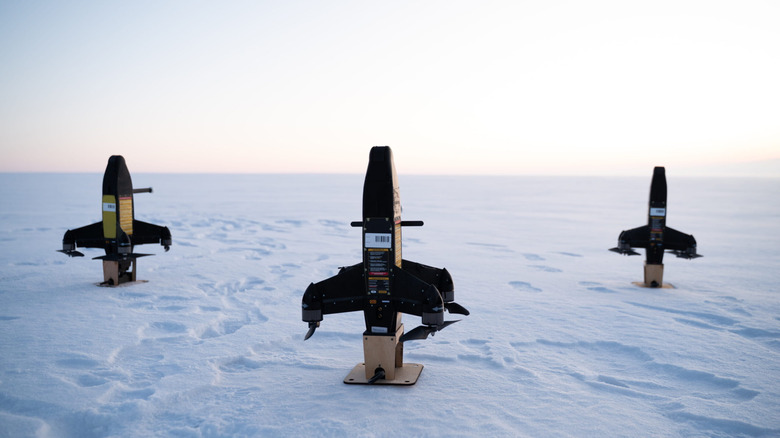
Named after the Ukrainian word for "arrow," the Strila is a high-speed interceptor drone designed specifically to hunt and destroy incoming drones before they reach their targets. Let's have a closer look at the Strila, how it intercepts incoming drones, and how it fits in with other high-tech tools used in the Russo-Ukrainian War.
What we know about the Strila and how it works
At the time of writing, the Strila hasn't been used in actual combat situations, but it has been tested extensively and certified as being at "Technology Readiness Level 7." Essentially, this means that the drone has passed tests to prove it works in real-life combat scenarios. Living up to its arrow name, the Strila is no slouch. It can reach speeds of up to 220 mph, allowing it to rapidly close in on incoming targets. That speed is supported by an aerodynamic design and custom-built propellers engineered to withstand the stresses of such high-velocity flights.
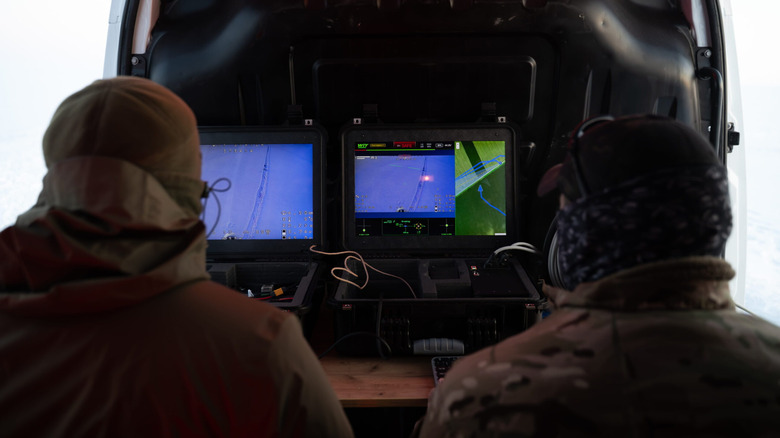
Rather than relying solely on automation, the drone works on a hybrid system. Autonomous systems and navigation software direct it to the general area of a detected threat. Once such a threat is detected, control is passed to a human operator. Essentially, this is the best of both worlds: Autonomous systems do the "donkey work" before passing it onto a human to apply the finishing touch.
To support this role, the Strila is equipped with a combination of daylight and thermal imaging cameras, allowing it to operate even in low-light conditions. With a reported flight endurance of about 10 minutes, this is a drone that's optimized for short, high-speed interceptions. It also features a return-to-base function that can be activated if a mission is canceled. Systems like Strila highlight how Ukraine is rapidly adapting its air defenses, not just to minimize the threat of drone strikes, but to do so for less than $4 million a shot.