

How Automakers Are Using Blockchain Tech, And Why It's So Useful
You don't hear much about blockchain these days. Back in the late 2010s, when everyone was talking about NFTs and cryptocurrency, companies were keen to put "blockchain" front and center on their press releases. "Look at us," they were saying, "we're embracing modern technology." But after the sad evolution of cryptocurrency, brands seemed to decide they didn't need the baggage that came with the word "blockchain." But that doesn't mean it's gone away — just that companies are likely to call it something different now. You're just more likely to hear things being referred to as distributed ledgers or "on-chain" tech.
According to the cryptocurrency exchange Coinbase, 60% of Fortune 500 companies are working on blockchain initiatives. The sectors that use blockchain the most are banking and finance, which account for around 20% of its use, but it's used across all types of business, including the automotive industry.
Before we look at how carmakers use blockchain, it's useful to understand what exactly blockchain is. At its most basic, blockchain is a shared digital record that isn't controlled by any single company or authority. Instead, identical copies are stored across a network of computers, and new information is added in secure, time-stamped "blocks" that are linked together. Because each new entry is verified by the network and connected to what came before it, the record is very difficult to alter or tamper with. This immutability makes it useful for automakers who are looking to provide things like digital battery passports and vehicle provenance. However, some car manufacturers are planning to take the tech even further.
Blockchain is used to store records about supply chains and provenance
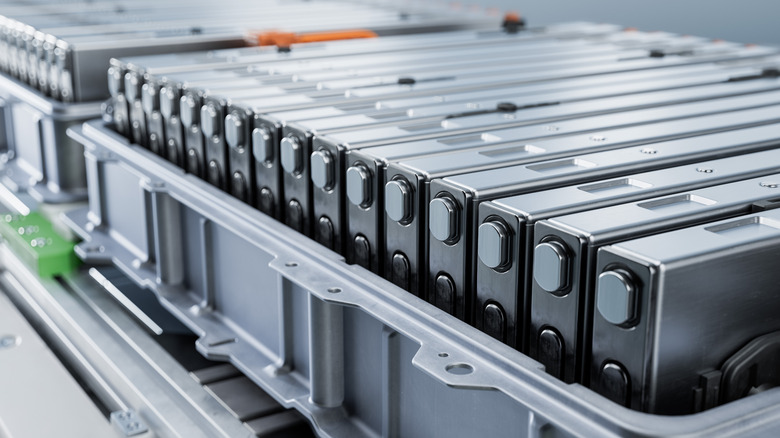
Blockchain is useful when it comes to storing digital battery passports. These are electronic records tracking the lifecycle of an EV battery and are going to be required in all countries in the European Union by 2027. This regulation affects all automakers who are selling into Europe — including those headquartered in the United States. Automakers need traceability data, and supply chains are international. A modern electric vehicle battery isn't a single bill of materials so much as a web of upstream mining, refining, processing, cell manufacturing, pack assembly, recycling, and logistics. A blockchain-powered distributed ledger can serve as one definitive record of permissions and provenance that can be shared by different companies.
In June 2024, Volvo Cars launched what it claimed to be the world's first EV battery passport for its EX90 SUV. The passport uses blockchain to record information such as the origins of raw materials, recycled content, and carbon footprint. Volvo plans to expand the scheme to more of its cars. Meanwhile, Tesla has implemented blockchain solutions to trace the provenance of cobalt in its supply chains. Hyundai and Kia developed an Integrated Greenhouse Gas Information System (IGIS), using blockchain to record emissions across the whole lifecycle of a vehicle.
Another use for blockchain is providing proof of provenance for collectible cars. Porsche is utilizing its unalterable nature to launch a blockchain-based digital passport pilot for classic cars, as well as other collectibles like watches or paintings. Automakers aren't the only ones using blockchain for car records. In July 2024, Reuters reported that the California Department of Motor Vehicles had digitized 42 million car titles using blockchain technology to detect fraud and streamline title transfers.
Other uses for blockchain in the automotive industry
One of the main uses of blockchain in the automotive industry is handling companies' finances. For example, BMW uses a blockchain system from JPMorgan to handle international financial transactions automatically. However, some pilots and plans suggest that there may be more innovative uses in the future. The much-hyped — but still not yet available — Sony/Honda Afeela EV sedan promises an "on-chain mobility service platform leveraging a token-based incentive model." Details are still pretty fuzzy, but it does indicate another use for blockchain in the automotive industry, even if it is just persuading people to share their data by giving them cryptocurrency. Nissan is proposing something similar with its Nissan Passport, which it describes as a "digital certificate that expands the range of experiences you can access based on your actions."
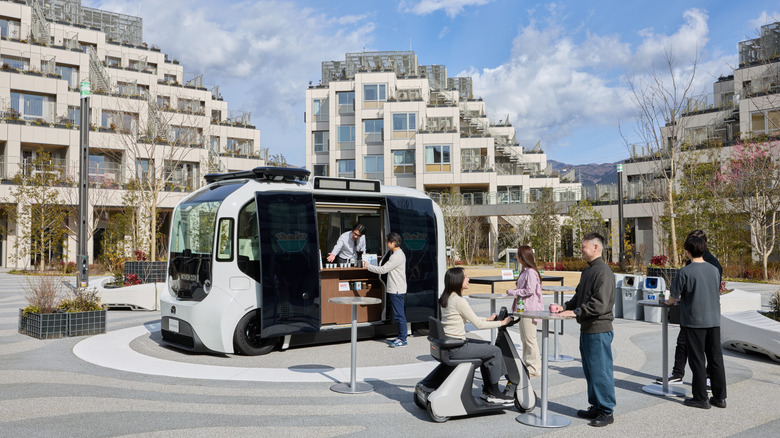
Toyota, the world's largest automaker, is betting big on blockchain tech and has its own "Blockchain Lab" exploring how blockchain could be used to give vehicles a secure digital identity, bundle fleets into investable portfolios, and make it easier to attract funding for things like electric vehicle fleets and new mobility services. It is proposing a new blockchain-based protocol called the Mobility Orchestration Network (MON), which would link vehicles with other agencies, like regulators, on one all-encompassing digital platform. Toyota's interest in blockchain goes beyond car manufacturing. It created Woven City, a blockchain-integrated smart city, in September 2025. The goal here is to use blockchain as a trusted digital system that lets people safely share vehicles, electricity, and city services without needing middlemen or paperwork.