

What Is A 3-Way Switch Used For & Why Would You Need To Install One?
At first glance, the light switch may seem like the most simplistic everyday device, but the standard switch isn't the only one available. For instance, there are wireless smart switches that can be useful for your home. Many homeowners also like using 3-way switches, allowing for control of one light fixture from two separate locations. It might sound unnecessary, but it can actually come in handy.
For example, if your home has stairs, it's a good idea to have a light switch at the top and the bottom. That way, you can control the light from either level, and always see where you're going. The same is true if you have a long hallway, because even though you're on a flat surface, it's still difficult to see at night. Additionally, if your living room or kitchen has two doors, installing a 3-way switch can save you some time, whether you're coming or going.
Unlike the standard, a a 3-way switch doesn't have a fixed on or off position. In fact, it doesn't even have those words on it. So rather than choosing on or off, you're really just changing the path of the electricity. A 3-way switch doesn't use more power than a standard switch setup, either — it's more about giving you a level of convenience that you might not have had otherwise.
3-way switch functionality and installation tips
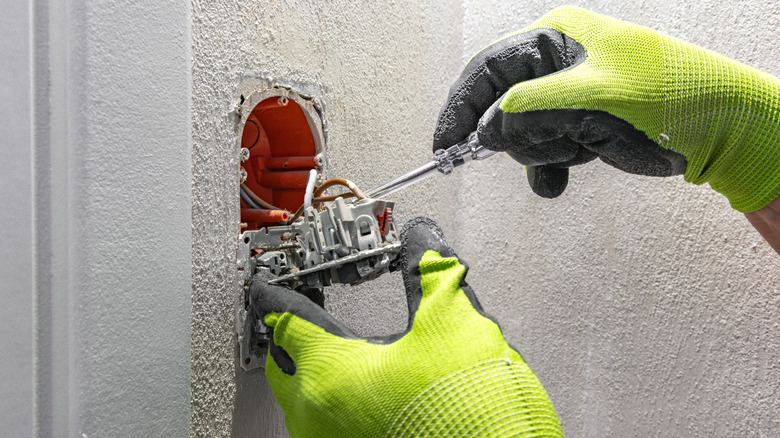
To install a 3-way switch, you'll need two of them per fixture for a traditional setup. You'll also need proper wiring. This switch requires a common wire and two traveler wires to function properly. The common wire is used to carry alternating current (AC) to or from the light fixture, and the traveler wires are designed to move the electrical signal between the switches.
Both of the 3-way switches you install are designed to complete or interrupt the circuit. When the circuit is complete, the light turns on. When the circuit is interrupted, the light turns off. The light's status depends on the combined positions of the switches. Flipping either switch will change the state of the circuit, which means either switch can turn the light on or off.
Always turn off the power before beginning any electrical work to avoid injury. A voltage tester, a tool at Home Depot anyone can use, can ensure there's no electricity running to the switch. It's also a good idea to wear safety goggles and gloves rated for electrical work. Get your tools ready, and once you remove the faceplate, take a pic of the setup, as a reminder. Most importantly, if you have any questions, call an electrician for advice, or to do the job. It's better to pay a professional and stay safe.