

5 Of The Worst (And Most Dangerous) Ways To Use A Miter Saw
We may receive a commission on purchases made from links.
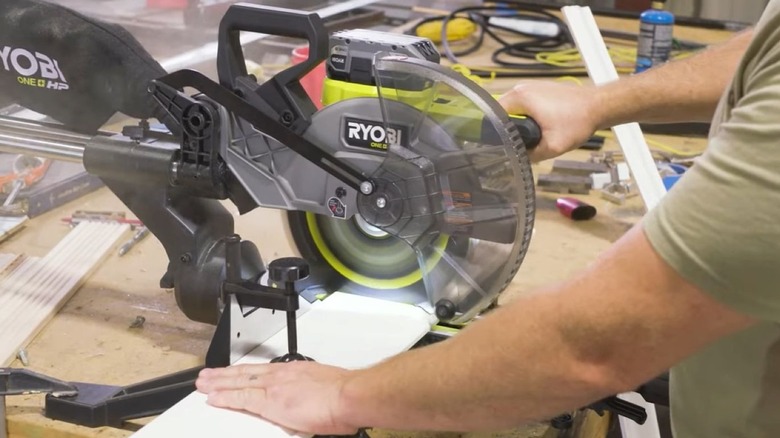
In the hands of an experienced user, a miter saw is one of the most useful tools in a shop. Whether it's a sliding miter saw or one with a stationary blade, a miter saw can make cuts straight down or, with a few easy miter and bevel adjustments, at vertical or horizontal angles. Also known as a chop saw or drop saw, miter saws are fantastic for simple, repetitive cuts like those used for baseboards, laminate flooring, or rough framing.
Miter saws, like most woodworking tools, are inherently dangerous. A powerful motor quickly rotates a sharp blade mere inches from your fleshy bits whenever you use a miter saw, and while the tool is one of the most useful for any homeowner, DIYer, or hobbyist, it's also very easy to put yourself in a dangerous situation.
As an amateur woodworker myself, I've learned a lot of these lessons the hard way. Unsafe practices can quickly become habits if you don't notice and correct them, so in this article, we'll point out some of those practices, along with some easy remedies, so that you'll be making those quick cuts with all of your limbs and digits still attached.
Not Wearing the Proper Clothing and PPE
This is basic information that applies to any cutting power tool, including circular saws and table saws. One study published in 2024 estimated 786,900 patients were treated for power tool-related injuries in the U.S. between 1998 and 2005, a number that may have risen since the rise in DIYers and YouTube influencers.
Loose clothing and long hair are the enemy of both foodservice workers and woodworkers. Failing to roll up your sleeves or secure long hair can result in a very quick and very painful accident. Your miter saw can and will pull an arm or a chunk of hair into its blade way faster than you can fight it, and our skin and hair aren't exactly compatible with rapidly rotating steel teeth.
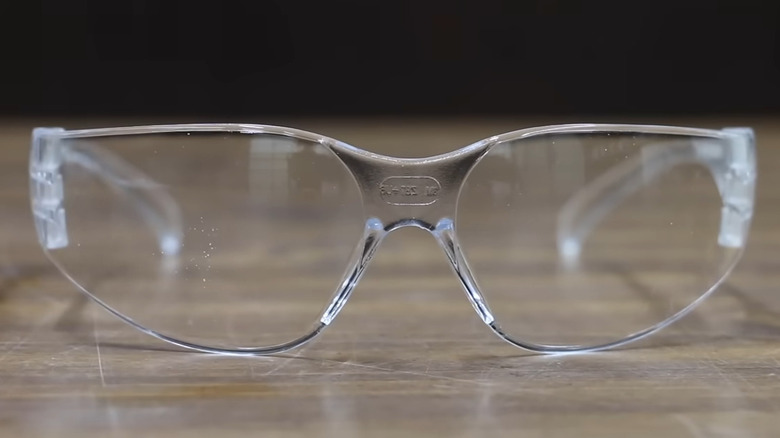
Eye and ear protection may seem like a nuisance, especially if you're making a single cut on a board you just undercut. But neglecting PPE can lead to the tinnitus I experience daily after a career in auto repair. In fact, OSHA cited eye and face protection violations on construction sites as its ninth most cited standard in 2024, meaning more than a few of us were caught without our goggles or earplugs at work.
Using The Stock Blade That Came With Your Miter Saw
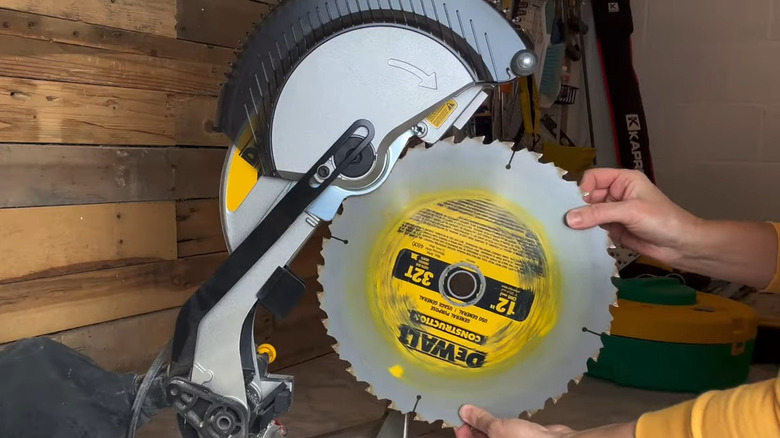
It's a common issue among both cheapskates like me and new miter saw users. You buy a new saw, you don't want to spend any more money, and you end up using that stock blade for everything from rough framing to laminate flooring to finishing cuts on plywood. The problem is, that blade is often the cheapest one the saw manufacturer makes — often a 24- or 32-tooth framing blade designed for the roughest of cuts.
It's imperative that you replace that blade ASAP, especially if you know what kind of work you'll be doing. The general rule is that more teeth make for a finer cut, with some blades featuring over 100 teeth. There are specialty blades for masonry or metal as well.
The number of blade manufacturers can be overwhelming. Fortunately, we've already made a list of the top brands and some affordable picks. CMT, Freud, and Forrest all make some of the best professional-grade blades available, but even ordering a Diablo or DeWalt general-purpose blade from Amazon — both are around $40 — will help make your cuts cleaner and your work easier, and keep you from being that poor carpenter who blames his tools.
Rushing Your Cuts
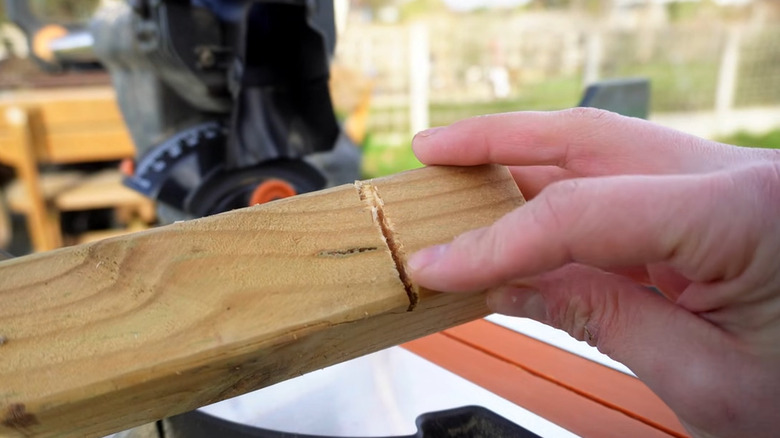
Impatience can cause the worst accidents. If you don't wait for your miter saw to reach full speed, you'll get poor cuts and tearing. This is a problem with all saws, but miter saw users are especially guilty of rushing their cuts because they start moving the saw down the second they power up the saw. Not only can that practice mangle wood, but the excess debris can injure operators and others around them.
New woodworkers often blame the blade or saw for sloppy cuts or torn materials — I know I did when I started out — but a little experience will teach you to wait a few seconds for the miter saw blade to spool up before making contact with your wood to get a clean, straight cut. It won't solve every problem you may have with your miter saw, but it should at least get you on the right track.
Not Supporting Your Material
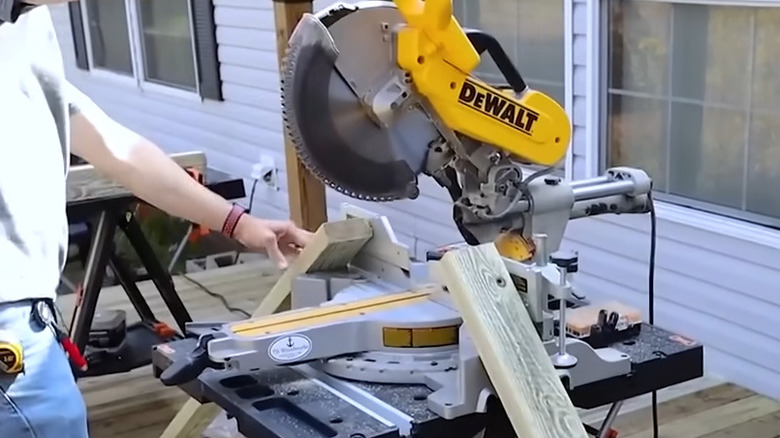
Cutting larger or longer materials with a miter saw is often the whole point of having the tool in the first place. Unfortunately, most miter saws don't come with a stand, and many users will rush a cut while trying to keep the piece of wood as straight as possible. Aside from the aforementioned issues with rushing your cut, holding a long board in place to reduce bend during a cut can result in injury or damage to the material.
A better, safer solution is to find literally anything to support that material. The first step to reaching that goal is to use the little clamp that's on nearly every miter saw. It's already there, and even if you've got a 12-foot baseboard to chop down, it can help secure at least one side of the material. Next, find a way to support the other end at roughly the same height. That doesn't necessarily mean spending a lot of money — in my garage, I often used what was around, usually a sawhorse, my workbench, or even the open tailgate of my little Ford Ranger.
If you're finding yourself enjoying the hobby, have a lot of cuts on long boards to make, or are using a portable miter saw on the job, investing in even a cheap stand with support wings (like this Amazon best seller that goes for under $100) will make life a lot easier, cuts a lot cleaner, and the work a lot safer.
Crossing Your Cuts
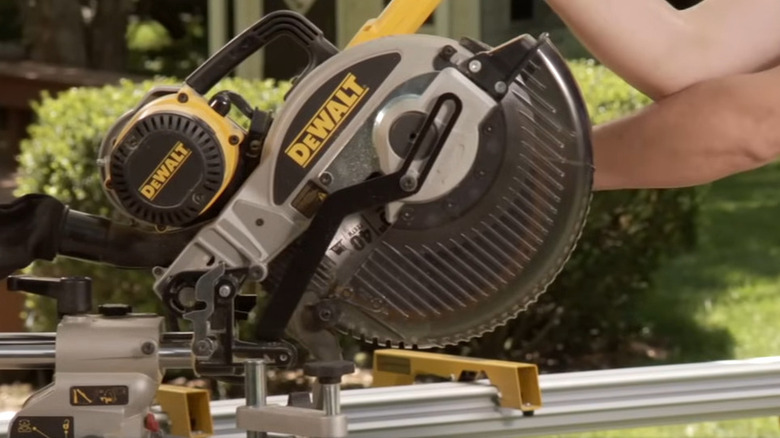
This isn't a note on cut technique. Rather, it's the name woodworkers have given to one of the most dangerous mistakes miter saw users of all experience levels make from time to time. "Crossing your cuts," or "crossing your arms," is the practice of placing your arms in front of or across your miter saw — meaning your arm ends up crossing the blade during the cutting process.
"But SlashGear," you say, "I am not an idiot child. Why would I do this?" You'd do it because you're cutting a long piece of baseboard, or a 2x4x12 for a project, and you're in a hurry, and you don't have a proper stand or a buddy to hold it in place. So you use your right hand on the saw itself, and cross your left hand to support the wood, risking life and limb. It's an easy habit to get into, and a really stupid one that can land you in the hospital looking like Ash from "The Evil Dead".
Avoiding this maneuver is simple enough. Just keep your hands on either side of the tool. For right-handed users, this means your left hand is placed on the material to secure it, and your right hand operates the miter saw. If the board you're cutting is so long that you feel like you need to cross your arm over to secure the other side, you clearly didn't read the section of this article labeled "Not Supporting Your Material."