

Can Three Of The Best Modern Café Bikes Break My Love Affair With A 2017 Yamaha XSR900?
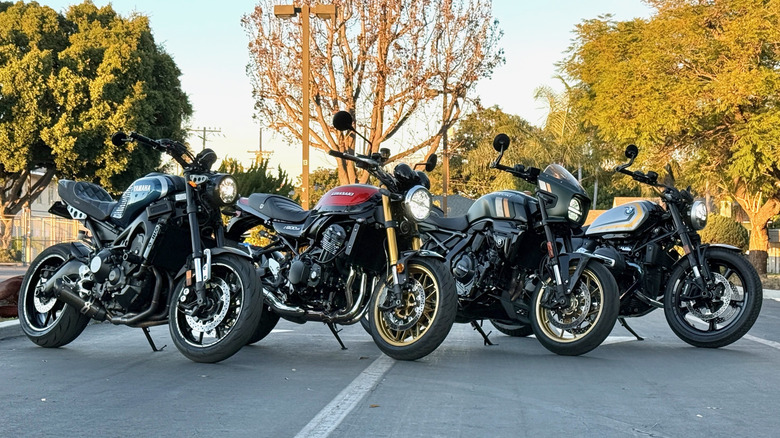
My Yamaha XSR900 is a real hoot. It's powerful, it sounds amazing, and it's properly fast. But it's getting old. I bought my 2017 XSR from the first owner a few years ago, and it's got over 20,000 miles on the odometer. In the next few years I'll likely see some serious value drop out of the bike if I continue to tack on the miles and maintenance costs will continue to rise.
So, it's time to commit to one of two ideas: Buy a new bike, or keep riding the old one for the foreseeable future. And with so many excellent café-styled bikes on the market now, there's a lot to choose from. In the last few years, there's been a pretty significant expansion of the café bike trend. Many manufacturers have leaned into the idea that people like classic, round-headlight styling, but they want it paired with legit performance and modern features.
How I tested these four bikes
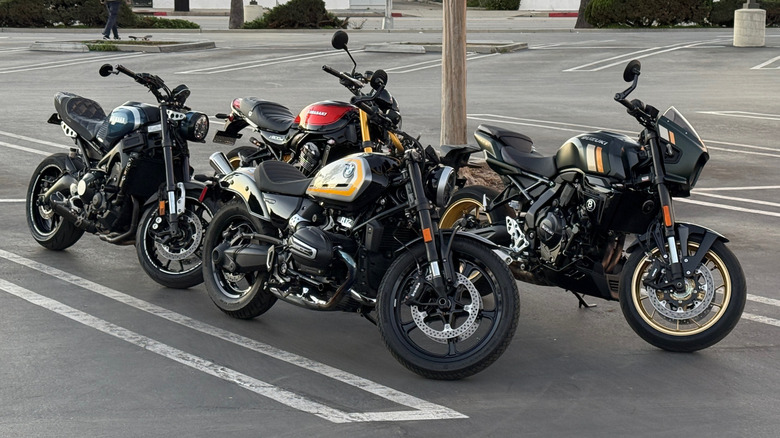
To see what was out there, and what stood a chance of replacing my XSR, I hit up a few motorcycle manufacturers and asked what they had in the fleet that fit my needs: Café motorcycle looks, but with modern tech. Fun to ride, but reasonably priced.
The bikes that fit my needs (and were available for testing) are as follows: BMW R 12, Suzuki GSX-8TT, and Kawasaki Z900RS. So, it was a four-bike test to see what could potentially replace a bike I love.
 Travis Langness/SlashGear
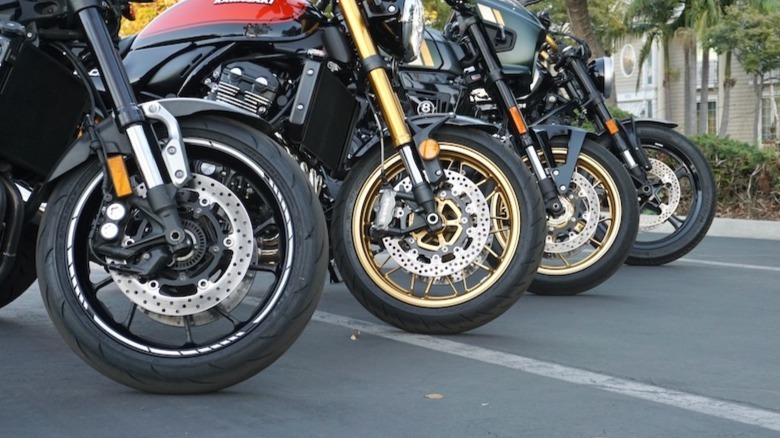
Back-to-back-to-back-to-back. I rode the BMW, Kawasaki, Suzuki, and Yamaha bikes you see here for a few weeks, rotating between each model and familiarizing myself with the controls, quirks, and features. Then, I spent a weekend riding them all on the same canyon routes, about 100 miles at a time, to see how they stacked up on my local roads. I wanted to see what they were like to live with and what sort of fun I could have on each bike — and what it would cost me to upgrade.
Pricing out the rivals
I bought my XSR used, so the price I paid for it isn't really a fair yardstick by which to judge the other bikes. The current XSR900 is a better starting point, coming in at $11,299 (including $700 destination fee). The modern but classically-styled Kawasaki Z900RS SE has an MSRP of $15,439, while the base trim non-SE model will set you back $13,739.
The BMW R 12 has some serious heritage, and it has a base MSRP of $13,640, but the options on the model you see here brought it up to $17,359. That doesn't put it completely out of range as a rival of the XSR, but it makes it a reach — still, it was definitely on my list of potential replacements.
The Suzuki GSX-8TT has an MSRP of $11,849, though there is a version called the GSX-8T that's slightly lower at $11,349, but it's missing the headlight cowl and the gold wheels.
What I liked about the BMW R 12
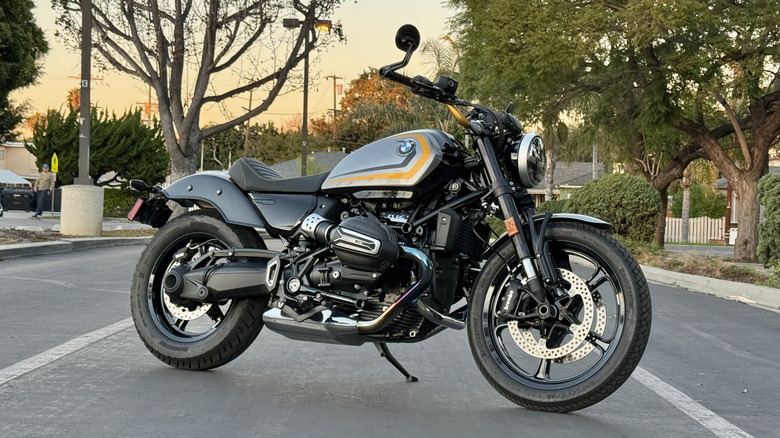
The BMW felt extremely well built, using excellent materials everywhere. Every time I swung my leg over the seat, I felt like I was riding an ultra-premium product. Up close, it's one of the best-looking bikes on the road today. The upfront pricing might scare some people off, but it's worth the extra cash.
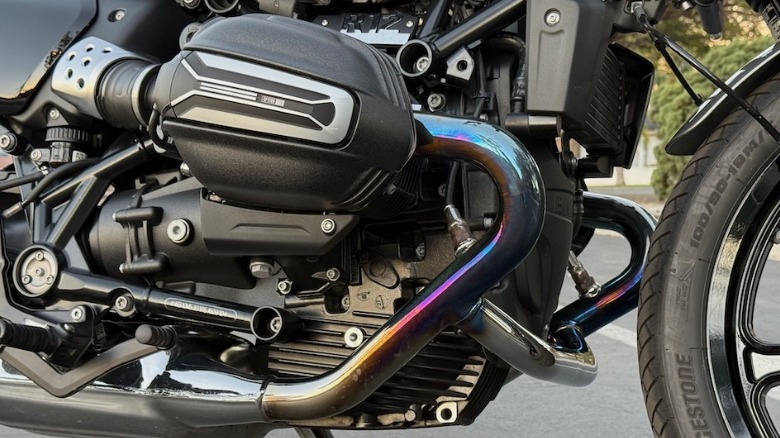
The R 12 is powered by a two-cylinder 1,170cc boxer engine that makes 95 horsepower and 81 lb-ft of torque. The back-and-forth rumble provided by the flat twin boxer engine is utterly unique. At stoplights, the bike felt like it was rocking back and forth, idling like a child on a swing that rocks to build momentum before jumping off.
 Travis Langness/SlashGear
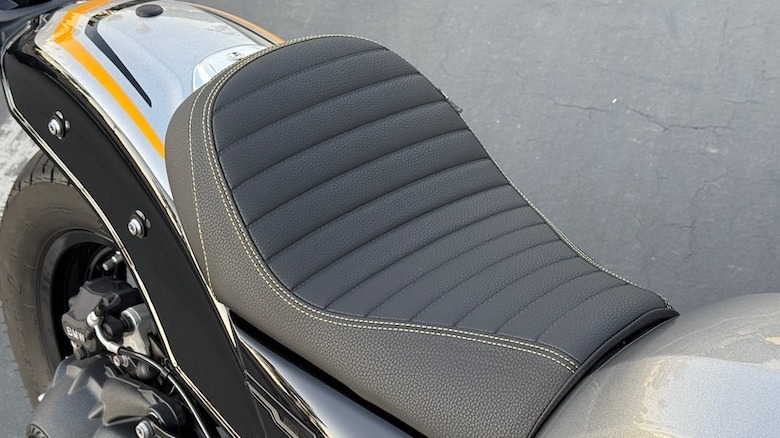
The thick-sidewall tires gave the BMW some small-pothole-absorption capabilities, but the ride was rough over larger road imperfections. Thankfully, the seat is made of thick and forgiving materials, so a long ride doesn't wear you down much. The Brembo brakes felt excellent — quick to respond, even if the BMW's weight added some stopping distance.
 Travis Langness/SlashGear
Stable at speed, and maneuverable for its size, the BMW felt good stitching a few corners together. It's also plenty low enough that I can flat-foot it while stopped (the seat height is just 29.7 inches), but the low ride height meant it was the only bike of the bunch to scrape during my test.
Things about the R 12 that weren't so impressive
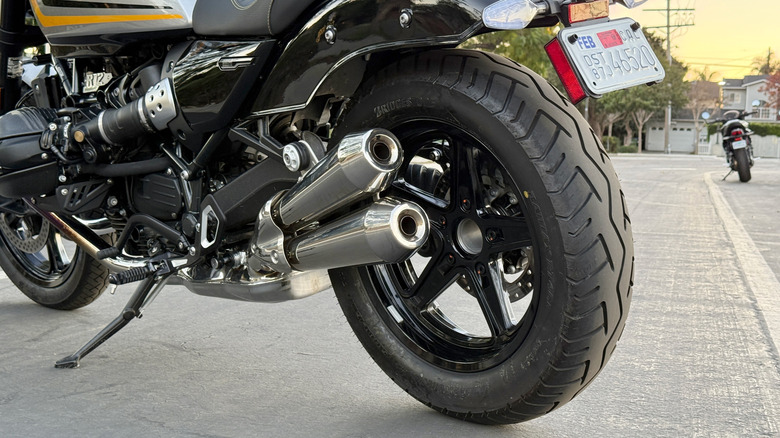
The R 12's engine felt so wide that I had to double-check to make sure it didn't outsize the handlebars. Splitting lanes and fitting into tight spaces felt particularly precarious, based solely on the engine's large footprint. The BMW is also missing a temp gauge and a fuel gauge, both of which could easily be displayed on the digital readout, but they simply aren't. Really, there isn't much in the way of information on the small display, other than RPMs and riding mode.
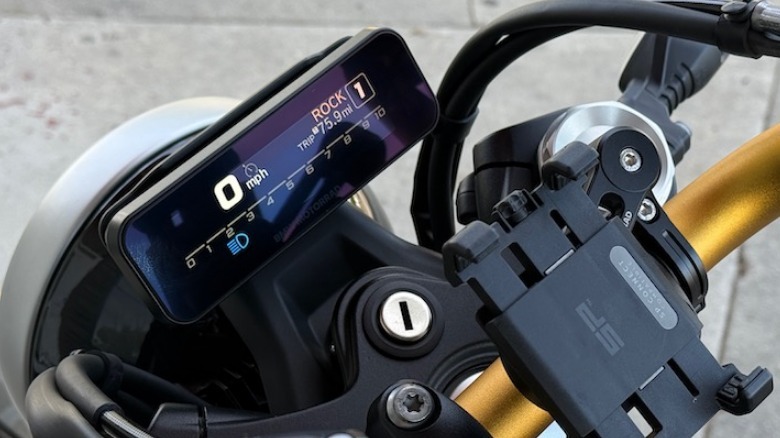 Travis Langness/SlashGear
The single-sided swingarm is an excellent aesthetic, and the paralever brace is a unique suspension setup, but with just 3.5 inches of suspension travel, those large imperfections mentioned earlier can bounce you around a bit. The BMW is also the heaviest of the bunch, with a 500-pound curb weight to throw around.
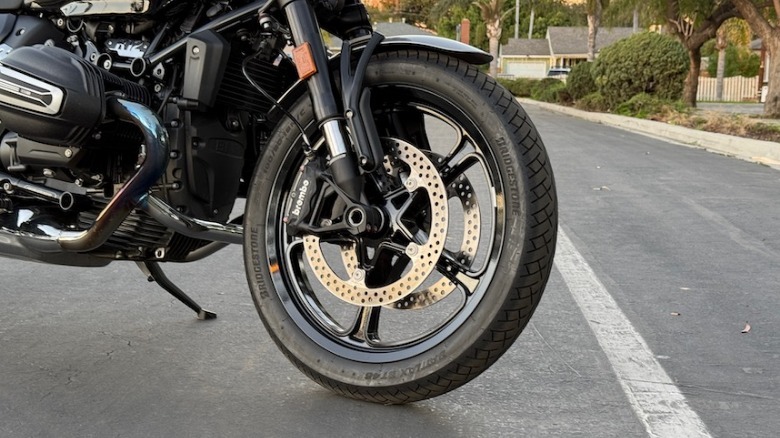 Travis Langness/SlashGear
The BMW's quick shifter is a bit delayed sometimes, too. From the time my foot performed a shift request at the foot lever to the time I felt the bike make the physical shift in the transmission, there was often a one-Mississippi count to fill the time delay.
The Kawasaki Z900RS makes a strong case for itself
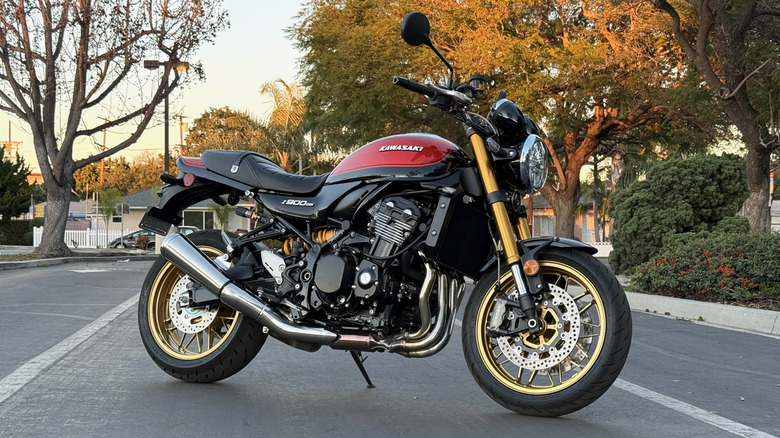
With four-cylinder power, the Kawasaki has the smoothest powerband of all the bikes assembled here. Power comes on in a linear and predictable fashion when you twist the throttle. The 948cc inline four-cylinder makes 115 horsepower and 73 lb-ft of torque, which is a match for my XSR, but no matter what scenario I was in, it never felt snappy or scary. The resonance of the Kawasaki's four-cylinder engine is excellent, too. Aside from my modified Yamaha, the Kawi is the best-sounding bike of the bunch.
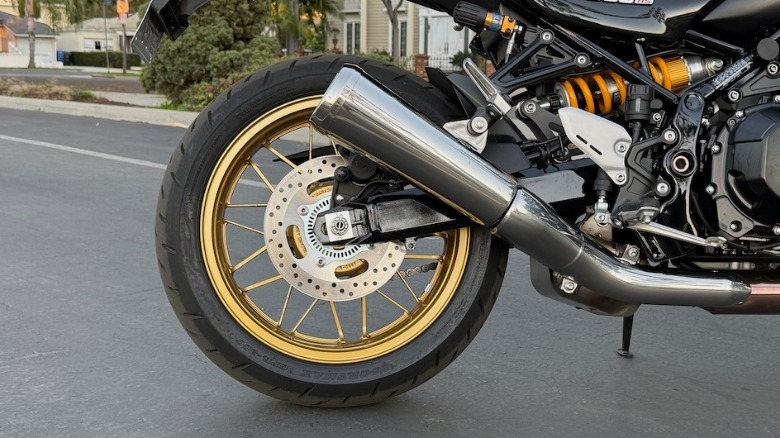 Travis Langness/SlashGear
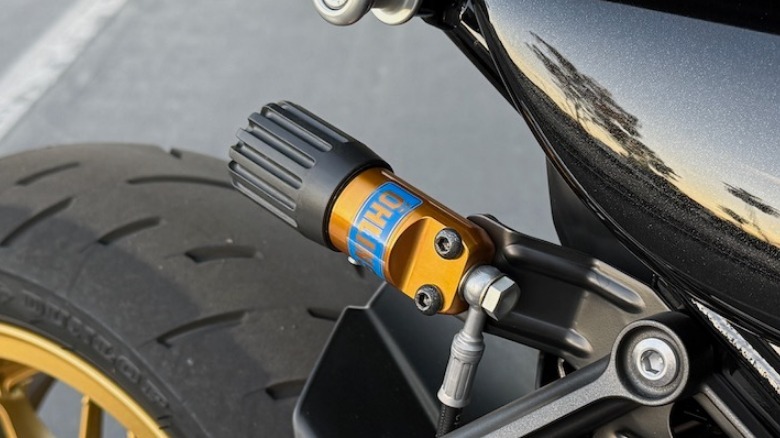
The Z900RS' highly-adjustable Öhlins suspension was also a highlight of the test. The bike turned in with ease, tracked well through corners, and absorbed mid-corner bumps without any detectable disturbance from the seat. The seat was excellent too — perfectly shaped and well-padded for long rides.
 Travis Langness/SlashGear
Styled after the classic Z1, the Z900RS really looks the part of a café bike. Of the three new bikes in this test, it's the only one without a proper TFT screen. Instead, it gets a pair of gauges with a small digital readout between them, so it feels a bit more nostalgic, but that does introduce a small issue.
The Z900RS has very few drawbacks
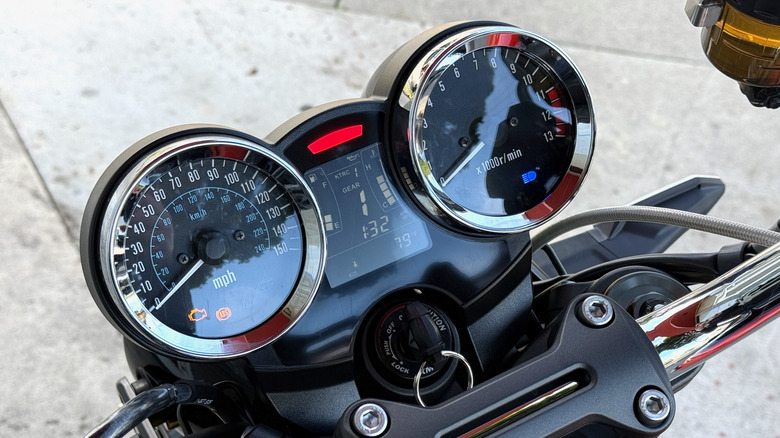
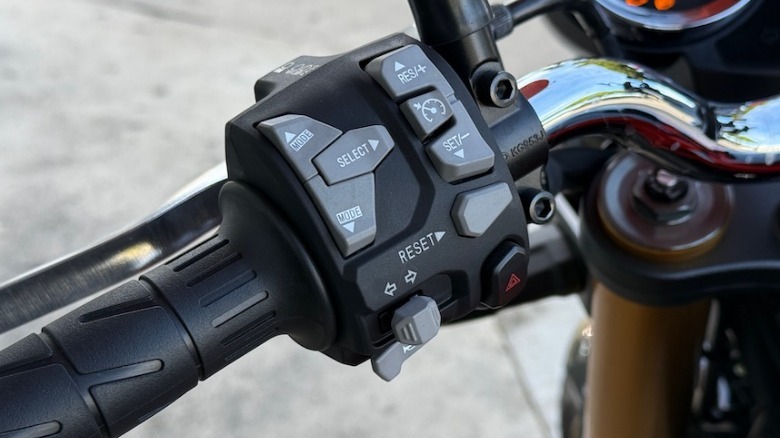
There's not a lot to complain about with the Z900RS. It's mostly competent in the areas where it isn't masterful. The tall mirrors look a bit silly, but that's an easy fix on the aftermarket. The biggest gripe I have is with the mismatched look and feel of some of the controls. The cruise control buttons and various other handlebar controls feel out of place on such a classic-looking bike.
 Travis Langness/SlashGear
The small digital readout between the two analog gauges feels squeezed in, with a completely different style than the rest of the bike. The big cruise-control buttons feel the same way. I get it – Kawi has to put some modern tech on this bike, but I'd almost prefer a stripped-down version without those features to make the view forward a bit better. That said, the cruise control did work well during my test, taking away some riding fatigue on open stretches of highway.
A strong entry from the Suzuki GSX-8TT
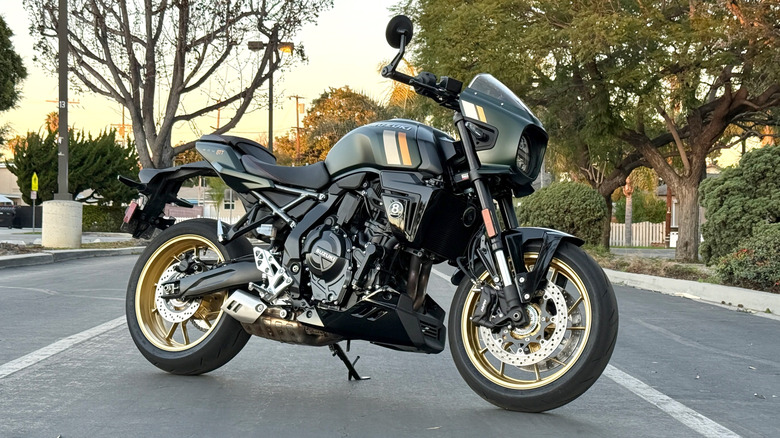
At just 445 lbs, the GSX-8TT is nimble and light on its feet. It moves extremely well through corners, though some of that is likely attributed to the aftermarket tires fitted to the test bike Suzuki let me ride. The 776cc parallel-twin engine puts out just 82 hp and 57 lb-ft, but it's an excellent fit for this bike, providing torque low in the rev range, and enough top-end power for faster maneuvers on the highway. On the highway and between lanes, the GSX-8TT feels narrow. It's thin enough to slice-and-dice traffic with no issues.
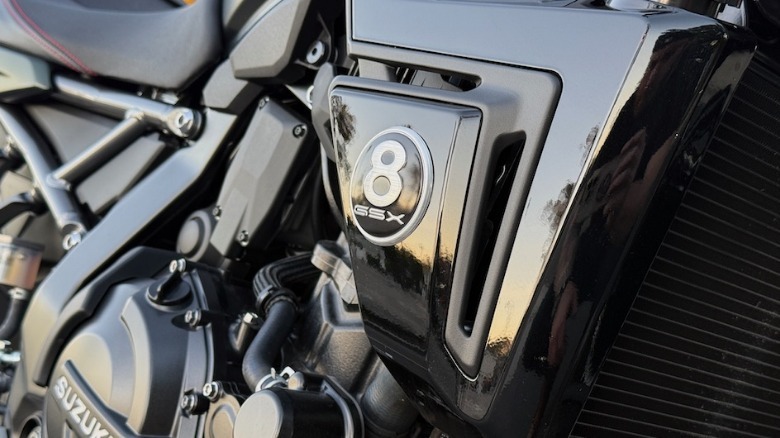 Travis Langness/SlashGear
On the highway and over rougher city streets, the Suzuki was unbothered by bumps and cracks in the pavement. The seat, while basic, is comfortable enough for long rides. Even with mid-corner bumps, the GSX-8TT felt stable.
 Travis Langness/SlashGear
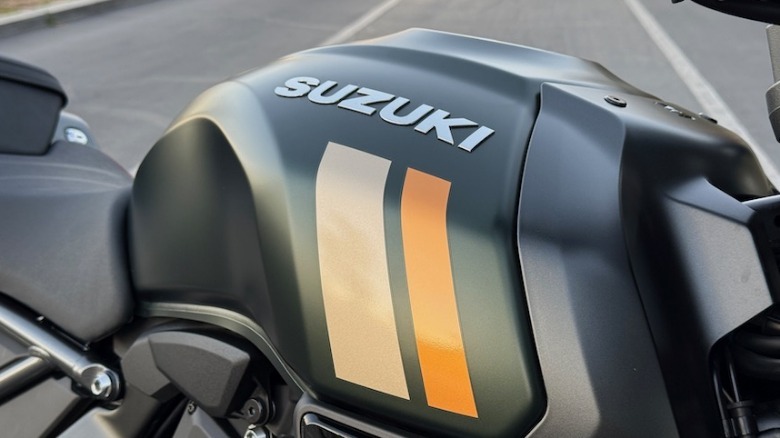
Aesthetically, Suzuki nailed it with the GSX-8TT. The Pearl Matte Shadow Green paint contrasted with the gold wheels is a timeless combination. The small stripes give it a bit of extra flare without looking gaudy, and the lower cowl rounds out the look of a bike that feels modded directly from the factory. For less than $12k, this is one hell of a bike.
The Suzuki GSX-8TT is good, but not perfect
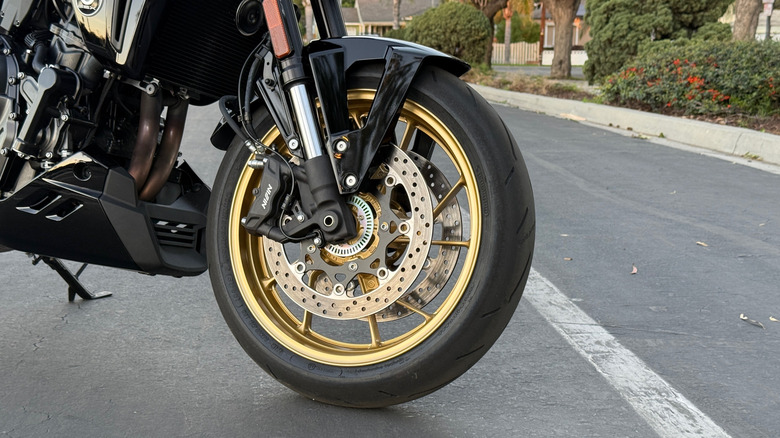
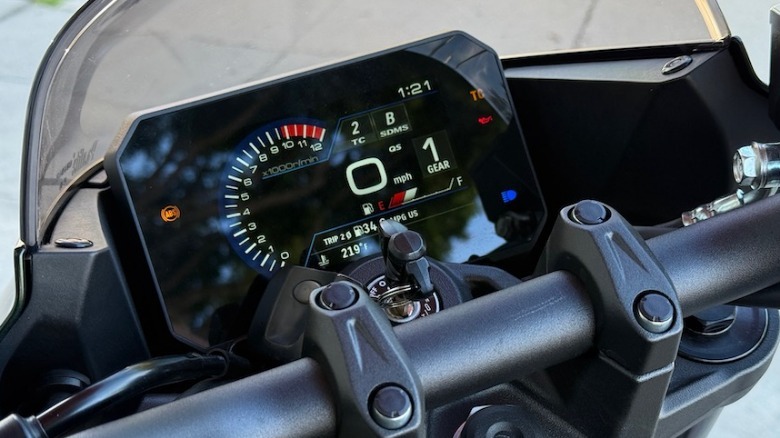
The GSX-8TT was probably my favorite of the three competitors I lined up to potentially replace my Yamaha. Like the XSR, the GSX felt playful and eager to perform. It had a nice combination of modern and classic vibes, without feeling like it was faking its aesthetic. The 5-inch TFT screen was the best of the bunch, with high contrast graphics and a display that didn't wash out in heavy sunlight (helped by the headlight cowl, no doubt).
 Travis Langness/SlashGear
Unfortunately, the brakes on the GSX-8TT were the least confidence-inspiring of the bunch. Both the front and rear levers felt a bit spongy, with poor feedback for a bike that felt so impressive otherwise. The bike required much more brake pressure than any of the other three to bring it to a similar stop. It's possible that this was an issue of boiled brake fluid from a previous rider (these media-loan bikes see some serious abuse), but if that's the way the bike rides from the factory, it's something I'd need to address right away.
The joys of a modified bike
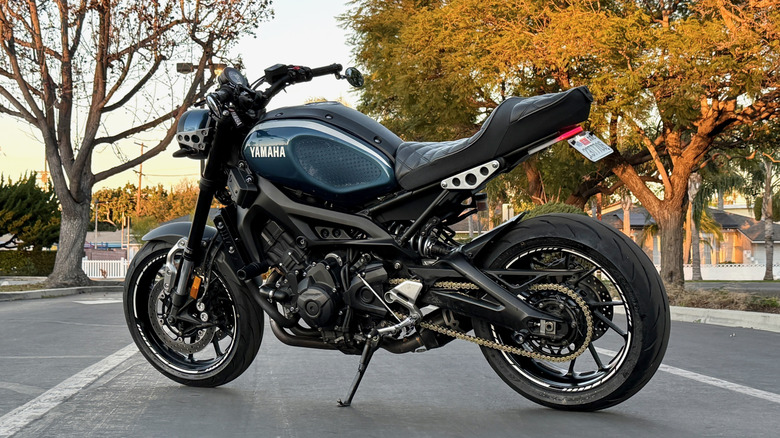
It's always hard to let go of a vehicle you've modified, so I figured listing what I like about my bike would help me be a bit more objective. Even before I started messing with it, this Yamaha XSR900 had a rowdy character. The 847cc three-cylinder engine feels like it wants you to wheelie every time you set off. The most aggressive ride modes are twitchy.
 Travis Langness/SlashGear
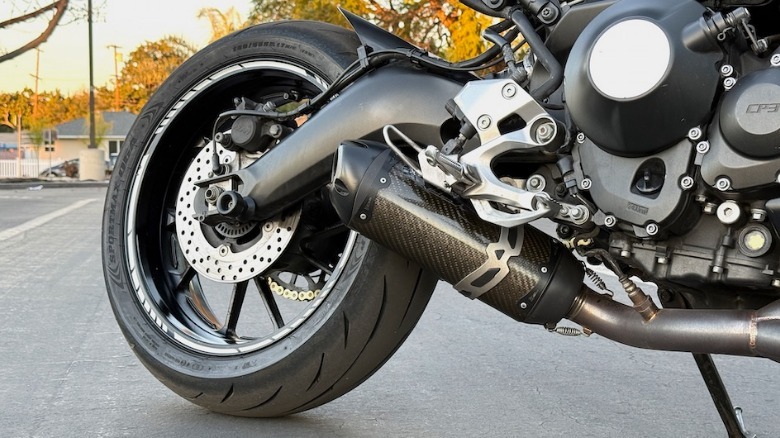
Yamaha doesn't list horsepower numbers for the XSR, but according to most sources, it's around 115 hp: still enough to keep up with all the modern bikes on this list (and the new version is only up to 117 hp, according to UK specs). And even before I started doing things like removing the passenger pegs, the XSR900 was light for its class, with a weight of just 430 lbs when stock (the 2026 model weighs just 425 lbs). It makes its way between corners with an urgency that none of the other bikes quite matched. Turn in is light and immediate with the XSR, which is part of what makes it such a versatile bike.
My XSR could use some updates
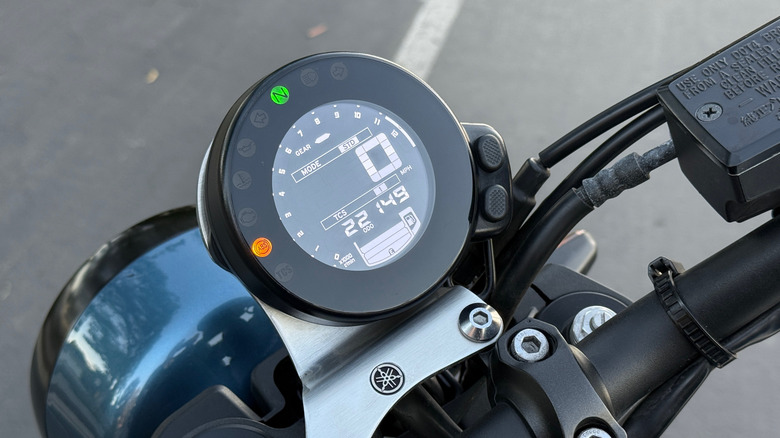
Being an older version of the XSR, my bike is missing some modern features. It doesn't have the modern bike's TFT screen (it's just a simple digital readout), nor does it have the larger-displacement version of the CP3 engine, so it's down on power a bit. Plus, my older XSR is missing a quick shifter. I might eventually install one, but the newest Yamaha has a quick shifter as part of the package.
 Travis Langness/SlashGear
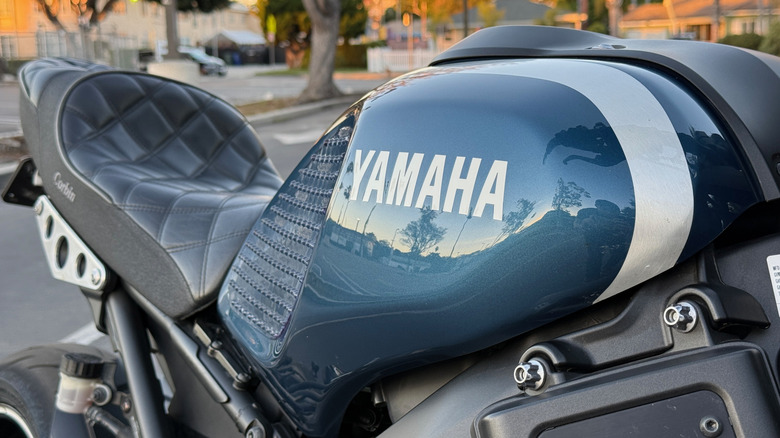
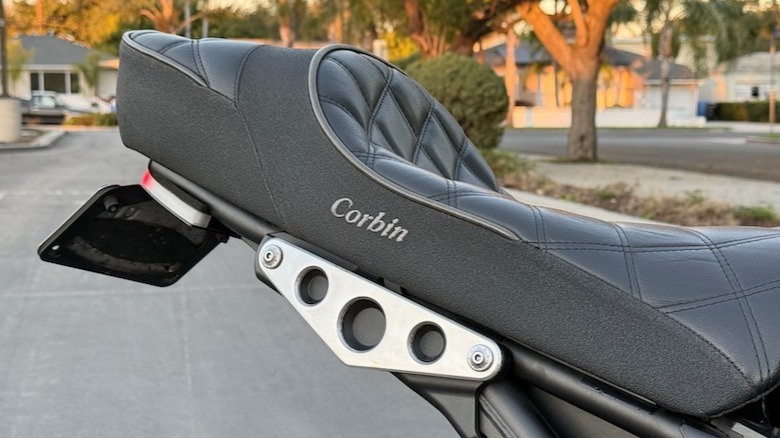
Having sat on a new XSR, it also has a better seat. I love the comfort that the Corbin seat provides on long rides, but it's a bit too wide. Even though it's set at a proper height, the width of the seat makes it harder for me to place my feet flat at a stoplight.
 Travis Langness/SlashGear
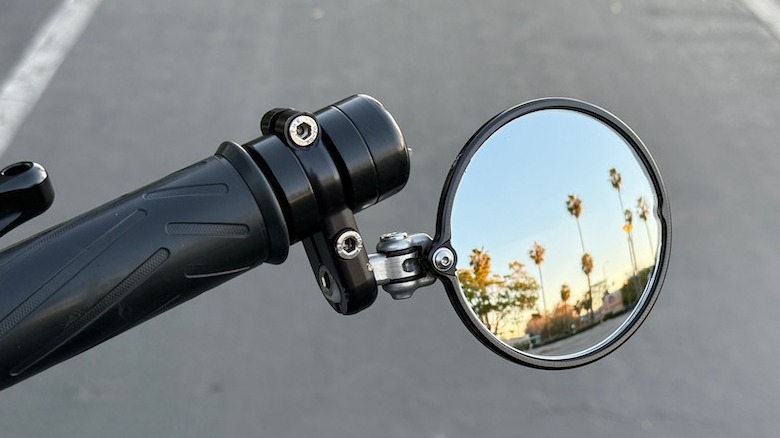
The aftermarket mirrors are great for splitting lanes. I can quickly fold them in, making the bike instantly a few inches narrower for fitting in tight spaces, but they're small and sometimes hard to see — ah, the trade-offs we make for aesthetics.
The verdict: Best big café bike
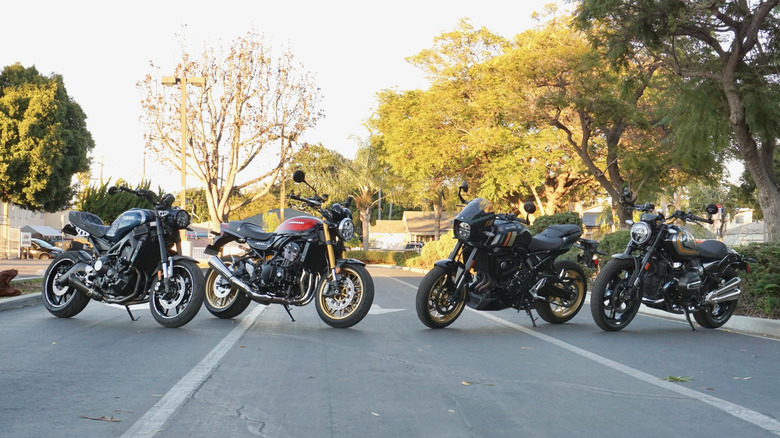
Every bike here was extremely good in its own unique way, and all three of the rival bikes gave me inspiration for modification of my own Yamaha. I'll probably be powder coating my wheels gold and adding some suspension upgrades very soon. But none of the other bikes were so earth-shatteringly good that I wanted to get rid of mine, which probably means that the latest XSR 900 would win this test too. Of the four, the Kawasaki was the most enjoyable to ride, and the Suzuki presented the best value for money; the BMW felt special, but the riding experience didn't justify its big price tag.
These aren't the only bikes in the class, though. There are all sorts of café-styled bikes available from Triumph, Royal Enfield, and even a few Hondas, potentially landing in the U.S. in the near future. Maybe it's worth repeating this test with a few of those British bikes in the near future (my DM's are open to Triumph and Royal Enfield loans). Did somebody say annual café bike round-up?