

Satellites Found A 'Brown Ribbon' Near Africa – Now Scientists Are Sounding Alarms
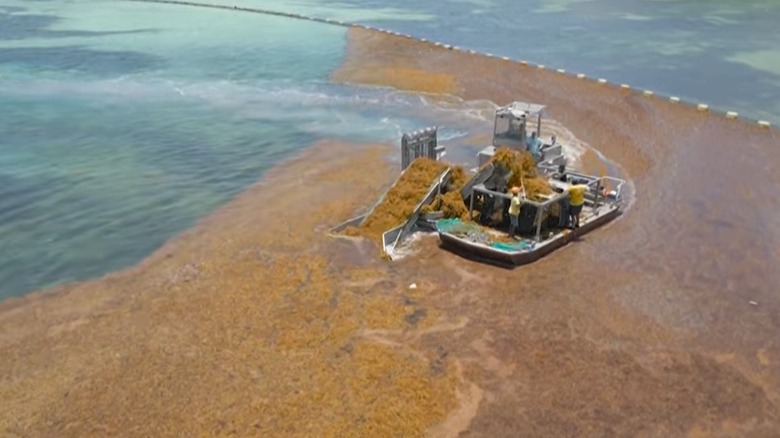
When you hear that something strange has appeared in satellite footage, it just sounds immediately ominous. When scientists raised the alarm about a brown belt that's longer than a continent, it definitely seemed alarming. But what exactly is the brown stripe that stretches across the Atlantic Ocean? And more importantly, should we be worried?
Satellites started detecting a brown stripe that stretches from the West African coast to the Gulf of Mexico. The strange object is actually 37.5 million tons of brown seaweed, a species called pelagic sargassum, once only found in the Sargasso Sea.
For the last 15 years, however, it's been spreading into the Atlantic — which is already at its "tipping point." Researchers at the Harbor Branch Oceanographic Institute at Florida Atlantic University have been analyzing four decades of satellite data, which has documented the seaweed's rapid growth in the Atlantic. The phenomenon is now called the Great Sargassum Belt, and it's not only disrupting ocean habitats and destroying beaches — it could be accelerating global warming.
Why is the brown seaweed creating a ribbon in the Atlantic?
Why is the pelagic sargassum spreading at such an alarming rate? Scientists have been researching this phenomenon since the 1980s and have found that the nitrogen content in the brown seaweed has increased by 55% between 1980 and 2020 — the nitrogen to phosphorus ratio also increased by 50%.
This means that the brown seaweed isn't only getting nutrients from natural ocean upwelling — a process where warm water is pushed off the coastline to allow more cold, nutrient-rich water from the deep ocean to rise to the surface. Due to human activity — like agricultural runoff and wastewater discharge — brown seaweed is getting its nutrients from land.
Pelagic sargassum is transported by ocean currents, especially when the Amazon River floods, into the Atlantic. Instead of dying off away from its safe haven of the Sargasso Sea, the brown seaweed is thriving in this new location thanks to the added nutrients.
The dangers of The Great Sargassum Belt
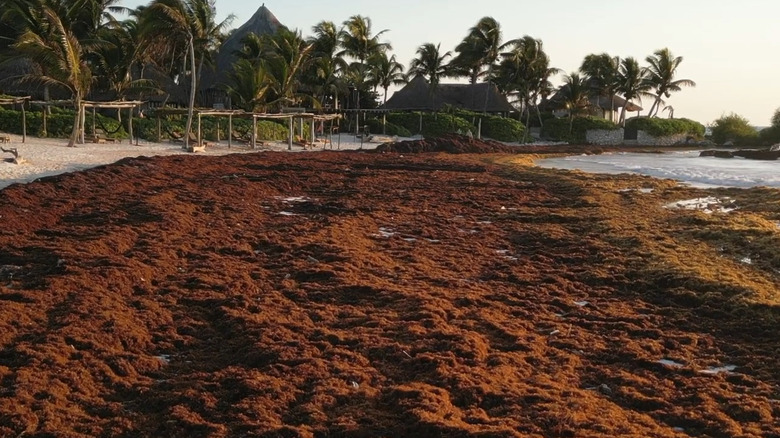
Over the past few decades, the rapid increase in thriving brown seaweed in the Atlantic has caused some shocking incidents. "These nutrient-rich waters fueled high biomass events along the Gulf Coast, resulting in mass strandings, costly beach cleanups and even the emergency shutdown of a Florida nuclear power plant in 1991," noted Brian Lapointe, Ph.D., the Lead Author and a Research Professor of Florida Atlantic University's Harmful Algae study.
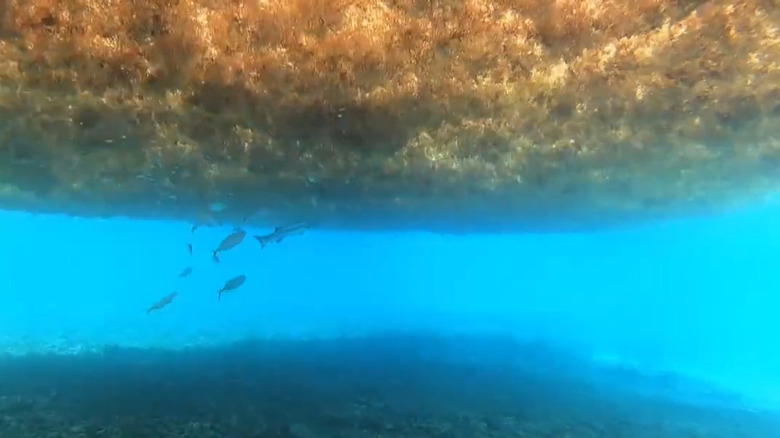
While the brown seaweed is not harmful as a species — and even acts as a habitat for over 100 species of fish, invertebrates, and turtles — this new brown belt has massively disrupted the ecosystem. Large amounts of sargassum wash ashore and begin to rot, releasing toxic hydrogen sulfide gas as it decomposes. The rotting seaweed damages coral reefs, reduces oxygen around the beach, and emits harmful greenhouse gases that could disrupt climate feedback loops.
Researchers are monitoring the brown belt and warning that humans should reduce nutrient runoff from the shore. If nothing changes, the brown seaweed may create similar phenomena in other regions, meaning more Great Sargassum Belts across the ocean. According to recent satellite footage, there's still time to combat climate change if changes are made.