

Bikers Have Mixed Opinions On This Type Of Harley
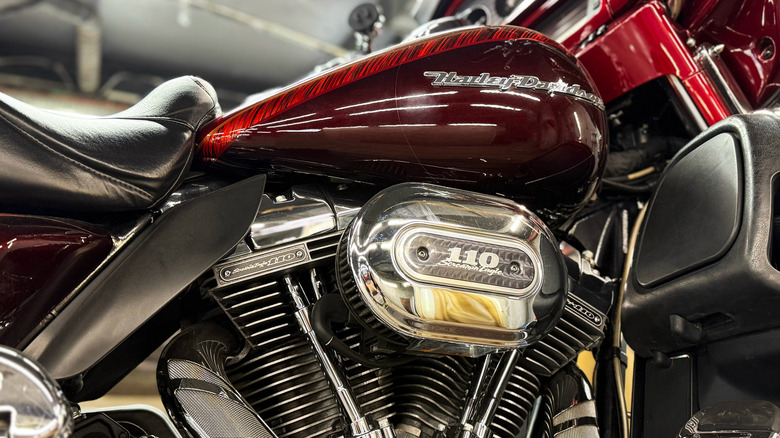
It's no secret that Harley-Davidson is one of the biggest-selling American-made motorcycle manufacturers. After all, since its inception in 1903, this Milwaukee-based manufacturer has achieved some mighty accomplishments, despite surviving numerous bankruptcy threats. Think of building motorcycles that served the U.S. Army in the Second World War, producing some of the most iconic motorcycles to have ever graced the American market, and even crafting some of the most powerful engines ever made, like the Evolution V-Twin engine.
Now, if you're moderately informed about motorcycle engines, you know that they often come in either air-cooled or water-cooled versions. The Evolution V-Twin engine (which revived Harley's glory days after the disastrous AMF years), in particular, is an air-cooled engine that relied heavily on cooling fins to regulate engine temperature. And while air-cooled engines are still going strong today in models like the Dyna Low Rider, we've recently seen Harley replace its signature silver ribs with jackets of liquid cooling.
But unfortunately, this shift has sparked a serious debate among riders online. After all, while some motorcyclists welcome the upgrade because it does have some good qualities, others argue that there's no need for you to rush to ditch an air-cooled Harley, as questions about old-school charm, maintenance, and reliability often come up. With that said, to help you understand more about this type of Harley, ahead, we'll take a closer look at the pros and cons of liquid-cooled Harley-Davidson motorcycles based on what real riders say about their bikes.
Why do bikers love liquid-cooled Harleys?
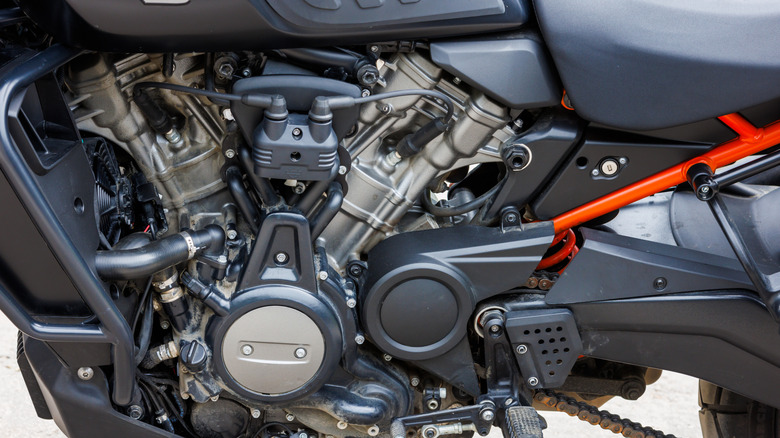
Liquid-cooled engines, as the name suggests, use a coolant to cool the engine. This design allows Harley to meet strict emission standards and also keeps the engine at a steady operating temperature. And that's exactly why models like the Nightster, Sportster S, and Street 500 are among the best Harley-Davidsons perfect for everyday use.
In fact, many users have posited online that liquid-cooled Harleys often perform better in demanding riding conditions, like stop-and-go traffic and aggressive riding, where the demand for more power is high. One owner on a Harley-Davidson forum wrote, "My 2011 Screamin' Eagle ultra air-cooled... when I would come up on a hill, it would sag and overheat... Today, with my 2014 Ultra-Limited wet head, I am the boss. When I passed a line of trucks going up the Continental Divide at 100mph in top gear... no heat, I know I made the right decision." This means that if you're chasing high-revving power, liquid-cooled monster engines will deliver more horsepower without experiencing overheating issues.
Besides performance, some riders in areas with extreme heat have a more positive attitude towards liquid-cooled Harleys, praising their comfort, especially on longer rides. On an online forum, one user noted, "I often ride in Los Angeles, and getting stuck in traffic, on a congested freeway, is my reason for choosing some liquid cooling. I don't like my leg to burn from the heat of my engine/pipes sitting in traffic, and from what I'm seeing, this 2014 Ultra Limited liquid-cooled one isn't doing that."
Additionally, some riders appreciate the fact that liquid-cooled engines are much quieter than their air-cooled counterparts. But it's worth noting that, when it comes to Harley, this can be a pro or a con depending on your point of view.
Liquid-cooled Harleys also have somewhat limited appeal
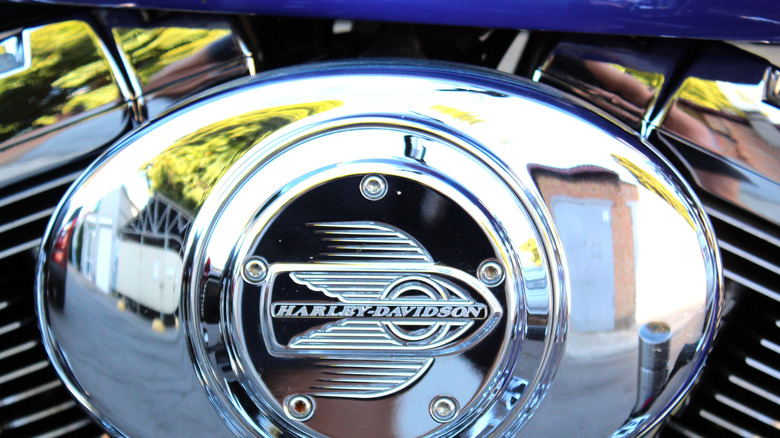
While liquid-cooled Harleys are recommended by many bikers, there are some important caveats you should know about. For instance, many riders complain that water-cooled engines are less attractive, with one owner claiming that if he decides to purchase one, he will have to add cooling fins to the heads to get that raw Harley-Davidson nostalgia.
Over on Harley-Davidson forums, several riders agree that one of the least desirable qualities of liquid-cooled Harleys is the weight that the coolant and associated components add. Weight is a crucial factor to think about when buying a motorcycle. And considering that some Harley-Davidsons are quite intimidating to ride because of their weight, one user complains that, "Having that additional weight suspended on the engine guards isn't going to help with balancing a heavy bike, either."
There is also the issue of coolant leaks. Generally, you should expect to change your bike's coolant every two to five years. But sometimes, though it's quite rare, your cooling system may develop leaks — after all, radiators, water pumps, and rubber hoses may wear out because of age and poor driving habits. And if you see any signs of coolant leaks, you'll want to stop the engine at once and do not ride further until you resolve the issue.