

Your Old, Worn-Out Tires Could Prevent Potholes And Pricey Road Repairs
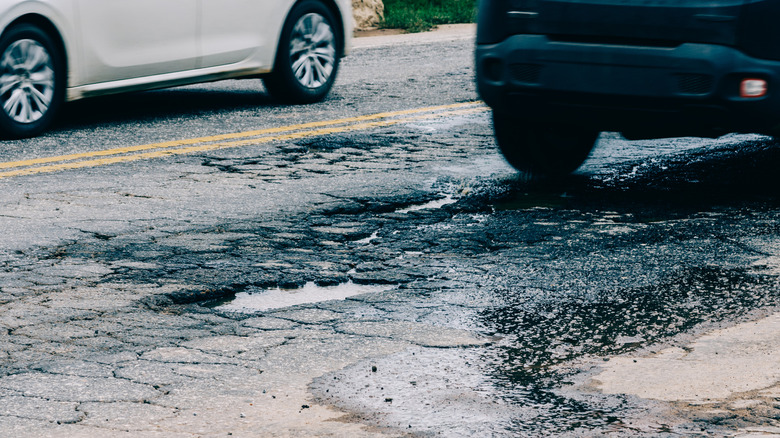
Every driver knows the bone-jarring thud of a pothole you didn't see coming. It's always unnerving, inducing winces and maybe even some explicit words. Rightly so. It doesn't matter if you have the best tires with the best warranty – potholes can cause flats and ruin your day. This issue is especially problematic in cities with extreme temperature swings, where the asphalt can present some serious road craters. If you're wondering why the streets you drive on — from inner-city grids, to highways, to backcountry stretches — seem to be in a constant state of decay, the answer usually lies in what's beneath that pockmarked asphalt.
Perhaps you already know how potholes form, and why they're dangerous. If not, consider subgrade, which is like the mattress, while the asphalt could be considered the sheets. Weak subgrade — stuff like silt or clay – can lead to uneven settling and surface cracks, or worse, deep holes. This is where worn-out tires, referred to as Tire-Derived Aggregate (TDA) in the industry, factor in. According to the experts at CalRecycle, TDA is a lightweight subgrade option weighing about a third of conventional soil fill used in pothole repair. By swapping out heavy fill for these shredded tires, state engineers can reduce the vertical stress on foundation soils. TDA also acts as a thermal blanket, insulating the subgrade to help prevent frost damage that is often the precursor to potholes. What's more, this rubber aggregate actually helps enhance water drainage, something that is important to road longevity.
Pave The Way
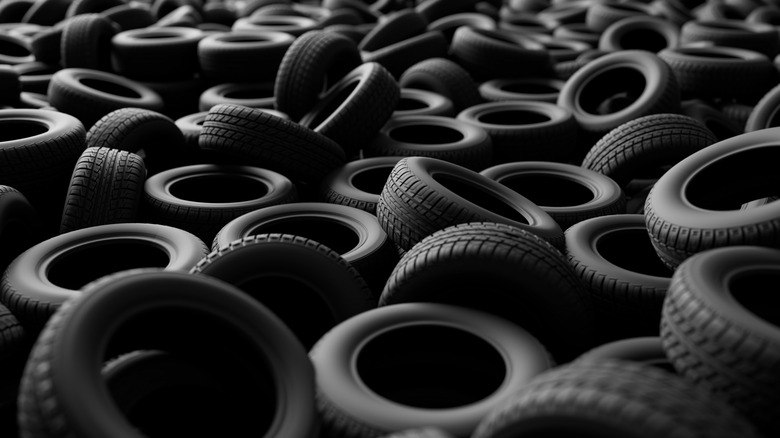
Some states have brutal roads, while others are blessed with some truly plush asphalt. If you've ever been cruising on the highway and noticed some stretches feel smoother and even quieter than others, it's possible that you may have been on Rubberized Asphalt Concrete (RAC). It might seem silly to think that asphalt technology would progress much, but RAC is essentially premium pavement that's been optimized. It's made by mixing uniformly shredded, used tires — known as crumb rubber – with any metal removed, then combined with traditional asphalt.
This type of road material has a resiliency that can stand up to harsh temperatures, while taking a beating from thousands of cars each day. Impressive stuff. What's more, the environmental stats are just as impressive as the material's innate features. One mile of single-lane RAC resurfacing can save approximately 2,000 scrap tires from ending up in landfills — remarkable stuff. Thanks to the research and development behind this style of road material, states and municipalities can lessen the burden of costly road repairs while extending the life of highways and streets. For anyone who spends a significant amount of time driving, this is a win in the battle against sketchy potholes. Drive safe!