

Should You Use Your Turn Signal At A Roundabout? These Lawmakers Say 'No'

Although traffic roundabouts have existed for a long time around the world, they are still relatively novel to many American drivers, having only become common on American roadways over the last 20 years. As you might imagine, this could lead to problems for drivers unfamiliar with how to navigate those strange circles in the road, and, in some areas, has led motorists to plow straight through roundabouts as if they weren't even there.
This latest roundabout issue in America, though, comes not from difficulties of motorists actually driving through the circle, but the act of using (or not using) your car's turning signals while navigating a roundabout. And this has led to a situation in Utah where some lawmakers are hoping to remove part of a law that requires motorists to signal when entering and exiting a roundabout.
Meanwhile, for drivers in states other than Utah, this news may have them wondering whether they are technically breaking the law each time they drive through a roundabout without signaling. And based on the typical American roundabout experience, this would likely mean that a large majority of drivers are technically guilty of this.
Is not signaling at a roundabout actually illegal?

Issues with roundabouts, sometimes called 'traffic circles', have popped up in cities across the United States and, in some cases, have led to their complete redesign to reduce accidents and confusion for unfamiliar drivers. This new Utah bill was introduced after a friend of State Rep. Ariel Defay was pulled over and cited for failing to signal in a roundabout. Like many Utah drivers, neither Defay nor her friend knew this rule was on the books, so Defay drafted H.B. 128 to amend state law to exclude roundabouts from the existing turn-signal rules.
But it's not just that Rep. Defay sees the current law as vague and unnecessary; she also argues that using turn signals in Utah's typically small roundabouts can be unintuitive and unnatural for drivers. Often, a car is only in the roundabout for a few seconds at most, and with multiple entry and exit points close together, turn signals may increase confusion for other motorists.
Likewise, if a car is simply driving through a roundabout without changing direction onto a different road, the turn signal could feel counterproductive to the natural flow of traffic, so it's not hard to see where the confusion and unfamiliarity would come from.
More harm than good?
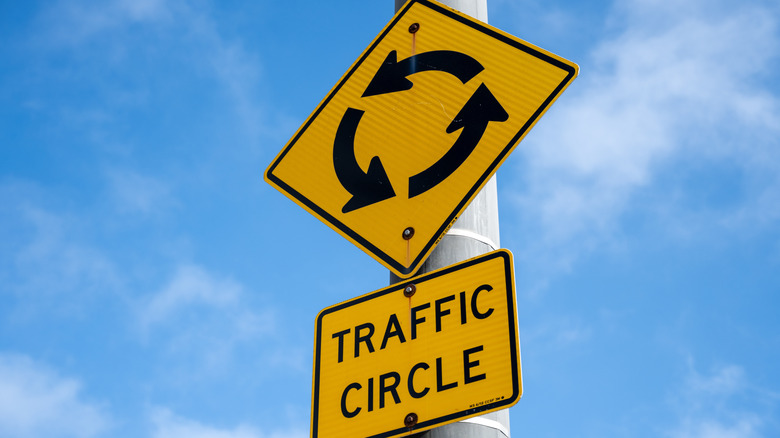
As a Utah State bill, this proposal wouldn't obviously protect drivers in other states from getting tickets for failing to signal in a roundabout. Individual rules vary by state, and even if the law does not specifically mention roundabouts, signal laws could still apply to these intersections. California rules, for example, say drivers should use their right turn signal when exiting a roundabout.
If your state or municipality has a law saying turn signals must be used in roundabouts, you may not know it because it can be uncommon for police officers to write citations simply for failing to signal -unless it's done egregiously or directly affects another vehicle. However, like other small infractions, such as a missing front license plate or broken taillight, failing to signal could be used by officers as the initial reason to pull over a suspicious vehicle or driver.
Whether or not the Utah proposal leads to similar changes elsewhere, its supporters would argue that, rather than making roundabouts smoother and safer, actively policing turn signals does the opposite, making roundabouts more intimidating and troublesome than they've already proven to be for many American drivers.