

Are Ram Prices Slowing Down? Here's What We Found
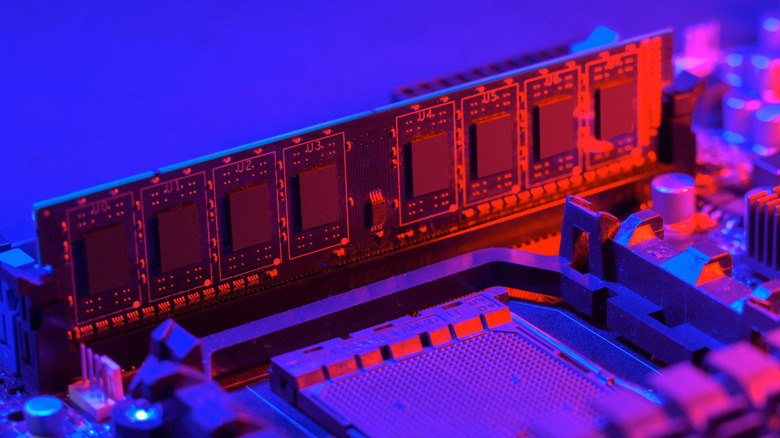
Building a computer is never cheap, but it can be a particularly frustrating experience when the price of a specific component inflates well beyond what it would typically go for. A few years ago, it was graphics cards that were suffering due to a perfect storm of the microchip shortage, COVID-19-related supply chain issues, and the ever-increasing demand from cryptocurrency miners. Now it's memory that's driving up the cost of your build. RAM kits have traditionally been among the more affordable components used in the construction of PCs, but recent market factors have dramatically driven up costs to the point that you might be spending as much on memory as you are on your CPU.
The reason RAM prices are so out of control in the U.S. is connected squarely with the rise of AI. The data centers that power these services require vast amounts of memory. In fact, they require so much of the new memory being manufactured that they have caused a shortage in the consumer market, which has started to outpace supply and drive up prices. Even the older DDR4 RAM kits have gotten more expensive as buyers have been looking backwards for more affordable alternatives, creating a secondary scarcity in that market as well.
Those who've seen the skyrocketing cost of RAM in recent months might be wondering if it's finally reaching a peak, hoping against hope that its rapid escalation is finally starting to slow. Unfortunately, painful as it might be to hear, this doesn't appear to be the case. In fact, many analysts seem to believe that these prices will continue to rise.
What does the pricing history look like?
In order to get a better idea about where RAM pricing is headed, it helps to take a look at its recent trajectory. There are a few resources we can look at to give us a better picture. Tom's Hardware tracks the most affordable versions of each kit and compares them to their previous lowest prices, showing the dramatic disparity of the current inflation. CamelCamelCamel tracks individual product pricing on Amazon, and TrendForce tracks the "Spot Price" and "Contract Price" between manufacturers and retailers.
But one of the best resources for evaluating the computer RAM market's recent history as a whole is PCPartPicker. The company tracks prices on everything you need to build a PC, from cases to CPUs, across multiple major platforms, including Amazon, Newegg, Best Buy, Micro Center, and more. It also shows pricing trends from across the last year based on the average cost of memory kits by generation, size, and number of sticks.
There is some variance in the trajectory of individual kits, but the overall flow looks about the same. Prices were fairly stable from September 2024 through May 2025, but that shifted somewhere around mid-June. The cost of RAM steadily began to rise, ascending even more rapidly starting in October and reaching an all-time high in January, with kits now costing two to three times what they did last year. These charts do show that the trajectory has slowed a little in January, but this isn't the first short plateau we've hit, and analysts don't believe that it's going to last.
Analysts believe prices will continue to rise
A recent press announcement from TrendForce claimed that the memory market is on course to earn more than twice the revenue of the foundry industry. The company's data suggests that there are no signs of the RAM inflation slowing down just yet. "The current AI surge is anticipated to boost both the memory and wafer foundry sectors to record-breaking revenues by 2026, based on TrendForce's recent data," the press announcement claimed. "Limited supply and rapidly increasing prices are likely to grow the memory market's total worth to $551.6 billion."
Counterpoint seems to have drawn similar conclusions. Its report on the transition from Q4 2025 states that memory prices have spiked 80%-90% since the end of last year and that more increases might be on the way. "The memory profitability is expected to reach unprecedented levels. DRAM operating margins have already reached the 60% range in Q4 2025, marking the first time margins for general-purpose DRAM have surpassed those of HBM," The company's senior analyst, Jeongku Choi, stated. "The first quarter of 2026 is set to be the period where DRAM margins exceed their historical peaks for the first time. Having said that, this will either set a new normal or a very high bar which looks solid now but could make the next down cycle (if there is one) look uglier." It's difficult to say when this surge will finally stabilize, but it certainly doesn't seem like consumers should expect prices to return to normal any time soon.