

Why The US Coast Guard Is Deploying Ships To NYC
The mission of the United States Coast Guard is to protect, defend, and save. From search and rescue operations to maritime law enforcement, the Coast Guard "protects our seas, and protects us from the sea." In early 2026, one of those missions includes an icebreaker operation in the New York City area.
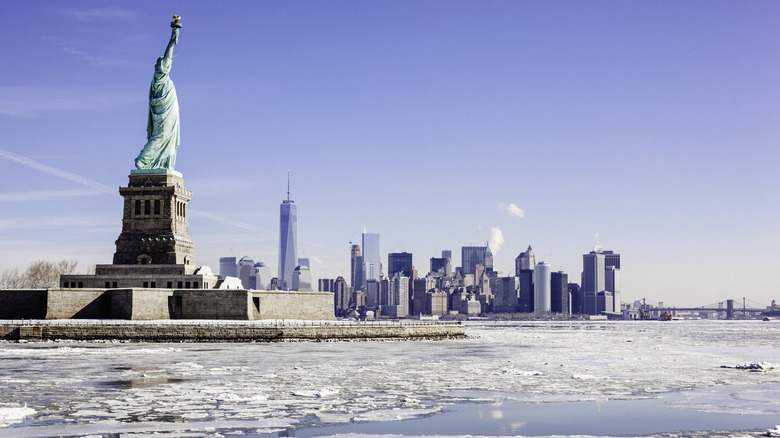
The frigid weather that began in late January with winter storm Fern stretched into early February, with snow, ice, and freezing temperatures leading to several deaths in New York City. Some areas saw more than a foot of snow, but now it's ice that's causing headaches. Icy conditions in the harbor and the Hudson River escalated fast during that last week of January, with the Coast Guard describing "significant amounts of ice from the harbor to the Hudson Valley." These conditions don't just impact safe navigation for boats, but can also delay deliveries into the city and broader Hudson region and wreak havoc on public transportation. While ports are open, the New York City Ferry Service suspended all routes in late January through early February, citing the safety of "all crew, passengers, and vessels."
Keeping the ports open
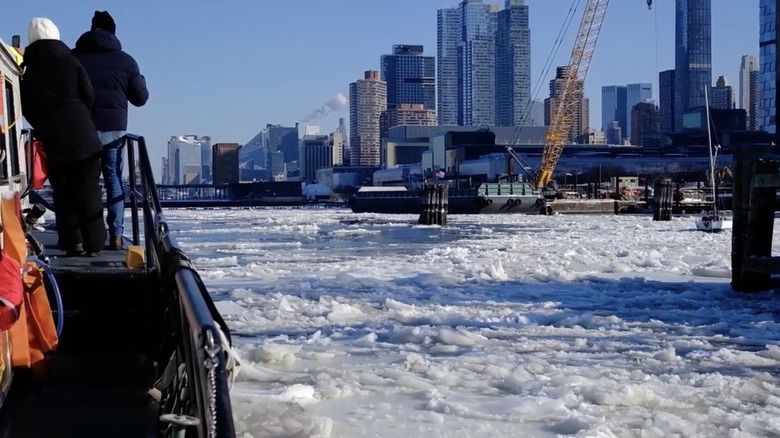
The USCG, which recently closed a deal to expand its fleet of icebreakers, stated that among its top priorities is "facilitating the safe movement of critical commercial traffic that supports the region's economy and daily needs." When ice takes over essential waterways, the delivery of key assets to the region may be delayed, including fuel and heating oil, even as temperatures in the city remain below freezing.
The operation involves two 140-foot Bay-class icebreaking tugs — the CGC (Coast Guard Cutter) Penobscot Bay and the CGC Sturgeon Bay — along with the 65-foot harbor tug CGC Hawser
The icebreakers are part of a larger mission called Operation Reliable Energy for Northeast Winters (OP RENEW), which seeks to support the Northeast region of the United States during winter weather. All three ships are homeported in Bayonne, New Jersey, and are well equipped for icebreaking and search and rescue operations in waterways affected by ice.
At the time of writing, no restrictions are in place for ports within the NYC Coast Guard sector, but the ferry service remains suspended with no timeline for when service may be restored. The independently operated Staten Island Ferry remains open, and the Coast Guard advises anyone on the water to "exercise extreme caution, monitor weather and ice conditions, and report navigational hazards to the Coast Guard."
A critical mission in the Northeast
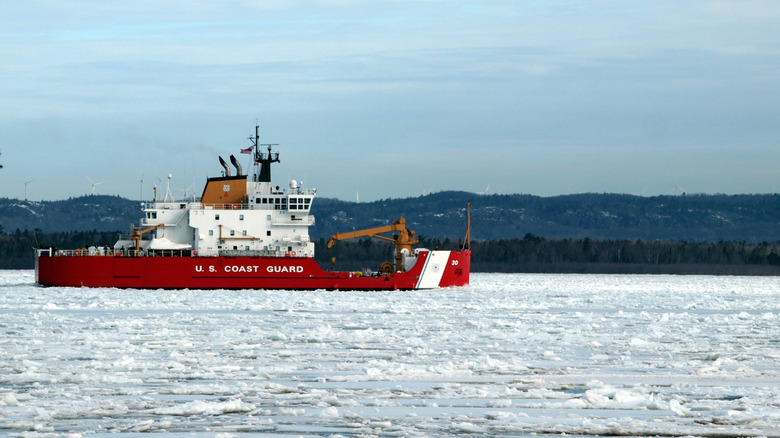
The icebreaking operation in New York Harbor and the Hudson River isn't the first time these ships have been assigned this type of winter duty — in fact, they're stationed in Bayonne, New Jersey, for just this purpose, and they often complete work up and down the Northeastern seaboard. The Coast Guard partners with both local and state emergency management officials to clear ice-jammed waterways to create navigable paths for vital commercial traffic.
In 2018, the CGC Penobscot Bay worked with other Coast Guard ships to clear the ice-jammed Kennebec River in Maine, breaking through ice that was as much as five feet thick in some areas. Sometimes the icebreakers will escort ships until they're clear of dangerous ice — the Penobscot Bay recently escorted a ship carrying more than 10 million barrels of oil out of New Jersey. The Penobscot Bay and similar ships are sometimes crewed by fewer than 20 Coast Guardsmen, who live on the ship if they're working far from their Bayonne base.
The Coast Guard stations its icebreakers along the Northeast to ensure a rapid response when critical waterways are jammed with ice. In addition to Bayonne, icebreakers are also positioned in three areas of Maine, in Rhode Island, and in Connecticut.