

Camo, Nets & More: Pentagon Reveals Guide To Protect The US From Hostile Drones
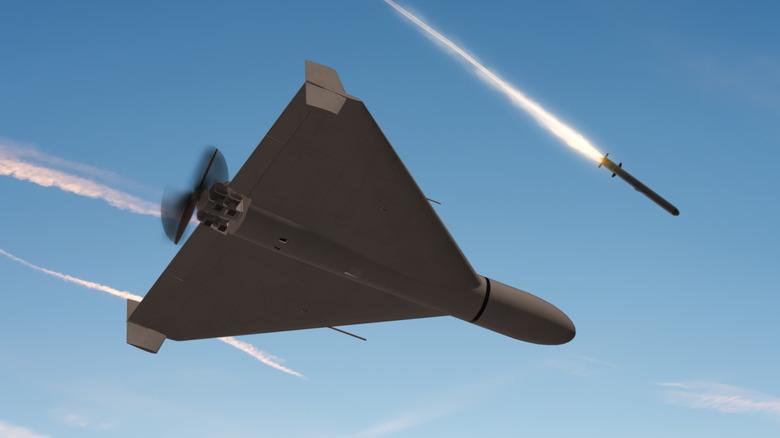
If there's one thing that's become clear in the 21st century, it's that drones are the future of combat operations around the globe. The United States began heavily using drones during Operations Iraqi Freedom and Enduring Freedom (Afghanistan), including arming hunter-killer drones for use in calculated strikes against high-value targets. The U.S. is hardly alone, as other nations have followed suit, such that drones are truly the most useful and dangerous weapons of modern warfare, and the risk is constantly rising.
This has been evident throughout the Russo-Ukrainian War, and in plenty of other hostile areas around the globe. Because of this, the Department of War published a new guideline on January 30, 2026, teaching its personnel how to protect key facilities and infrastructure from airborne threats and hostile drones. The Joint Interagency Task Force 401 published "JIATF 401 Guide for Physical Protection of Critical Infrastructure," which is described as "a critical document designed to help installation commanders and law enforcement use passive measures" to secure against hostile uncrewed airborne vehicles.
The guide's principal directive is summed up in its overall concept of "Harden, Obscure, Perimeter," isolating the means of protecting important assets and infrastructure from airborne attack. It provides detailed suggestions on how to best protect these important sites, beginning with "Determining Vulnerabilities," which outlines how every facility should be seen from the outside in. This enables better defensive planning and coordination as it ideally highlights the most significant vulnerabilities and then addresses them via the guide's physical protection measures.
How the DoW plans to protect assets from hostile drones
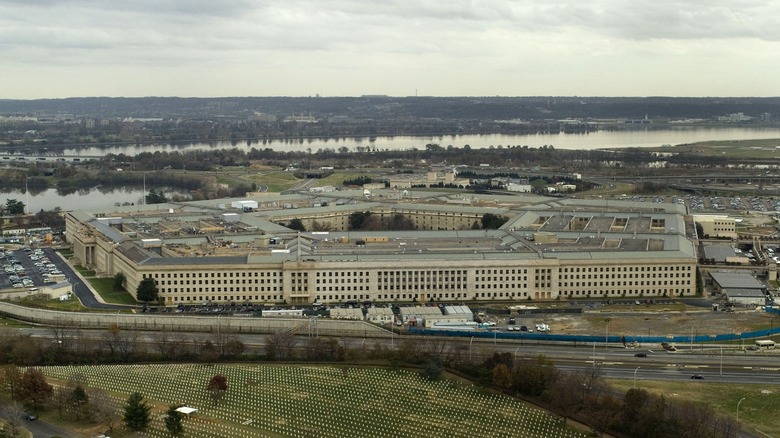
Much of the information in the three-page guide includes practices that have been around for decades, including hardening, which creates physical obstacles to overhead threats. These can range in variety from concrete walls, hardened roofs, overhead netting, tension cables, closing retractable roofs, and even using wire, mesh, or fishing line. This is the same practice done to harden facilities from mortars during deployments, as the outer shell forces an early detonation.
Obscuring a facility is the next practice, which isn't anything new for militaries, as they've been doing it since ancient times. Essentially, it's important to reduce what a drone or its operator can see, which can be done using temporary walls, visual clutter to break up overhead views, using decoys, camo-netting, or diversions to draw fire from a more important target. It also outlines revisiting traffic and the flow of people to reduce the number of personnel out in the open when arriving or leaving the work site.
Finally, in perimeter thinking, the guide suggests extending security beyond the fence line. The U.S. military already maintains a perimeter around its most important assets, but it's now recommended to extend that through a layered defense further out to ideally force a drone to operate beyond its range capabilities. This can be accomplished by increasing patrols and stand-off distances, changing the locations of checkpoints, and retraining security personnel. These practices should help reduce vulnerabilities to hostile drones, while anti-drone weapon systems would be used to further create a safe operating area.